
Camera lens adapters with focal reducers can do more than connect an older lens to a newer camera. By reducing the projected image circle, the right adapter can provide a wider effective field of view and transfer more light to the sensor.
This roundup compares 10 options for Canon EF, Nikon G and D, Pentax 67, Mamiya 645, C-mount, and telescope setups. Pay close attention to mount compatibility, electronic support, coverage, and whether you need autofocus or manual aperture control.
Best 10 Camera Lens Adapters with Focal Reducers Picks for 2026
Best Overall for Fuji X
VILTROX EF-FX2 Pro 0.71x Adapter

- Adapts Canon EF lenses to Fujifilm X cameras
- Provides 0.71x focal reduction
- Supports AF, aperture, EXIF, and IS features
Best For: Fuji X users adapting Canon EF lenses
Best for Telescope Imaging
Astromania 0.5x C-Mount Reducer
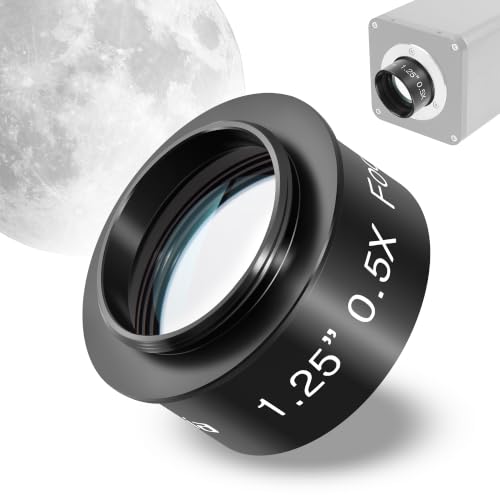
- Fits 1.25-inch telescope accessories
- Connects to C- or CS-mount cameras
- W widens the field and can shorten exposures
Best For: Telescope viewing and astrophotography with C-mount cameras
Best for MFT Autofocus
VILTROX EF-M2 II 0.71x Speed Booster

- Adapts Canon EF lenses to MFT cameras
- Adds 0.71x focal reduction
- Retains AF, aperture, EXIF, and firmware updates
Best For: MFT users seeking electronic Canon EF lens support
Best Simple Telescope Reducer

- Reduces telescope focal length by about 0.5x
- Uses 1.25-inch and C-mount threading
- Includes coated two-lens optical correction
Best For: Manual telescope imaging with C- or CS-mount cameras
Best Manual Nikon-to-Micro Four Thirds Reducer

- 0.71x focal reduction with a one-stop aperture increase
- Manual aperture ring and smooth manual focus
- Supports Nikon G/D lenses on compatible M4/3 cameras
Best For: Manual-focus Nikon lens users with Micro Four Thirds cameras
Best Autofocus EF-to-Micro Four Thirds Booster

- 0.71x reducer adds a one-stop aperture advantage
- Supports autofocus and camera-controlled aperture
- USB firmware updates and stabilization support
Best For: Canon EF users seeking electronic control on M4/3 cameras
Best Canon EF-to-EF-M Speed Booster

- 0.71x reducer increases aperture by one stop
- Autofocus, aperture, EXIF, and stabilization support
- Metal build with tripod thread and firmware updates
Best For: Canon EF lens users with compatible EOS M cameras
Pentax 67 Cinema Booster

- 0.71x optical focal reduction
- Threaded flange lock
- Manual focus; no EXIF transmission
Best For: Pentax 67 lenses on PL-mount cinema cameras
Electronic M4/3 Speed Booster
VILTROX EF-M2 Pro 0.71x Adapter

- Autofocus and aperture control
- EXIF and IS support
- Rotating lock with USB-C updates
Best For: Canon EF/EF-S lenses on Micro Four Thirds cameras
Mamiya 645 L-Mount Booster

- 0.71x optical focal reduction
- Secure threaded flange lock
- Manual focus with no EXIF transmission
Best For: Mamiya 645 lenses on Leica or Panasonic L-mount cameras
Best Overall for Fuji X – VILTROX EF-FX2 Pro 0.71x Adapter
If you need camera lens adapters with focal reducers for a Fujifilm X-mount setup, the VILTROX EF-FX2 Pro connects Canon EF lenses while adding a 0.71x reduction factor. It also retains electronic features such as autofocus, aperture control, EXIF transmission, and built-in IS support.
Best For: Fuji X-mount photographers adapting Canon EF lenses for a wider effective view and added electronic control.
Pros:
- 0.71x focal reducer with an optical correction group
- Supports autofocus, aperture control, and EXIF transmission
- Built-in IS function, metal construction, and USB firmware-upgrade port
Cons:
- Compatibility is limited to Canon EF and Fujifilm X mounts
- The adapter adds electronic complexity compared with a fully manual adapter
The EF-FX2 Pro is the most feature-rich choice here for Fuji X users who want to reuse Canon EF glass without giving up key camera-body controls. Confirm your exact camera model and lens compatibility before buying.
Best for Telescope Imaging – Astromania 0.5x C-Mount Reducer
The Astromania is a practical option among camera lens adapters with focal reducers for telescope and C-mount systems. Its 0.5x reduction can widen the field of view and shorten exposure times, while spacing adjustments allow users to fine-tune the setup.
Best For: Telescope owners using 1.25-inch accessories with C- or CS-mount CCTV cameras for visual observing or astrophotography.
Pros:
- 0.5x reduction factor with an 85mm focal length, depending on spacing
- 1.25-inch filter thread connects with compatible eyepieces, diagonals, and filters
- Two coated lenses, 22.5mm clear aperture, and lightweight aluminum barrel
Cons:
- Manual-focus design without electronic camera control
- Designed to perform better with longer focal-ratio telescopes, such as f/8 systems
This reducer is aimed at telescope users rather than conventional interchangeable-lens cameras. Check your focuser, accessory threading, camera mount, and required spacing before purchase.
Best for MFT Autofocus – VILTROX EF-M2 II 0.71x Speed Booster
For Micro Four Thirds users comparing camera lens adapters with focal reducers, the VILTROX EF-M2 II combines Canon EF compatibility with a 0.71x speed-booster design. Electronic contacts provide autofocus, aperture adjustment, EXIF transmission, and an upgradeable firmware platform.
Best For: MFT camera owners who want to use Canon EF lenses while retaining automatic exposure-related controls and electronic communication.
Pros:
- Adapts Canon EF lenses to Micro Four Thirds cameras
- 0.71x focal reducer with autofocus and aperture control
- Transmits EXIF data and includes a USB firmware-upgrade port
Cons:
- Compatibility is limited to Canon EF and MFT mounts
- Not water resistant according to the supplied specifications
The EF-M2 II is a strong match for MFT photographers building a flexible Canon EF lens kit. Verify support for your particular camera body, since electronic performance can depend on the camera and lens combination.
Best Simple Telescope Reducer – Alstar 0.5x C-Mount Corrector
The Alstar offers a straightforward manual option for telescope users seeking camera lens adapters with focal reducers. Its 0.5x design connects 1.25-inch telescope accessories to C- or CS-mount cameras, helping provide a wider field of view and shorter astrophotography exposures.
Best For: Manual telescope and C-mount imaging setups that need a compact, coated focal reducer.
Pros:
- Approximately 0.5x reduction with an 85mm focal length, depending on spacing
- 22.5mm aperture and two coated lenses for improved correction
- Aluminum housing with 1.25-inch filter threading and C-mount output
Cons:
- Manual-focus design with no electronic lens communication
- Intended for longer focal-ratio telescopes and narrower to moderately wide fields
The Alstar is a focused, budget-style solution for compatible telescope systems rather than a general-purpose camera adapter. Confirm the telescope’s threading, camera mount, and available backfocus before ordering.
Best Manual Nikon-to-Micro Four Thirds Reducer – VILTROX NF-M43X 0.71x
If you want to use Nikon G or D lenses on a Micro Four Thirds camera, this manual adapter adds useful focal-reducer functionality. Its 0.71x optical reduction widens the effective view and increases maximum aperture by one stop, making it a practical option among camera lens adapters with focal reducers for photographers who do not need electronic autofocus.
Best For: Manual-focus photographers using Nikon G/D lenses with compatible Micro Four Thirds cameras, including selected Panasonic, Olympus, and BMPCC models.
Pros:
- 0.71x focal reduction provides a wider effective field of view.
- Increases maximum aperture by one stop for improved low-light potential.
- Built-in aperture ring offers manual exposure and depth-of-field control.
- Maintains infinity focus and uses four groups of five optical elements.
Cons:
- Manual-focus design does not provide autofocus.
- No image stabilization is built in.
- Compatibility is limited to Nikon G/D lenses and Micro Four Thirds bodies.
The NF-M43X is a straightforward choice when optical reduction, aperture control, and broad Nikon-to-Micro Four Thirds compatibility matter more than electronic automation.
Best Autofocus EF-to-Micro Four Thirds Booster – VILTROX EF-M2 II
The VILTROX EF-M2 II is designed for Canon EF lenses and Micro Four Thirds cameras, combining a 0.71x focal reducer with electronic lens communication. For shoppers comparing camera lens adapters with focal reducers, its autofocus, aperture control, image-stabilization support, and USB firmware-update capability make it the more feature-rich option in this group.
Best For: Canon EF lens owners using compatible Panasonic or Olympus Micro Four Thirds bodies who want autofocus and camera-controlled aperture adjustment.
Pros:
- 0.71x reduction widens the effective field of view and increases aperture by one stop.
- Supports autofocus and electronic aperture adjustment from the camera body.
- Includes electronic contacts and image-stabilization support for compatible setups.
- USB interface allows firmware upgrades and bug fixes.
Cons:
- Electronic features depend on compatibility between the specific lens, adapter, and camera.
- Limited to Canon EF lenses and compatible Micro Four Thirds cameras.
- Firmware updates may be needed to improve lens and camera support.
Choose the EF-M2 II if retaining electronic operation is a priority; it offers a broader feature set than a fully manual reducer while preserving the one-stop speed advantage.
Best Canon EF-to-EF-M Speed Booster – VILTROX EF-EOS M2 0.71x
For Canon EOS M users with EF lenses, the VILTROX EF-EOS M2 combines focal reduction with electronic communication. Its 0.71x optical design broadens the shooting range and adds one stop of aperture, while autofocus, EXIF transmission, aperture control, and built-in stabilization make it a practical pick among camera lens adapters with focal reducers.
Best For: Canon EF lens owners using compatible EOS M-series cameras, including the M50, M6 II, M200, and other listed EF-M bodies.
Pros:
- 0.71x reduction shortens effective focal length and widens the view.
- Increases aperture by one stop for more light and background blur.
- Supports autofocus, camera-controlled aperture, EXIF transmission, and image stabilization.
- Metal construction includes a tripod-support screw and firmware-update support.
Cons:
- Designed specifically for Canon EF lenses and Canon EF-M cameras.
- Electronic performance can vary with particular lens and camera combinations.
- Not water resistant.
The EF-EOS M2 is a strong fit for EOS M owners who want to adapt existing Canon EF glass without giving up key electronic shooting functions.
Pentax 67 Cinema Booster – 0.71x Pentax 67 to PL Adapter
For filmmakers comparing camera lens adapters with focal reducers, this Pentax 67-to-PL model is a focused choice for widening the view of compatible Pentax 67 lenses on PL-mount cinema cameras. Its 0.71x optical reduction, threaded flange lock, and precision machining prioritize secure mounting and infinity-focus accuracy.
Best For: Manual-focus cinema setups using Pentax 67 lenses with PL-mount cameras.
Pros:
- 0.71x focal reduction provides a wider field of view.
- Threaded flange-locking structure helps keep the adapter secure and shake-free.
- CNC-machined construction is designed for accurate infinity focus.
Cons:
- Manual focus only.
- Does not transmit lens EXIF data.
- Compatibility is limited to Pentax 67 lenses and PL-mount cameras.
This adapter makes the most sense when your priority is optical focal reduction and dependable physical mounting rather than electronic lens communication. Confirm both mounts before purchase, especially for a cinema rig.
Electronic M4/3 Speed Booster – VILTROX EF-M2 Pro 0.71x Adapter
The VILTROX EF-M2 Pro is one of the more versatile camera lens adapters with focal reducers for using Canon EF or EF-S lenses on Micro Four Thirds cameras. Its 0.71x reducer is paired with autofocus, aperture control, EXIF transmission, and a rotating security lock for a more integrated shooting experience.
Best For: Micro Four Thirds photographers and videographers adapting Canon EF or EF-S lenses with electronic control.
Pros:
- 0.71x focal reducer helps provide a wider field of view and greater effective light gathering.
- Supports autofocus and aperture adjustment from compatible M4/3 camera bodies.
- Electronic contacts can transmit EXIF information and support IS functions.
- USB-C firmware-upgrade support and a rotating lock add convenience and security.
Cons:
- Compatibility should be confirmed for the specific lens and camera combination.
- Electronic features depend on compatible Canon EF/EF-S and Micro Four Thirds equipment.
- It is not water resistant.
Choose this model if you want more than a purely mechanical adapter. Its electronic controls and broad listed camera compatibility make it a practical bridge for existing EF/EF-S lens collections, while the 0.71x reduction helps counter the M4/3 crop effect.
Mamiya 645 L-Mount Booster – 0.71x Mamiya 645 to L Adapter
This Mamiya 645-to-L-mount adapter is a straightforward option for photographers seeking camera lens adapters with focal reducers for Leica or Panasonic L-mount cameras. The 0.71x optical reducer widens the field of view, while its threaded flange lock and precision infinity-focus design support a stable manual-focus setup.
Best For: Manual-focus users adapting Mamiya 645 lenses to Leica or Panasonic L-mount cameras.
Pros:
- 0.71x focal reduction helps create a wider field of view.
- Threaded flange-locking mechanism is designed for secure, shake-free installation.
- CNC-machined assembly is designed for accurate infinity focus.
Cons:
- Manual focus only.
- No lens EXIF data transmission.
- Some cameras may require “Shoot without lens” to be enabled.
This is a sensible pick for adapting medium-format Mamiya 645 glass when electronic communication is not essential. Check the exact camera mount and be prepared to adjust the no-lens setting if the camera does not release the shutter.
How We Picked These Camera Lens Adapters with Focal Reducers
We selected adapters across several common lens and camera ecosystems, including Canon EF to Fuji X, Micro Four Thirds, and Canon EF-M, plus Nikon, Pentax 67, Mamiya 645, C-mount, and telescope applications. The list includes both electronic speed boosters and simpler optical reducers so you can compare convenience, control, and intended use.
Our evaluation focuses on mount accuracy, focal-reduction factor, likely sensor coverage, aperture and autofocus support, locking security, and the practical limitations of each design. Compatibility should always be confirmed against the exact lens and camera model before purchase.
Quick Comparison
- Best for electronic Canon EF setups: Viltrox EF-FX2 Pro, EF-M2 II, EF-EOS M2, and EF-M2 Pro.
- Best for manual Nikon G or D lenses: Viltrox NF-M43X with aperture control.
- Best for telescope or C-mount applications: Astromania and Alstar 0.5x reducers.
- Best for larger-format lenses: The Pentax 67-to-PL and Mamiya 645-to-L mount reducers.
- Common reduction factor: A 0.71x reducer generally provides a wider view and approximately one stop of additional light compared with using the lens without reduction.
Key Buying Factors for Camera Lens Adapters with Focal Reducers
Mount Compatibility and Flange Distance
Both sides of the adapter must match precisely: the lens mount, the camera mount, and the required flange distance. A physically similar mount is not necessarily interchangeable. Check for full-frame, APS-C, Micro Four Thirds, or smaller sensor coverage, especially when adapting large-format lenses.
Electronic Communication
Electronic adapters may support autofocus, aperture control, EXIF data, or image stabilization, but features vary by camera and lens firmware. Manual adapters are often simpler and more dependable for video or controlled shooting, while autofocus models are more useful for moving subjects and everyday photography.
Reduction Factor and Image Quality
A 0.71x reducer widens the effective field of view and concentrates light, but it adds glass and another optical interface. Look for clean construction, secure mounts, and reviews that address sharpness, flare, chromatic aberration, and edge performance. Telescope reducers are specialized products and should not be treated as general-purpose camera speed boosters.
Build Quality and Locking Security
Heavy lenses place substantial stress on the adapter and camera mount. A firm locking mechanism, minimal play, and a tripod foot or support option can matter more than small differences in advertised specifications.
Who Should Buy Which Camera Lens Adapters with Focal Reducers?
Choose an electronic Canon EF reducer if you want to reuse Canon DSLR lenses while retaining as much autofocus and aperture functionality as possible. Choose a manual Nikon-to-Micro Four Thirds model if you value direct aperture control and already work comfortably with manual focus.
Choose a 0.5x C-mount reducer for compatible telescope or industrial optical setups, not ordinary DSLR lenses. Choose the Pentax 67 or Mamiya 645 option when adapting medium-format lenses to a compatible cinema or mirrorless system, and verify image-circle coverage before shooting. If you need maximum reliability for video, prioritize a rigid manual adapter; if speed and convenience matter most, select an electronic model supported by your specific lens and camera combination.