
Optical camera viewfinders offer a bright, distraction-free way to compose images when your camera screen is difficult to see or you want a more deliberate shooting experience.
This roundup compares compact external finders, waist-level designs, director’s viewfinders, and dedicated electronic options so you can match the tool to your camera, focal length, and workflow.
Best 10 Optical Camera Viewfinders Picks for 2026
Compact Classic
Ricoh GV-2 External Mini Viewfinder

- 28mm-equivalent optical framing
- Built-in 1:1 alignment marks
- Includes protective case
Best For: Ricoh GXR users wanting a lightweight optical accessory
Waist-Level Creative
CHI Sight 28mm Optical Waist Level Viewfinder

- Mirrored waist-level optical image
- 28mm view with 35mm/50mm frame lines
- Adjustable cold-shoe mount and hood
Best For: Street and travel photographers seeking a retro waist-level experience
Director-Style Precision
VD 11X Micro Director's Viewfinder

- Multi-coated optical glass
- Supports numerous cinema aspect ratios
- 37mm filter thread and telescopic design
Best For: Filmmakers and directors planning shots across multiple formats
Modern 28mm Framing
SmallRig External Optical Viewfinder 5873

- 28mm full-frame-equivalent view
- Five optical-glass groups with up to 98% transmission
- Broad camera compatibility and 3:2 frame lines
Best For: Users of supported cameras wanting a bright retro-style finder
Best Electronic Upgrade

- Large electronic viewfinder for comfortable viewing
- 90-degree upward tilt adds shooting flexibility
- Includes video audio monitoring support
Best For: SIGMA fp-series video and photography users
Best Classic Framing Tool
LightMate OV-X2 Optical Viewfinder

- Bright 28mm, 35mm, and 50mm framelines
- High-transmittance optical glass construction
- Compact 21g aluminum-alloy body
Best For: Rangefinder-style composition across compatible cameras
Best for Low-Angle Shooting
ULANZI VF01 Waist-Level Viewfinder
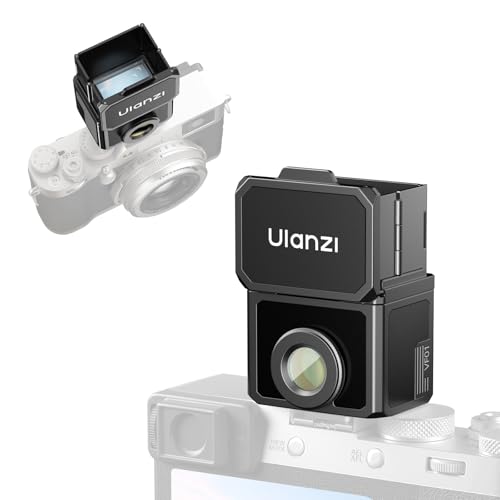
- Supports authentic low-angle composition
- 28mm view with switchable 35mm/50mm framelines
- Magnetic hood helps block stray light
Best For: Street, candid, and retro-style low-angle photography
Pro EVF Upgrade
Blackmagic Pocket Cinema Camera Pro EVF

- Purpose-built for the Pocket Cinema Camera 6K Pro
- Four-part glass diopter with -4 to +4 correction
- Proximity sensor and integrated status information
Best For: 6K Pro filmmakers needing a dedicated electronic viewfinder
Cinematography Framing Tool

- 11x magnification with multi-coated optical elements
- Adjustable eyepiece for scene-viewing comfort
- Supports common film and TV aspect ratios
Best For: Directors and cinematographers planning cinematic compositions
Compact Optical Finder
28mm External Side Axis Viewfinder

- Small, bright finder for Ricoh GR and Leica X Series cameras
- Installs through a hot or cold shoe
- Available in 28mm, 35mm, and 40mm options
Best For: Lightweight external framing on compatible compact cameras
Compact Classic – Ricoh GV-2 External Mini Viewfinder
The Ricoh GV-2 is a compact choice for photographers seeking optical camera viewfinders for the Ricoh GXR system. Its hot-shoe design provides a lag-free 28mm-equivalent framing aid, while the built-in 1:1 marks support square compositions.
Best For: Ricoh GXR users who want a lightweight 28mm optical framing accessory.
Pros:
- Designed specifically for the Ricoh GXR hot shoe.
- Provides a 28mm-equivalent optical view without electronic delay.
- Includes 1:1 aspect-ratio alignment marks and a protective case.
Cons:
- Compatibility is limited to the Ricoh GXR system.
- It provides framing only, with no autofocus, image stabilization, or electronic exposure controls.
At just 23 grams, the GV-2 is an unobtrusive manual accessory for wide-angle shooting. It is most appealing when simplicity, portability, and a traditional optical viewing experience matter more than electronic features.
Waist-Level Creative – CHI Sight 28mm Optical Waist Level Viewfinder
The CHI Sight offers a distinctive waist-level approach to optical camera viewfinders, displaying a horizontally mirrored image for a classic shooting experience. Its bright-line framing supports 28mm viewing with internal 35mm and 50mm frame configurations.
Best For: Street, travel, and candid photographers who enjoy waist-level composition and a retro handling style.
Pros:
- Produces a mirrored waist-level image without batteries or screen delay.
- Includes 35mm and 50mm frame lines alongside the 28mm viewing angle.
- Detachable hood helps reduce flare, and the adjustable cold-shoe mount broadens compatibility.
Cons:
- The mirrored image may require an adjustment period.
- Its waist-level design is less conventional than an eye-level finder.
The 0.17mm Fresnel lens and 90-degree viewing angle are intended to keep the display bright and usable, while the aluminum construction suits regular carry. This is a style-focused option for photographers who value an immersive, screen-free composing experience.
Director-Style Precision – VD 11X Micro Director's Viewfinder
The VD 11X Micro Director’s Viewfinder is a specialized option among optical camera viewfinders, combining multi-coated optical glass with magnification and selectable cinema aspect-ratio references. Its telescopic design and 37mm filter thread make it suited to production-oriented framing.
Best For: Filmmakers, directors, and users who need magnified viewing across multiple film and television formats.
Pros:
- Offers multi-coated optical glass and 11x magnification as specified.
- Supports formats and aspect ratios including 4:3, 16:9, 1.85, 2.2, and 2.4.
- Telescopic construction, retractable design, and a standard 37mm filter thread add flexibility.
Cons:
- Its production-focused design is more specialized than a simple everyday finder.
- It is manual and does not provide electronic camera information.
- The supplied specifications contain inconsistent magnification references, so buyers should verify the intended optical power.
With ambient-light shielding and a magnifying viewing function, this accessory is designed to help inspect framing and focus in bright conditions. Its broad format support makes it better suited to visual planning than casual still-photo composition.
Modern 28mm Framing – SmallRig External Optical Viewfinder 5873
The SmallRig 5873 is a versatile option for photographers comparing optical camera viewfinders across multiple camera systems. It provides a 28mm full-frame-equivalent view, five groups of optical glass, up to 98% light transmission, and built-in 3:2 frame lines.
Best For: Owners of supported Fujifilm, Nikon, Canon, Sony, Ricoh, or Leica cameras who want a bright, retro-style external finder.
Pros:
- Compatible with a broad list of supported camera models and mounts via a cold shoe.
- Five optical-glass groups are specified to provide a clear, bright image with minimal distortion.
- Includes 3:2 frame lines and a silicone bottom pad to help protect the hot shoe.
Cons:
- The fixed diopter is nominally -0.52D, limiting optical adjustment.
- On APS-C cameras, an 18mm lens is recommended for matching framing.
- Optimal clarity depends on keeping the eye close to the eyepiece and centered.
The 5873 is a practical cross-system choice for photographers who want optical composition without relying on an electronic display. Its compatibility list is extensive, but buyers should confirm their exact camera model and account for the fixed viewing design.
Best Electronic Upgrade – Sigma EVF-11
The Sigma EVF-11 is an electronic option for photographers seeking clearer, more comfortable viewing on compatible SIGMA fp-series cameras. Its large viewfinder, tilting design, and video-focused features make it more specialized than a typical optical camera viewfinder.
Best For: SIGMA fp-series users who want a large electronic viewing surface and improved video monitoring.
Pros:
- Large viewfinder designed for clarity and comfort
- 90-degree upward-tilting mechanism supports flexible viewing
- Supports audio monitoring during video capture and external recording to a portable SSD
Cons:
- Compatible with the SIGMA fp series rather than a broad range of cameras
- Electronic rather than optical viewing
The EVF-11 is a strong fit when video capability and viewing comfort matter most. Check camera compatibility before buying, since its dedicated fp-series design limits its versatility.
Best Classic Framing Tool – LightMate OV-X2 Optical Viewfinder
The LightMate OV-X2 is a compact optical camera viewfinder with built-in 28mm, 35mm, and 50mm framelines. Its bright optical glass, metal construction, and adjustable cold-shoe positions make it a practical choice for rangefinder-style composition across several compatible cameras.
Best For: Photographers who want bright multi-focal-length framing lines in a compact, vintage-styled accessory.
Pros:
- Built-in 28mm, 35mm, and 50mm bright framelines
- Six high-transmittance optical glass lenses for a clear view
- Lightweight aluminum-alloy construction weighing 21g
- Adjustable cold-shoe mounting positions improve fit flexibility
Cons:
- Does not provide electronic information or autofocus assistance
- Compatibility may vary with special camera mounts
Choose the OV-X2 if direct optical framing and a classic rangefinder experience are priorities. Its multiple framelines add versatility, while the standard cold-shoe mount broadens camera compatibility.
Best for Low-Angle Shooting – ULANZI VF01 Waist-Level Viewfinder
The ULANZI VF01 is an optical waist-level viewfinder designed for low-angle composition and candid shooting. It offers a 28mm full-frame view with switchable 35mm and 50mm framelines, plus a flip-open hood to help block stray light.
Best For: Street and candid photographers who want a more comfortable, waist-level approach to low-angle framing.
Pros:
- Enables low-angle shooting without relying on the camera screen
- Switchable 35mm and 50mm framelines complement the 28mm view
- Three-element, three-group optical lens is designed to reduce distortion and artifacts
- Magnetic flip-open hood helps block stray light
Cons:
- Its waist-level design may not suit eye-level shooting preferences
- Uses a cold-shoe mount, so fit depends on the camera’s shoe
- ABS construction may feel less substantial than an all-metal viewfinder
The VF01 stands out for photographers who value discreet, low-angle perspectives and a retro shooting experience. Its frameline options make it more adaptable than a fixed-view waist-level accessory.
Pro EVF Upgrade – Blackmagic Pocket Cinema Camera Pro EVF
For filmmakers comparing optical camera viewfinders and electronic alternatives, this Blackmagic Design EVF is purpose-built for the Pocket Cinema Camera 6K Pro. It combines a proximity sensor, four-part glass diopter, adjustable dioptre compensation, and integrated status information in a compact electronic viewfinder.
Best For: Blackmagic Pocket Cinema Camera 6K Pro owners who want a dedicated electronic viewing accessory with adjustable eye correction.
Pros:
- Designed specifically for the Blackmagic Pocket Cinema Camera 6K Pro.
- Includes a proximity sensor and integrated status information.
- Four-part glass diopter provides -4 to +4 dioptre compensation.
- Compact 5.8-ounce design.
Cons:
- Compatibility is limited to the listed Blackmagic camera.
- This is an electronic viewfinder rather than an optical finder.
Its strongest advantage is the camera-specific integration and adjustable diopter range. Choose it when compatibility with the 6K Pro and electronic status display matter more than using a simple optical accessory.
Cinematography Framing Tool – VD 11X Director Viewfinder
This director viewfinder is a practical choice for filmmakers evaluating optical camera viewfinders for scene planning and framing. Its 11x magnification, multi-coated optical elements, adjustable eyepiece, and support for common film and TV aspect ratios make it suited to pre-shoot composition work.
Best For: Directors, cinematographers, and photography teams who need a portable scene viewer for common cinematic formats, including 16:9.
Pros:
- 11x magnification helps inspect and frame distant scenes.
- Multi-coated optical elements are specified for high-definition viewing.
- Supports common film and television formats, including 16:9.
- 37mm filter adapter thread allows compatible accessories such as a wide-angle converter.
Cons:
- It is a scene-planning director’s viewfinder, not a camera recording viewfinder.
- The supplied notes do not specify camera mounting or recording features.
The adjustable eyepiece and format flexibility make this a focused composition aid rather than a general camera accessory. It is most useful when you want to preview framing before committing to a lens or camera setup.
Compact Optical Finder – 28mm External Side Axis Viewfinder
LICHIFIT 28mm External Optical Side Axis Viewfinder for Ricoh GR for Leica X Series Cameras
Check Price On AmazonPhotographers seeking optical camera viewfinders for compact rangefinder-style setups may appreciate this 28mm external side-axis finder. It is designed for Ricoh GR and Leica X Series cameras, installs through a hot or cold shoe, and provides a small, bright, transparent framing view.
Best For: Ricoh GR and Leica X Series users who want a lightweight external 28mm optical framing accessory.
Pros:
- Designed for Ricoh GR and Leica X Series cameras.
- Small, transparent, and bright according to the supplied specifications.
- Installs and removes easily through the camera’s hot or cold shoe.
- Available in 28mm, 35mm, and 40mm options.
Cons:
- The 28mm version is the selected focal-length option; other sizes are separate choices.
- High SLR-style hot shoes are not recommended because parallax may be large.
- External optical finders require attention to framing parallax.
At only 0.704 ounces, this finder is aimed at portability and straightforward optical framing. Confirm your camera’s shoe design and preferred focal-length option before buying, especially if using a taller SLR-style shoe.
How We Picked These Optical Camera Viewfinders
We focused on framing tools that serve distinct real-world needs: compact rangefinder-style composition, waist-level shooting, director’s visualization, and electronic monitoring for compatible cinema cameras. We considered focal-length coverage, viewing style, mounting method, portability, optical clarity, build quality, and camera compatibility. Because an external finder does not usually communicate exposure, focus, or capture information, we also treated it as a composition aid rather than a universal replacement for an in-camera viewfinder.
Quick Comparison
| Type | Best For | What to Check |
|---|---|---|
| Fixed optical finder | Fast, simple framing | Matching focal length and camera mount |
| Switchable frameline finder | Multiple lenses or cameras | Frameline accuracy and viewing angle |
| Waist-level finder | Low-profile, discreet shooting | Eye position, brightness, and orientation |
| Director’s viewfinder | Shot planning and cinematography | Magnification, aspect ratio, and filter thread |
| Electronic viewfinder | Live exposure and focus monitoring | Camera compatibility, power, and resolution |
Key Buying Factors for Optical Camera Viewfinders
Focal Length and Framelines
Choose a finder that matches the lens or lenses you use most. A 28mm finder is useful for wide environmental compositions, while 35mm and 50mm coverage suits general-purpose street, documentary, and portrait work. Switchable framelines provide flexibility, but verify whether the marked frame corresponds to your camera’s sensor or film format.
Compatibility and Mounting
Check the camera’s accessory shoe, cold shoe, hot shoe, and body clearance before buying. Some products are designed specifically for Leica M, Ricoh GR, or a particular cinema camera; others use a standard shoe but may not align perfectly with every body. An optical finder typically does not control the camera or transmit electronic data.
Optics, Eye Relief, and Brightness
Bright glass and clear framelines matter in low light and high-contrast scenes. If you wear glasses, look for generous eye relief and an adjustable eyepiece where available. A compact finder may be easier to carry, but a larger body can provide a more comfortable, less tunnel-like view.
Size, Durability, and Shooting Style
For travel and street photography, prioritize low weight and a secure mount. For production planning, magnification, adjustable viewing, and filter compatibility may matter more than pocketability. Waist-level models can encourage discreet, low-angle compositions, while director’s finders are better suited to planning shots than operating a camera.
Who Should Buy Which Optical Camera Viewfinders?
Choose a compact fixed finder if you primarily use one focal length and want fast, uncomplicated framing. Choose a switchable frameline model if you alternate between 28mm, 35mm, and 50mm lenses or cameras. Choose a waist-level design for discreet street work, low-angle compositions, or a more relaxed shooting posture. Choose a director’s viewfinder for scouting locations, visualizing coverage, and planning cinema shots rather than precise still-camera exposure. Choose a dedicated electronic viewfinder only when your camera explicitly supports it and you need live focus, exposure, or recording information.
Before ordering, confirm the exact camera model, lens focal length, accessory-shoe standard, and whether the finder is intended for still photography or production planning. Those checks prevent the most common mismatch: a well-made viewfinder whose framing or interface does not suit your setup.