
Outdoor filming is easiest when you can clearly judge focus, framing, and exposure despite glare, changing light, or an awkward camera position. The right viewfinder can turn a washed-out rear screen into a more controlled shooting experience.
This roundup compares 10 practical options, including bright external monitors, LCD loupes, waist-level finders, and optical director’s viewfinders. Use the guide below to match the viewing system to your camera, lens, and production style.
Best 10 Camera Viewfinders for Outdoor Filming Picks for 2026
Best Bright Monitor
FEELWORLD F5 Prox 5.5" Field Monitor

- 1600-nit display for sunny locations
- Waveform, histogram, false color, and focus peaking
- Mounts to cameras, rigs, gimbals, and tripods
Best For: Outdoor creators needing a bright monitor with pro tools
Best Compact Loupe

- 3x magnification for 3.0- and 3.2-inch LCDs
- Blocks light for better sunlight viewing
- Only 4 ounces with eyeglass-friendly eyecup
Best For: Lightweight outdoor LCD viewing
Best DSLR Kit

- Complete loupe, base, eyecup, and plate set
- Designed for DSLR bodies
- Supports 3- to 3.2-inch LCD configurations
Best For: DSLR users wanting a bundled outdoor live-view setup
Best Optical Director Viewer
VD 11X Micro Director's Viewfinder

- Multi-coated optical glass for scene viewing
- Supports numerous cinema aspect ratios
- Retractable design with 37mm filter thread
Best For: Directors planning shots in bright outdoor conditions
Low-Angle Optical Framing
SmallRig 28mm Waist-Level Viewfinder

- 28mm view with 35mm and 50mm frame lines
- Bright optical design with AR coating
- Lightweight cold-shoe mount and flip-up hood
Best For: Compact waist-level street and low-angle compositions
Glare-Free LCD Viewing

- Shades LCD screens up to 3.2 inches
- 3x magnification for screen viewing
- Plus-or-minus 3 diopter adjustment
Best For: Outdoor filming with glare-prone camera LCDs
Director-Style Scene Checking
VD-11X Micro Directors Viewfinder
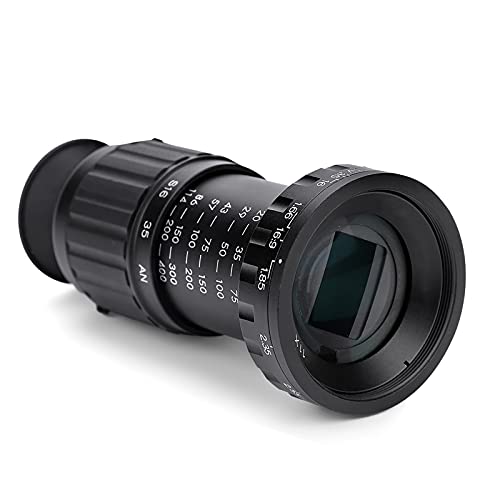
- 11x magnification with multi-coated optics
- Retractable design and locking eyecup
- Supports 16:9 and other standard aspect ratios
Best For: Outdoor shot planning and scene composition checks
Daylight Detail

- 3X optical magnification for daylight viewing
- Adjustable diopter and soft rubber eye patch
- Fits 3.0- and 3.2-inch LCD cameras
Best For: Magnified LCD framing in bright outdoor conditions
Quick Frame
TTARTISAN 35mm Optical Viewfinder
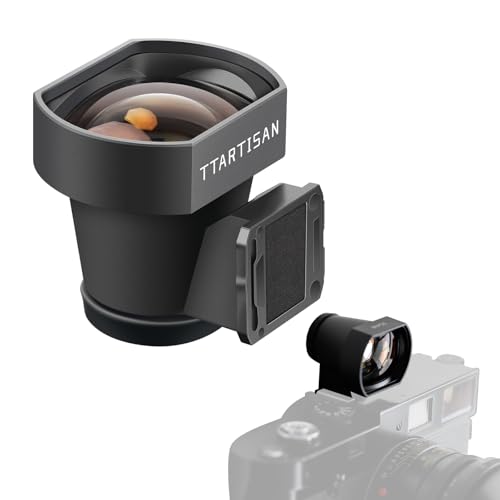
- Bright frame lines for 35mm composition
- Standard hot-shoe mounting
- Lightweight metal construction
Best For: Manual-focus 35mm-equivalent outdoor shooting
Director’s Precision
VD-11X Micro Director Viewfinder

- 11X magnification for detailed scene viewing
- Multi-coated optics and telescopic design
- 37mm thread with broad format compatibility
Best For: Film and TV scene planning across supported formats
Best Bright Monitor – FEELWORLD F5 Prox 5.5" Field Monitor
For outdoor filming, a bright external monitor can make framing and exposure easier than relying on a small camera screen. The FEELWORLD F5 Prox combines a 1600-nit display with focus and exposure tools, making it a practical choice among camera viewfinders for outdoor filming.
Best For: Videographers, vloggers, and filmmakers who need a bright on-camera display for field production.
Pros:
- 1600-nit brightness helps maintain visibility in direct sunlight.
- Focus peaking, waveform, histogram, and false color support accurate monitoring.
- Supports DSLR, mirrorless, and cinema cameras with rig, cage, gimbal, tripod, and handheld mounting.
- Includes LUT preview for monitoring a filming look when shooting Log.
Cons:
- At 2.82 pounds, it is heavier than a simple LCD loupe.
- Requires a lithium-ion battery, which adds another power consideration to a camera setup.
This is the most feature-rich option here for creators who want monitoring tools as well as a larger screen. Its brightness and mounting flexibility are particularly useful outdoors, though compact rigs may need to account for its weight.
Best Compact Loupe – Kamerar CVF-2 LCD Viewfinder
If you want to improve visibility without adding an electronic monitor, the Kamerar CVF-2 uses a 3x magnifier and light-blocking design to make a camera’s LCD easier to view outdoors. It is a straightforward option among camera viewfinders for outdoor filming.
Best For: DSLR and mirrorless users seeking a lightweight loupe for bright outdoor shooting.
Pros:
- 3x focusable magnification enlarges 3.0- and 3.2-inch 16:9 LCD screens.
- Blocks excess light for clearer, higher-contrast viewing in sunlight.
- Eyecup works with either eye and can accommodate eyeglasses.
- Adjustable rubber bands install securely without marking the camera screen.
Cons:
- Compatibility is focused on 3.0- and 3.2-inch 16:9 LCD screens.
- It magnifies the existing LCD rather than providing separate focus or exposure tools.
At only 4 ounces, the CVF-2 is a practical low-bulk solution for improving LCD visibility. Choose it when portability and glare control matter more than the advanced monitoring features of an external field monitor.
Best DSLR Kit – Hoodman Live View Kit
The Hoodman Live View Kit packages a loupe, base components, eyecup, and plate for DSLR live-view shooting. Its light-blocking outdoor loupe makes it a useful traditional choice among camera viewfinders for outdoor filming.
Best For: DSLR owners who want a complete loupe-based live-view setup rather than a standalone accessory.
Pros:
- Designed for all DSLR camera bodies.
- Includes the H30MB HoodLoupe Outdoor Loupe, H32B base, HTE Teardrop HoodEye, and HCP base plate.
- Supports 3-inch LCDs and LCD screens up to 3.2 inches, depending on the included component.
Cons:
- Compatibility is centered on DSLR cameras and specified LCD sizes.
- The 12.8-ounce kit is less minimal than a simple loupe.
- It does not provide electronic monitoring tools such as waveform or histogram functions.
This kit is a sensible pick for DSLR shooters who want the parts needed to build a HoodLoupe live-view arrangement in one package. It is less suitable for users who prefer a compact, universal magnifier or an advanced external monitor.
Best Optical Director Viewer – VD 11X Micro Director's Viewfinder
The VD 11X Micro Director’s HD Viewfinder is an optical scene viewer for checking composition, aspect ratios, and field of view without relying on a camera’s LCD. Its retractable design and multi-coated glass make it a specialized option among camera viewfinders for outdoor filming.
Best For: Directors and photographers who need an optical framing viewer with multiple cinema aspect-ratio markings.
Pros:
- Multi-coated optical glass provides a magnified view for composition and focus checking.
- Supports formats and aspect ratios including 4:3, 16:9, 1.85, 2.2, and 2.4.
- Retractable body and locking eyecup support different viewing setups.
- Built-in 37mm filter thread accepts compatible wide-angle converters.
Cons:
- It is an optical scene viewer, not an electronic camera monitor.
- Its specialized format and aspect-ratio features may be unnecessary for casual shooting.
- It is not water resistant.
This viewer is best suited to deliberate shot planning and cinema-style framing rather than live exposure monitoring. Its optical design can help in bright conditions, while the aspect-ratio options make it more useful for filmmakers working across formats.
Low-Angle Optical Framing – SmallRig 28mm Waist-Level Viewfinder
For outdoor filming and photography, the SmallRig 6127 offers a bright optical alternative to direct eye-level framing. Its 28mm field of view, built-in frame lines, and flip-up hood make it useful when you want a more deliberate waist-level composition in changing light.
Best For: Fujifilm, Nikon, Canon, Sony, Ricoh, and Leica users seeking compact waist-level framing for street photography or low-angle compositions.
Pros:
- 28mm full-frame-equivalent view with 35mm and 50mm bright frame lines.
- Four-element optical design, Fresnel lens, and multi-layer nano AR coating.
- Lightweight 62g aluminum-alloy construction with a secure cold-shoe mount.
- Magnetic protective cover and hood open together to help reduce stray light.
Cons:
- Designed around optical viewing rather than an electronic LCD display.
- The 28mm viewing angle may not suit users who need a narrow telephoto composition.
With its low weight and broad listed camera compatibility, this is a practical choice for outdoor shooters who prefer a compact, observational framing tool and clear optical viewing.
Glare-Free LCD Viewing – Hoodman H32MB HoodLoupe
The Hoodman H32MB is a practical option among camera viewfinders for outdoor filming when sunlight makes an LCD difficult to see. It shades screens up to 3.2 inches, adds 3x magnification, and includes diopter adjustment for a more comfortable viewing setup.
Best For: Outdoor shooters who need glare reduction and magnified viewing from a compatible camera LCD.
Pros:
- Helps provide glare-free viewing of camera LCD screens outdoors.
- Fits LCD screens up to 3.2 inches.
- Offers plus-or-minus 3 diopter adjustment and 3x magnification.
- Optical module can swap between different-size bases.
Cons:
- Compatibility depends on having an LCD screen no larger than 3.2 inches.
- It is a screen loupe rather than a standalone optical viewfinder.
If your main outdoor-filming problem is reflected light on the rear display, the H32MB focuses on the essentials: shading, magnification, and adjustable viewing. Confirm your LCD size before buying.
Director-Style Scene Checking – VD-11X Micro Directors Viewfinder
The VD-11X is a dedicated scene viewer for planning shots rather than monitoring a camera’s rear screen. Its 11x magnification, retractable telescopic design, aspect-ratio support, and 37mm filter thread make it suited to filmmakers checking compositions before outdoor production.
Best For: Directors and photographers who need a portable scene viewer for standard film and TV formats, including 16:9.
Pros:
- 11x magnification with multi-coated optical elements.
- Retractable telescopic design supports different viewing uses.
- Supports standard film and TV aspect ratios, including 16:9.
- 37mm filter thread accepts a compatible wide-angle converter.
Cons:
- It is a scene-planning viewfinder, not a camera-mounted LCD loupe.
- Its 4.9-ounce weight and telescopic form are less minimal than a basic compact viewer.
- Wide-angle converter availability is not included in the supplied details.
Choose the VD-11X when shot planning and format checking matter more than direct camera monitoring. The locking eyecup and aspect-ratio functionality add useful control for production-oriented outdoor work.
Daylight Detail – 3X LCD Viewfinder Magnifier
For outdoor filming, this 3X viewfinder magnifier is designed to make a compatible camera’s LCD easier to inspect in bright daylight. Its optical-glass lens, adjustable diopter, and soft rubber eye patch support a clearer, more comfortable viewing experience.
Best For: Camera operators using 3.0- or 3.2-inch LCD screens who need magnified daylight framing.
Pros:
- 3X magnification helps with detailed scene observation.
- Optical glass is designed to preserve a clear, non-deformed image.
- Includes adjustable diopter and a directional rubber eye setting.
- Offers 1/4-inch and 3/8-inch screw holes for tripod or shoulder-bracket mounting.
Cons:
- Compatibility is centered on 3.0- and 3.2-inch camera LCD screens.
- It adds a separate mounted accessory to the camera setup.
This is a practical choice among camera viewfinders for outdoor filming when your main priority is enlarging an LCD image for daylight composition. Confirm your screen size and mounting arrangement before buying.
Quick Frame – TTARTISAN 35mm Optical Viewfinder
The TTARTISAN 35mm viewfinder offers an LCD-free way to compose with lenses around a 35mm-equivalent focal length. Its bright frame lines, standard hot-shoe mounting, and lightweight metal construction make it a compact option for outdoor camera setups.
Best For: Photographers using manual-focus lenses and a 35mm-equivalent field of view on compatible mirrorless or rangefinder cameras.
Pros:
- Bright, clear frame lines support direct composition.
- Standard hot-shoe connection suits most mirrorless and rangefinder cameras.
- Lightweight 1.76-ounce metal design adds little weight.
- Provides an alternative to composing through the LCD screen.
Cons:
- Designed specifically for 35mm-equivalent lenses rather than variable focal lengths.
- It is an optical framing aid, not a magnified electronic display.
Choose this model if you value a simple, bright composition reference and regularly shoot at the intended 35mm-equivalent perspective. It is less flexible for lenses outside that framing.
Director’s Precision – VD-11X Micro Director Viewfinder
The VD-11X Micro Director is a high-magnification optical scene viewer for film, television, and photography work. With 11X magnification, multi-coated optical elements, a telescopic design, and support for multiple formats, it is aimed at precise scene planning rather than everyday camera-screen viewing.
Best For: Film and TV users who need detailed optical framing across supported formats and have a 37mm filter-thread connection or compatible setup.
Pros:
- 11X magnification supports detailed framing and scene evaluation.
- Multi-coated optical elements are designed for a clear viewing experience.
- Telescopic design accommodates different shooting scenarios.
- Eyecup lock rings help keep aspect-ratio rings positioned securely.
Cons:
- Compatibility depends on a 37mm filter thread and supported camera or film formats.
- The product is not water resistant.
- Its specialized high magnification may be excessive for simple outdoor composition.
This is the most specialized option here for production planning and precise format-based framing. Check the 37mm connection and your required format before treating it as one of your camera viewfinders for outdoor filming.
How We Picked the Best Camera Viewfinders for Outdoor Filming
We focused on the viewing problems that matter most outside: direct sunlight, reflections, difficult viewing angles, manual-focus accuracy, portability, and compatibility. The selection includes powered monitors for larger, more detailed displays; LCD loupes for shielding a camera’s built-in screen; and optical viewfinders for composition, lens planning, or lightweight field work.
We also considered mounting options, magnification, construction, power requirements, and whether a product is best suited to DSLR, mirrorless, cinema, or director-style use. Because these tools solve different problems, the best choice depends on your workflow rather than magnification alone.
Quick Comparison
| Type | Best for | Main advantage | Potential trade-off |
|---|---|---|---|
| High-brightness monitor | Video crews and focus-critical shooting | Large, bright image with monitoring tools | Needs batteries, cables, and a mount |
| LCD loupe | DSLR and mirrorless operators | Blocks glare while magnifying the camera screen | Depends on the camera’s screen size and layout |
| Optical director’s viewfinder | Shot planning and lens visualization | Lightweight, battery-free framing reference | Does not display the live camera image |
| External optical viewfinder | Minimalist handheld or street setups | Compact composition aid | Limited information compared with an electronic monitor |
Key Buying Factors for Camera Viewfinders for Outdoor Filming
Sunlight Performance
For a live electronic display, look for high brightness and a genuinely effective hood or loupe. A shade helps, but it cannot compensate for a dim panel in harsh midday sun. Optical finders avoid screen glare entirely, although they cannot show focus peaking, exposure, or the recorded image.
Magnification and Focus Control
Magnification can make manual focus easier, but excessive magnification narrows your view and may slow composition. Check whether the finder provides a clear, distortion-controlled image and whether its diopter or adjustment range suits your eyesight.
Fit and Compatibility
Confirm the camera’s LCD dimensions before choosing a loupe. Also check whether the product uses a dedicated base, cold shoe, magnetic mount, or a 37mm filter thread. A secure attachment matters when filming handheld or moving between locations.
Weight, Power, and Accessories
External monitors add useful tools but also add batteries, cables, and rig weight. Optical finders are simpler for lightweight setups. Factor in mounting hardware, protective cases, spare batteries, and room around the camera’s ports and controls.
Who Should Buy Which Camera Viewfinders for Outdoor Filming?
Choose a high-brightness monitor such as the FEELWORLD option if you need a large live image, stronger visibility, and video-assist features. Choose a Hoodman or similar LCD magnifier if you already like your camera’s display and mainly need glare protection and a more stable viewing position.
Director’s viewfinders from the VD range are better for planning shots, checking field of view, or scouting locations than for monitoring a live feed. SmallRig and TTARTISAN optical finders suit compact rigs where low weight and quick framing matter more than on-screen exposure data. Before buying, prioritize the display type, camera fit, and outdoor brightness that match your actual shooting conditions.