
A dependable viewfinder can make a major difference when you are pulling focus, judging exposure, or composing a shot in bright outdoor conditions. The right option depends on your camera system, output connections, mounting points, and whether you need an electronic display or a simple optical aid.
We compare 10 camera viewfinders for cinema cameras across dedicated EVFs, HDMI monitors, optical finders, and LCD magnifiers so you can choose a practical match for your workflow and budget.
Best 10 Camera Viewfinders for Cinema Cameras Picks for 2026
Native 6K Pro Upgrade
Blackmagic Pocket Cinema Camera Pro EVF
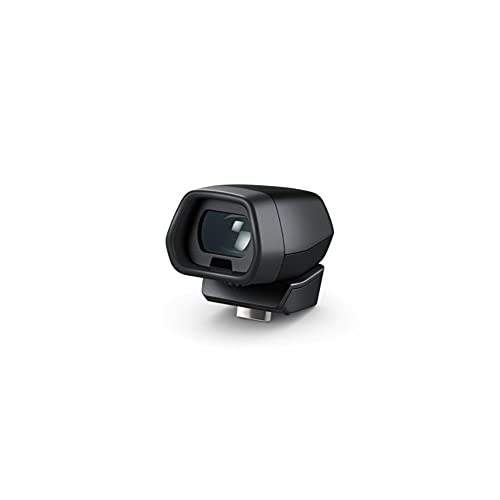
- Dedicated for the Pocket Cinema Camera 6K Pro
- -4 to +4 dioptre compensation
- Proximity sensor and integrated status information
Best For: Blackmagic Pocket Cinema Camera 6K Pro owners
Feature-Rich HDMI Monitoring
Portkeys LEYE III HDMI Electronic Viewfinder

- +8D to -3D adjustable diopter
- 1440x900 LCD with 2.9-inch screen
- Waveform, false color, peaking, LUTs, and more
Best For: HDMI cinema rigs needing comprehensive monitoring tools
Optical Framing Tool
Hilitand Director's HD Viewfinder 11X

- 11x magnification with multi-coated optics
- Supports common film and TV aspect ratios
- 37mm thread for a wide-angle converter
Best For: Optical framing, composition checks, and shot previsualization
Tilting fp-Series Viewing
Sigma EVF-11 Electronic Viewfinder

- Designed for SIGMA fp-series cameras
- 90-degree upward tilt
- Audio monitoring and portable SSD recording support
Best For: SIGMA fp-series video shooters
Best LCD Magnifier

- 3x focusable LCD magnification
- Blocks light for bright conditions
- Fits many 3.0- and 3.2-inch 16:9 screens
Best For: Bright-day shooting with compatible LCD screens
Best Optical Framing Finder

- Bright 28mm, 35mm, and 50mm framelines
- Six optical glass lenses
- Lightweight aluminum-alloy body
Best For: Quick composition on compatible rangefinder and mirrorless cameras
Best Adjustable LCD Loupe

- 3x magnification for 3.0- and 3.2-inch screens
- Adjustable diopter and eye setting
- High-definition optical glass
Best For: Daylight video monitoring and focus assistance
Retro Optical Framing
SmallRig 28mm External Viewfinder

- Bright five-group optical glass with up to 98% transmission
- Fixed 28mm full-frame-equivalent view with 3:2 frame lines
- Cold shoe mount with protective silicone pad
Best For: Compatible camera users wanting an optical, retro-style framing aid
LCD Daylight Magnifier

- 3X magnification for enlarged LCD monitoring
- Adjustable diopter with soft rubber eye contact
- Mounts through 1/4-inch or 3/8-inch screw holes
Best For: Daylight monitoring and focusing on 3.0- or 3.2-inch screens
Accessible Video Monitoring

- 3X amplification for enlarged video details
- Adjustable diopter and rubber eye setting
- Soft rubber viewing surface for comfort
Best For: Video monitoring and focus observation on compatible 3.0- or 3.2-inch screens
Native 6K Pro Upgrade – Blackmagic Pocket Cinema Camera Pro EVF
For filmmakers seeking camera viewfinders for cinema cameras, this electronic viewfinder is a direct fit for the Blackmagic Design Pocket Cinema Camera 6K Pro. It combines a proximity sensor, four-part glass diopter, integrated status information, and dioptre compensation from -4 to +4.
Best For: Blackmagic Pocket Cinema Camera 6K Pro users who want a dedicated electronic viewfinder with adjustable diopter control.
Pros:
- Designed specifically for the Blackmagic Pocket Cinema Camera 6K Pro.
- Provides -4 to +4 dioptre compensation.
- Includes a proximity sensor and integrated status information.
- Uses a four-part glass diopter and offers a digital test chart.
Cons:
- Compatibility is listed for the Pocket Cinema Camera 6K Pro.
- It is not water resistant.
This is the most purpose-built option in the group for 6K Pro owners. Its dedicated fit and built-in shooting information make it a practical choice when an integrated Blackmagic viewing solution matters more than broad camera compatibility.
Feature-Rich HDMI Monitoring – Portkeys LEYE III HDMI Electronic Viewfinder
Portkeys LEYE III 4K HDMI Electronic Viewfinder 2.4 Inch LCD Monitor [Adjustable +8D~-3D]
Check Price On AmazonThe Portkeys LEYE III is a flexible choice among camera viewfinders for cinema cameras, with an HDMI electronic viewfinder, adjustable +8D to -3D diopter, and a 2.9-inch LCD offering 1440×900 effective resolution. Its monitoring tools are suited to users who want more than a basic display.
Best For: Shooters who need adjustable eyesight correction and on-set exposure, focus, framing, and audio-monitoring tools in an HDMI EVF.
Pros:
- Adjustable +8D to -3D diopter accommodates different eyesight needs.
- 2.9-inch LCD provides 1440×900 effective resolution, 8-bit color, and a 1100:1 contrast ratio.
- Includes 3D LUT, waveform, histogram, peaking, false color, zebra, guides, and audio meters.
- Metal rear cover is CNC processed for added durability.
Cons:
- Its 300-nit brightness may be limiting in very bright conditions.
- It uses a Canon E6 battery, which must be available for operation.
The LEYE III stands out for its extensive monitoring feature set and broad diopter range. It is a strong option for HDMI-based rigs, especially when waveform, false color, peaking, and other exposure aids are important to your workflow.
Optical Framing Tool – Hilitand Director's HD Viewfinder 11X
Unlike electronic camera viewfinders for cinema cameras, the Hilitand Director’s HD Viewfinder is a compact optical framing accessory. Its multi-coated optics, 11x magnification, telescopic design, and aspect-ratio support make it useful for previewing compositions across common film and television formats.
Best For: Directors, cinematographers, and photographers who want a portable optical tool for checking framing and aspect ratios before or during production.
Pros:
- Offers 11x magnification with multi-coated optical elements.
- Telescopic design can be pulled out for different uses.
- Supports standard film and TV aspect ratios, including 16:9.
- 37mm filter thread accepts a 37mm wide-angle converter.
Cons:
- It is an optical director’s viewfinder rather than an electronic camera monitor.
- The supplied notes do not list electronic camera connectivity or on-screen monitoring tools.
This model is best viewed as a composition and previsualization accessory, not a replacement for an electronic EVF. Its strong magnification, telescoping body, and 37mm thread add useful flexibility for planning shots and checking framing.
Tilting fp-Series Viewing – Sigma EVF-11 Electronic Viewfinder
The Sigma EVF-11 is a dedicated electronic viewfinder for the SIGMA fp series. For filmmakers comparing camera viewfinders for cinema cameras, its large viewing design, 90-degree upward tilt, and visibility-focused interface make it a practical fit for unusual shooting angles and extended monitoring.
Best For: SIGMA fp-series users who want a larger, tilting electronic viewfinder with audio monitoring and external SSD recording support.
Pros:
- Compatible with the SIGMA fp series.
- 90-degree upward tilting mechanism supports flexible viewing angles.
- Large viewfinder design prioritizes clarity and comfort.
- Supports audio monitoring during video capture and external recording to a portable SSD.
Cons:
- Compatibility is listed for SIGMA fp-series cameras.
- The supplied specifications do not identify a broader camera compatibility range.
The EVF-11 is a focused accessory for the Sigma fp ecosystem rather than a universal cinema-camera viewfinder. Its tilting mechanism and production-oriented features make it particularly appealing for fp-series users who need comfortable viewing and additional video workflow support.
Best LCD Magnifier – Kamerar CVF-2
For filmmakers comparing camera viewfinders for cinema cameras, the Kamerar CVF-2 is a practical LCD magnifier for compatible 3.0- and 3.2-inch 16:9 screens. Its light-blocking design and 3x magnification can make monitoring and focusing easier in bright conditions.
Best For: Shooters who need a stable, enlarged view of a compatible camera LCD outdoors or in bright light.
Pros:
- Compatible with most 3.0- and 3.2-inch 16:9 LCD screens.
- Provides 3x, focusable magnification with edge-to-edge viewing.
- Blocks excess light and supports either left- or right-eye viewing, including with eyeglasses.
- Mounts with adjustable rubber bands without leaving marks.
Cons:
- Limited to compatible 3.0- and 3.2-inch 16:9 LCD screens.
- Uses a rubber-band mounting system rather than a dedicated camera-specific mount.
The CVF-2 is a straightforward choice when screen visibility and focus checking matter more than a built-in electronic display. Confirm your LCD size and aspect ratio before buying.
Best Optical Framing Finder – LightMate OV-X2
Among camera viewfinders for cinema cameras and compact digital setups, the LightMate OV-X2 stands out as an optical framing accessory rather than an LCD loupe. Its bright 28mm, 35mm, and 50mm framelines support quick composition on compatible rangefinder and mirrorless cameras.
Best For: Photographers and filmmakers who want a lightweight optical finder with fixed wide-to-normal framing references.
Pros:
- Includes bright framelines for 28mm, 35mm, and 50mm fields of view.
- Uses six high-transmittance optical glass lenses for a clear view.
- Aluminum-alloy construction is lightweight, sturdy, and scratch-resistant.
- Adjustable cold-shoe positions help accommodate different shoe locations.
Cons:
- Its approximately 0.5x magnification and 1.2 cm eye relief may not suit every user.
- Compatibility excludes special mounts such as the Canon R50V.
- Framing is limited to the built-in 28mm, 35mm, and 50mm lines.
The OV-X2 is best viewed as a compact composition tool for supported cameras, not a replacement for an electronic or LCD viewfinder. Check the camera’s cold-shoe compatibility before choosing it.
Best Adjustable LCD Loupe – LIZEALUCKY 3X Viewfinder
The LIZEALUCKY LCD viewfinder is a simple option for buyers comparing camera viewfinders for cinema cameras, camcorders, and DSLR or SLR systems. It enlarges a compatible 3.0- or 3.2-inch screen three times, helping users inspect shooting details and focus in daylight.
Best For: Video shooters who want a magnified screen view with adjustable diopter control and a softer eyecup.
Pros:
- Provides 3x magnification for observing details and assisting focus.
- Uses high-definition optical glass designed to preserve the original image without deformation.
- Includes an adjustable diopter and repositionable rubber eye setting.
- Soft rubber padding is intended to improve comfort against the face.
Cons:
- Designed for 3.0- and 3.2-inch LCD screens, so compatibility should be verified.
- The supplied notes do not specify a particular mounting method or camera-specific fit.
- At 13.4 ounces, it is heavier than some compact viewfinder accessories.
This model suits users who prioritize a clear, enlarged LCD image and adjustable viewing comfort. Check the screen dimensions and mounting compatibility before adding it to a rig.
Retro Optical Framing – SmallRig 28mm External Viewfinder
For photographers and filmmakers seeking camera viewfinders for cinema cameras or compact mirrorless setups, the SmallRig 5873 offers a bright optical framing aid with a retro shooting feel. Its fixed 28mm full-frame-equivalent view, built-in 3:2 frame lines, and cold shoe mounting make it useful for quick composition without relying entirely on the rear screen.
Best For: Shooters who want an external optical composition aid for compatible cameras, especially when glare or screen viewing is inconvenient.
Pros:
- Five groups of optical glass provide up to 98% light transmission.
- Built-in 3:2 frame lines help define the composition.
- Cold shoe mounting and a silicone base pad support straightforward, scratch-conscious installation.
- Broad compatibility includes selected Fujifilm, Nikon, Canon, Sony, Ricoh, and Leica cameras.
Cons:
- Uses a fixed -0.52D diopter rather than an adjustable diopter.
- The 28mm framing is fixed; APS-C users may need an 18mm lens for a matching experience.
- Optimal viewing requires a centered eye position close to the eyepiece.
The SmallRig 5873 is a specialized optical accessory rather than a magnifying LCD loupe. Confirm camera compatibility and consider its fixed diopter and focal-length-specific framing before buying.
LCD Daylight Magnifier – 3X Camera Viewfinder Loupe
This 3X camera viewfinder is designed to enlarge and shade the image from a 3.0- or 3.2-inch LCD screen. For video work and camera viewfinders for cinema cameras, its adjustable diopter, soft rubber eyepiece, and tripod or shoulder-bracket mounting options can make daylight monitoring and focusing more comfortable.
Best For: DSLR, mirrorless, and camcorder users who need a magnified LCD view for daylight shooting or macro observation.
Pros:
- 3X magnification provides a larger view for observing shooting details.
- Optical glass is designed to preserve a clear, non-deformed image.
- Adjustable diopter and directional rubber eye setting allow viewing adjustments.
- Supports 1/4-inch and 3/8-inch mounting holes for tripod or shoulder-bracket setups.
Cons:
- Compatibility is centered on 3.0- and 3.2-inch LCD screens.
- At 12.6 ounces, it adds noticeable weight to a camera rig.
- Installation requires attaching the bottom plate with fixing screws.
This loupe is a practical choice when screen magnification and daylight viewing matter more than a compact build. Verify your screen size and mounting arrangement before adding it to a rig.
Accessible Video Monitoring – ST-1 3X Screen Viewfinder
The ST-1 3X screen viewfinder helps users observe video details through a magnified camera display. As an option among camera viewfinders for cinema cameras and other video rigs, it combines high-definition optical glass, adjustable diopter control, and a soft rubber viewing surface for more comfortable daylight monitoring.
Best For: Video shooters who want a 3X enlarged view of a 3.0- or 3.2-inch camera screen, including users who benefit from easier detail and focus observation.
Pros:
- 3X amplification enlarges the camera screen for detail and focus checks.
- High-quality optical glass is designed to avoid image deformation or incomplete framing.
- Adjustable diopter and adjustable rubber eye setting support personalized viewing.
- Soft rubber contact improves comfort during use.
Cons:
- The supplied details do not specify mounting hardware or mounting-hole compatibility.
- It is intended for 3.0- or 3.2-inch screens, limiting broader screen compatibility.
- Its 12.8-ounce weight may be significant on a lightweight setup.
The ST-1 focuses on straightforward magnified screen viewing rather than optical camera framing. It is worth considering for video detail checks, provided your camera has a compatible screen size and your rig can accommodate its weight.
How We Picked These Camera Viewfinders for Cinema Cameras
We focused on compatibility, viewing quality, mounting flexibility, and the type of shooting each design supports. Dedicated electronic viewfinders and HDMI EVFs can provide a more complete monitoring experience, while optical viewfinders and LCD magnifiers are often lighter, simpler, and less expensive. We also considered screen size, magnification, adjustment range, connection requirements, and whether a product is intended for a specific camera or a broader range of bodies.
Before buying, verify the exact camera model, available video outputs, accessory ports, screen dimensions, and mounting hardware. Product names can suggest broad compatibility, but physical fit and signal support ultimately determine whether a viewfinder will work.
Quick Comparison
- Dedicated camera EVFs: Best when you want an integrated, high-quality viewing solution designed for a particular camera system.
- HDMI electronic viewfinders: Useful for cameras with compatible HDMI output and for operators who need adjustable diopter control or monitor features.
- LCD magnifiers: A practical choice for cameras with 3-inch or 3.2-inch rear screens, especially when glare and focus visibility are problems.
- Optical viewfinders: Best for framing without relying on battery power or an electronic signal, though they do not display camera information or a live sensor feed.
Key Buying Factors for Camera Viewfinders for Cinema Cameras
Compatibility and Signal Support
Check whether the viewfinder connects through HDMI, a proprietary interface, a cold shoe, or direct physical contact with the camera screen. Electronic models may require a specific resolution, cable, or camera output mode.
Magnification and Diopter Adjustment
Higher magnification can make manual focusing easier, but it may reduce the visible frame area. A built-in diopter or adjustable eyepiece helps accommodate different eyesight and is especially valuable during long takes.
Outdoor Visibility and Light Control
A loupe or enclosed eyepiece can block stray light and improve contrast on a rear LCD. Electronic displays may offer better visibility and monitoring tools, but they add power demands and require a reliable signal.
Mounting and Balance
Consider cold-shoe placement, rods, cage compatibility, and the added weight on the camera rig. A lightweight magnifier may suit handheld work, while a dedicated EVF can be more comfortable on a shoulder or studio setup.
Who Should Buy Which Camera Viewfinders for Cinema Cameras?
Choose a dedicated EVF if you use a compatible cinema camera regularly and want the most integrated operating experience. Choose an HDMI EVF if your camera provides a suitable HDMI feed and you need flexible positioning or adjustable viewing.
Choose an LCD magnifier if your main issue is glare, small on-screen details, or difficulty focusing through the camera’s existing display. These are often the simplest upgrade for DSLR-style bodies and compact cinema cameras. Choose an optical viewfinder if you primarily need framing guidance, prefer a battery-free accessory, or work with a camera system designed around optical composition.
For professional production, prioritize reliable compatibility and ergonomic placement over headline magnification. A viewfinder that stays securely mounted, remains visible in your shooting conditions, and matches your camera’s output is usually more valuable than one with the most specifications on paper.