
Replacing or deploying drives on Windows is easier when you can clone storage directly, without installing software or tying up a desktop. The best hard drive duplicators for Windows support common 2.5-inch and 3.5-inch SATA drives, provide clear status indicators, and preserve the source drive reliably.
This roundup compares ten standalone duplicators and docking stations for home upgrades, IT work, backups, drive sanitization, and multi-drive deployment. Check interface support, duplication speed, drive capacity limits, and whether the unit can clone one drive to several targets before choosing.
Best 10 Hard Drive Duplicators for Windows Picks for 2026
Best Overall SATA Pick
Standalone Dual-Bay SATA Duplicator

- Standalone sector-by-sector cloning
- Supports 2.5/3.5-inch SATA HDDs and SSDs
- USB 3.0 and eSATA dock functionality
Best For: SATA drive cloning and drive access without a PC
Best Fast SATA Cloner
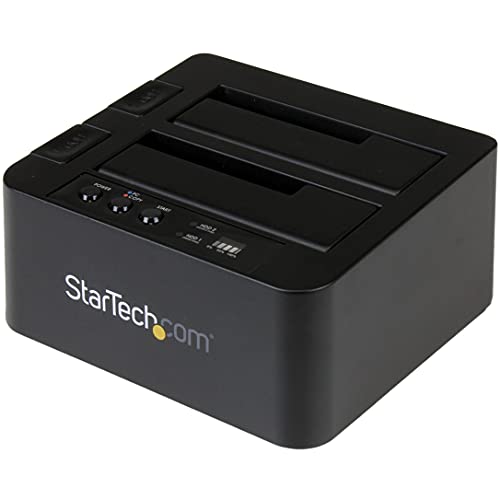
- Cloning speeds up to 28 GB/min
- USB 3.2 Gen 2 and SATA III connectivity
- TRIM and 4Kn support
Best For: Faster standalone SATA cloning and drive docking
Best Budget-Friendly Dock

- Offline cloning with no drivers required
- Supports 2.5/3.5-inch SATA drives
- Up to 10TB drive support
Best For: Simple home cloning and SATA drive access
Best M.2 and SATA Solution
NVMe/SATA Duplicator and Eraser

- Clones NVMe, M.2 SATA, and SATA drives
- Five configurable erase modes
- On-screen controls and HPA settings
Best For: Mixed-format cloning and secure drive sanitization
Best Standalone 1:1 Duplicator

- Standalone operation requires no computer or software
- Supports 2.5-inch and 3.5-inch SATA HDDs and SSDs
- Copies and sanitizes at up to 90MB per second
Best For: One-to-one SATA drive copying and erasure
Best Dual-Bay Dock
ORICO Offline Clone Docking Station

- Clones drives offline with a dedicated button
- Supports two SATA drives and up to 44TB total
- Also works as a USB 3.0 Windows drive dock
Best For: Offline cloning plus everyday drive access
Best Multi-Drive Copier
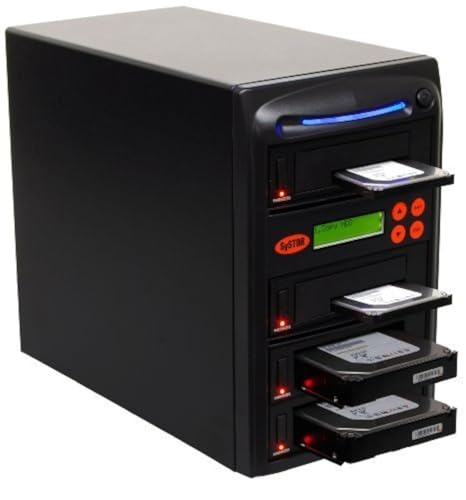
- Copies one source to up to three drives at once
- Standalone operation needs no computer or software
- Supports data copying, whole-drive duplication, and sanitization
Best For: Technicians and businesses preparing multiple SATA drives
Best Dual-Bay Pick

- Offline one-key cloning without a computer
- Dual bays support 2.5-inch and 3.5-inch SATA drives
- Up to 5Gbps USB transfer and 40TB total bay capacity
Best For: Home users and technicians handling SATA backups or migrations
Best High-Volume Copier

- Copies up to five drives simultaneously
- Standalone operation needs no computer or software
- Supports data copying, whole-drive copying, and DoD sanitization
Best For: Repair shops and IT teams processing multiple SATA drives
Best Sanitization Features

- 1:5 standalone copying at up to 120MB/s
- Multiple erase modes, including DoD seven-pass
- Supports NTFS, FAT, and Linux data-copy formats
Best For: Businesses combining batch duplication with configurable drive erasure
Best Overall SATA Pick – Standalone Dual-Bay SATA Duplicator
For shoppers comparing hard drive duplicators for Windows, the StarTech SDOCK2U33RE is a versatile standalone option for cloning 2.5- and 3.5-inch SATA drives without a computer. It also works as a USB 3.0 or eSATA drive dock for accessing disks.
Best For: Windows users and IT technicians who need sector-by-sector SATA cloning plus occasional drive-docking functionality.
Pros:
- Clones SATA HDDs and SSDs without requiring a PC or operating system.
- Supports 2.5- and 3.5-inch SATA I/II/III drives, including 4Kn media.
- Works with any file format and copies empty sectors as part of the full-drive process.
- Includes USB-A and eSATA cables, a universal power adapter, and a two-year warranty.
Cons:
- The target drive must be equal to or larger than the source drive.
- It does not natively support M.2 drives, and the IDE adapter is sold separately.
With its dual-bay, tool-free design and OS-independent operation, this is a practical choice when you want one device for SATA duplication and drive access. Its 22 GB/min listed cloning speed is useful for routine migrations and recovery work.
Best Fast SATA Cloner – 28GB/min Dual-Bay SATA Dock
The StarTech SDOCK2U313R is a strong choice among hard drive duplicators for Windows when speed and modern host connectivity matter. Its standalone copier handles 2.5- and 3.5-inch SATA drives without a computer and can also serve as a USB-to-SATA dock.
Best For: Users who want faster standalone SATA cloning with USB 3.2 Gen 2 connectivity and TRIM support.
Pros:
- Lists standalone duplication speeds of up to 28 GB/min.
- Supports 2.5- and 3.5-inch SATA HDDs and SSDs, including 4Kn drives.
- Includes USB-C-to-B and USB-A-to-B cables for flexible computer connections.
- Features SATA III, TRIM, tool-free loading, and a two-year warranty.
Cons:
- The target disk must be equal to or larger than the source disk.
- It is designed for SATA drives; an IDE adapter must be purchased separately.
This model is especially appealing for repeated SATA cloning jobs where the higher listed duplication speed can reduce waiting time. Its dual-bay design and USB docking mode also make it useful beyond one-time migrations.
Best Budget-Friendly Dock – Sabrent Dual-Bay SATA Cloner
The Sabrent EC-HD2B keeps the hard drive duplicators for Windows concept straightforward: insert two SATA drives, clone offline, or connect the dock over USB 3.0 for drive access. It supports both desktop-size and laptop-size SATA storage.
Best For: Home users who need an uncomplicated dual-bay SATA dock and offline cloner with support for high-capacity drives.
Pros:
- Supports standard 2.5- and 3.5-inch SATA hard drives and SSDs.
- Offers offline cloning without drivers or a connected computer.
- Supports drives up to 10TB and USB 3.0 transfer speeds up to 5Gbps.
- Includes the docking station, power supply, USB 3.0 cable, and manual.
Cons:
- The listed offline cloning speed is up to 60Mbps, slower than the StarTech alternatives here.
- It does not provide the supplied StarTech models’ eSATA, USB-C, or 4Kn-specific feature set.
- The standard warranty is one year unless registration extends coverage to two years.
Its plug-and-play setup and broad SATA form-factor support make this a sensible option for occasional backups, upgrades, and drive reading. Consider it when basic offline cloning is more important than advanced sanitization or maximum stated speed.
Best M.2 and SATA Solution – NVMe/SATA Duplicator and Eraser
For advanced hard drive duplicators for Windows workflows, the StarTech SM2DUPE11 adds M.2 support to traditional SATA cloning. It can duplicate M.2 NVMe, M.2 SATA, and 2.5- or 3.5-inch SATA drives without a PC or cloning software.
Best For: IT professionals who need cross-format drive duplication plus configurable erasure and sanitization options.
Pros:
- Clones between M.2 NVMe, M.2 SATA, and 2.5/3.5-inch SATA drives.
- Supports M.2 sizes from 2230 through 22110 and multiple duplication modes.
- Provides five erase modes, including Secure Erase options aligned with NIST SP 800-88 Rev. 1.
- Offers an on-screen display, error reporting, HPA controls, and a two-year warranty.
Cons:
- Its listed cloning speed is up to 7.5GB/min, lower than the fastest SATA-focused model here.
- It is more specialized and likely more capability than needed for basic SATA-only cloning.
- IDE and mSATA support requires separately sold adapters.
This is the most versatile selection for mixed storage environments and secure drive retirement. The configurable duplication and erase modes make it better suited to managed IT, refurbishment, and data-sanitization tasks than simple home migrations.
Best Standalone 1:1 Duplicator – Systor SYS101HS-DP
For buyers comparing hard drive duplicators for windows, the Systor SYS101HS-DP is a standalone option that copies one source drive to one target drive without a computer or software. It supports both 2.5-inch and 3.5-inch SATA HDDs and SSDs, with speeds up to 90MB per second.
Best For: Home users and businesses that need direct one-to-one SATA drive duplication or drive erasure.
Pros:
- Operates without a computer or software.
- Supports 2.5-inch and 3.5-inch SATA HDDs and SSDs without an adapter.
- Copies at up to 90MB per second, even as the number of loaded drives increases.
- Includes DoD 5220.22-M-compliant sanitization and long-term technical support.
Cons:
- Its 1:1 design handles only one target drive per duplication cycle.
- Compatibility is focused on SATA drives.
The SYS101HS-DP is a practical choice when simplicity and repeatable one-to-one copying matter more than connecting through a PC. Its standalone operation and sanitization mode also make it useful for routine drive preparation and disposal workflows.
Best Dual-Bay Dock – ORICO Offline Clone Docking Station
Among hard drive duplicators for windows, the ORICO dual-bay docking station stands out as a compact dock that can clone drives offline or connect to a Windows computer over USB 3.0. It accepts 2.5-inch and 3.5-inch SATA HDDs and SSDs and supports capacities up to 44TB total.
Best For: Windows users who want a dual-purpose drive dock for offline cloning, backups, and file transfers.
Pros:
- Performs offline cloning without a connected computer.
- Supports two 2.5-inch or 3.5-inch SATA drives and up to 44TB total capacity.
- USB 3.0 with UASP and TRIM supports transfer speeds up to 5Gbps.
- Toolless design enables quick drive swapping and supports multiple operating systems.
Cons:
- The target disk must be larger than the source disk for offline cloning.
- It requires its included external power adapter.
- The dock does not power on without a hard drive inserted.
The ORICO is more flexible than a dedicated standalone duplicator because it also functions as a USB drive dock. Its offline clone button simplifies direct copying, while the dual-bay design is useful for accessing or transferring data between SATA drives.
Best Multi-Drive Copier – Systor SYS103HS-DP
For users handling several drives, the Systor SYS103HS-DP is a strong choice among hard drive duplicators for windows because it is a standalone 1:3 copier and sanitizer. It supports 2.5-inch and 3.5-inch SATA HDDs and SSDs and can copy to multiple drives simultaneously at up to 90MB per second.
Best For: Businesses, technicians, and users who need to produce multiple SATA drive copies in one cycle.
Pros:
- Copies one source drive to up to three target drives simultaneously.
- Requires no computer or software.
- Supports 2.5-inch and 3.5-inch drives without an adapter.
- Offers whole-drive or data-only copying plus DoD 5220.22-M-compliant erasure.
Cons:
- Its SATA-focused design does not indicate support for other drive interfaces.
- It is more specialized than a basic USB drive dock.
The SYS103HS-DP is designed for throughput rather than casual file access. Its 1:3 configuration can reduce repeated copying steps, making it especially useful for deployment, replacement-drive preparation, and sanitization tasks.
Best Dual-Bay Pick – USB-C SATA Cloner Dock
For buyers seeking hard drive duplicators for windows, this dual-bay SATA dock offers a straightforward mix of offline cloning and computer-connected storage access. It supports 2.5-inch and 3.5-inch SATA drives, transfers data over USB 3.2 Gen 1 at up to 5Gbps, and can clone drives without a computer.
Best For: Home users, technicians, and anyone migrating or backing up SATA drives without installing them in a PC.
Pros:
- One-key offline cloning with LED progress indicators.
- Supports both 2.5-inch and 3.5-inch SATA drives, with up to 20TB per bay.
- Tool-free vertical insertion, UASP, TRIM, and S.M.A.R.T. support.
Cons:
- USB transfer speed is rated at up to 5Gbps rather than faster USB generations.
- Designed for SATA drives only.
This is the most flexible option for occasional cloning and everyday drive access. Its two-bay design and broad operating-system compatibility make it especially convenient for Windows workstations and mixed-device setups.
Best High-Volume Copier – Systor 1:5 SATA Duplicator
Among hard drive duplicators for windows, the Systor SYS105HS-DP is built for repeated standalone copying and sanitization. It can duplicate up to five SATA hard drives or SSDs simultaneously at speeds up to 90MB per second, without requiring a computer or software.
Best For: IT departments, repair shops, and workflows that need to copy or erase several SATA drives at once.
Pros:
- 1:5 standalone duplication for higher-volume work.
- Supports both whole-drive and data-only copying.
- Includes drive erasing compliant with DoD 5220.22-M sanitization.
- Fits 2.5-inch and 3.5-inch drives without an adapter.
Cons:
- At 26 pounds, it is substantially less portable than a small docking station.
- Its listed transfer rate is lower than the fastest modern USB-based storage interfaces.
The Systor is a purpose-built production tool rather than a casual desktop dock. Its simultaneous-copy capability, sanitization function, and long technical-support coverage are strong reasons to consider it for professional Windows-based workflows.
Best Sanitization Features – DupliM 1:5 Drive Copier
DupliM 1:5 SSD HDD SATA Duplicator and Hard Drive Sanitizer Stand-Alone Cloner Copier Burner
Check Price On AmazonThis DupliM unit is one of the more specialized hard drive duplicators for windows, combining standalone 1:5 copying with multiple drive-erasure modes. It supports 3.5-inch SATA HDDs and SSDs directly, while 2.5-inch drives require optional adapters.
Best For: Businesses that need configurable drive sanitization alongside batch duplication.
Pros:
- Copies up to five SATA drives at speeds up to 120MB per second.
- Offers secure erase, quick erase, one-pass, three-pass, verified three-pass, and DoD seven-pass options.
- Supports FAT16/32, Linux ext2/3/4, and NTFS data-copy formats.
- Includes HPA copy support and 768MB buffer memory.
Cons:
- 2.5-inch drives need optional adapters that are not included.
- Its 19-pound chassis is intended more for a fixed workspace than travel.
- Listed maximum drive capacity is over 8TB, which may be limiting for larger current drives.
The DupliM stands out when erasure controls matter as much as duplication. Its broad sanitization menu and 120MB/s rated speed make it a strong fit for Windows data-retirement and refurbishment workflows, provided the drive-size requirements match your inventory.
How We Picked the Best Hard Drive Duplicators for Windows
We focused on standalone duplicators and cloner docks that work with storage commonly used in Windows PCs, including 2.5-inch and 3.5-inch SATA HDDs and SSDs. The selection covers simple dual-bay docks, USB-connected units, models with eSATA or USB-C, and dedicated 1:3 or 1:5 duplicators for repeated deployments.
We also considered practical factors such as advertised copy speed, supported drive formats, offline operation, erase or sanitization functions, capacity claims, status controls, and the difference between one-to-one cloning and multi-target duplication. A duplicator copies data; it does not automatically make a complete backup strategy, so keep the source drive and verify the result before wiping anything.
Quick Comparison
| Type | Best for | What to check |
|---|---|---|
| Dual-bay SATA dock | Occasional upgrades and drive access | Drive-size support, offline clone mode, host connection |
| M.2 and SATA duplicator | Mixed modern and legacy storage | NVMe versus SATA M.2 compatibility and keying |
| 1:1 standalone duplicator | Independent cloning or erasing | Source/target capacity and supported sector layouts |
| 1:3 or 1:5 duplicator | IT departments and batch deployment | Simultaneous target support, speed, and cooling |
Key Buying Factors for Hard Drive Duplicators for Windows
Drive Type and Physical Fit
Confirm whether the unit accepts 2.5-inch and 3.5-inch SATA drives, and whether it supports both HDDs and SSDs. M.2 compatibility requires extra care: M.2 SATA and M.2 NVMe are different protocols, while B-key, M-key, and B+M-key drives may not all fit or function in the same bay.
Clone Method and Capacity
Standalone cloning is convenient because the source and target drives operate without Windows software. In most cases, the target should be at least as large as the source, even when the source contains relatively little data. For multi-drive units, check whether all targets must match the source capacity.
Speed and Connectivity
Advertised rates are maximums and depend on the drive, data pattern, and interface. USB 3.0 or USB-C is useful when the dock also serves as an external reader; eSATA can be helpful on compatible systems. Offline duplication speed matters most when copying large drives regularly.
Erasing and Verification
If retiring drives, choose a model with a documented erase or sanitization mode rather than assuming cloning hardware securely wipes data. For important Windows installations, boot from the cloned drive and inspect partitions, recovery tools, and files before changing the original.
Who Should Buy Which Hard Drive Duplicators for Windows?
Choose a basic dual-bay dock if you occasionally upgrade a laptop or desktop and also want convenient access to spare SATA drives. A model supporting both USB and offline cloning is the most flexible choice for home users and repair benches.
Choose a combined M.2/SATA duplicator if your systems include newer NVMe or M.2 SATA storage alongside older 2.5-inch and 3.5-inch drives. For technicians, refurbishers, and IT teams, a 1:3 or 1:5 standalone unit can reduce repetitive deployment time, provided its capacity and target-drive requirements match your workflow.