
USB duplicators make it easier to create multiple flash-drive copies without connecting each target drive to a computer. They are useful for IT deployment, training materials, event media, retail distribution, and secure drive sanitization.
Our selection includes compact four-port models, higher-capacity systems, touchscreen units, and standalone duplicators with dedicated erase functions. Use the guide below to compare speed, target count, compatibility, and workflow features before buying.
Best 10 USB Duplicators Picks for 2026
Compact IT Workhorse

- Standalone copying to two USB targets
- Cloning, verification, and erase modes
- LCD controls with error and bad-sector scanning
Best For: Small-batch IT duplication and USB sanitizing
Seven-Drive Production Pick

- Copies to up to seven drives
- Synchronous and asynchronous modes
- Standalone operation with Type-C support via adapter
Best For: Routine business and IT batch duplication
Touchscreen Ease-of-Use
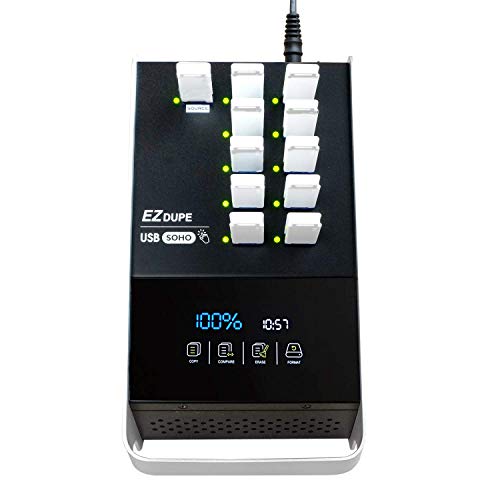
- Touchscreen copy, compare, format, and erase controls
- Duplicates to up to ten USB drives
- Supports USB 2.0, 3.0, and 3.1 media
Best For: Accessible high-volume flash-drive duplication
Maximum Batch Capacity

- Duplicates one source to fifteen targets
- Standalone bit-by-bit copying
- Synchronous and asynchronous modes
Best For: Large-scale USB deployment and production runs
Best Compact USB Duplicator
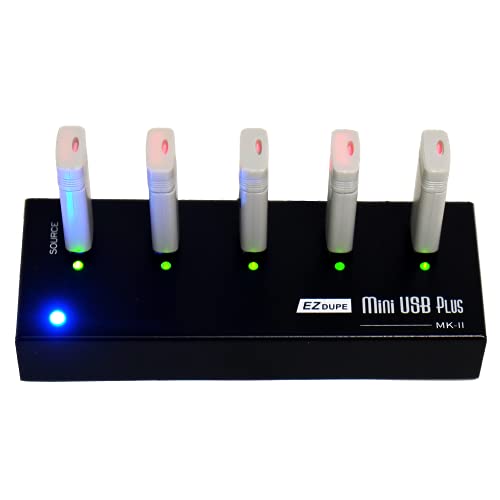
- Duplicates up to four USB drives simultaneously
- Standalone, portable, and computer-free
- Supports USB 1.0/2.0/3.0 media
Best For: Portable four-drive copying at home or in a small office
Best High-Capacity USB Duplicator

- Copies to 15 USB targets
- Asynchronous standalone duplication
- Includes raw mode and secure erase
Best For: Professional or organizational bulk duplication
Best Seven-Drive USB Duplicator

- Duplicates up to seven USB drives
- Standalone plug-and-use operation
- Supports capacities above 2TB
Best For: Small-scale bulk copying with seven simultaneous targets
High-Capacity Pick
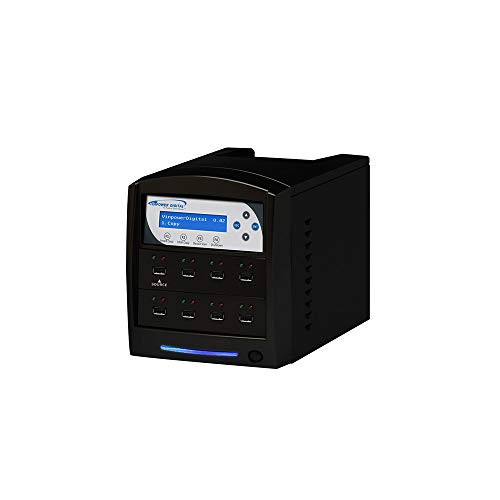
- Seven-target standalone duplication
- Bit-by-bit copying for all data formats
- Prescan and secure erase features
Best For: High-volume USB duplication without a PC
Professional 1:7 Choice
StarTech USB Duplicator and Eraser

- Seven-port standalone duplicator and sanitizer
- Sector-by-sector copying for all formats
- LCD monitoring and copy verification
Best For: IT technicians managing USB media
Compact 1:5 Value
StarTech USB Duplicator Eraser

- Five-target standalone operation
- File and sector-by-sector copy modes
- Portable design with erase and verification tools
Best For: Small-team USB duplication and sanitization
Compact IT Workhorse – StarTech 1:2 USB Duplicator
For technicians who need practical USB duplicators without connecting a computer, the StarTech USBDUP12 combines two-target cloning with drive-erasing tools in a compact standalone unit. It supports USB 2.0 and 3.0 flash media, offers sector-by-sector or file-system copying, and includes LCD-guided controls.
Best For: IT technicians, boot-drive preparation, small-batch duplication, and USB drive sanitizing.
Pros:
- Copies one source drive to two targets without a computer.
- Supports system/file copying, sector-by-sector cloning, and multiple erase modes.
- Copy-and-Compare helps verify completed clones.
- Asynchronous copying allows finished drives to be replaced without stopping, when source content is under 64 MB.
Cons:
- Only provides two target ports.
- Asynchronous mode has a 64 MB source-content limit.
- Some external USB storage devices may need their own power source.
The StarTech is a flexible choice for smaller duplication jobs where verification and sanitization matter as much as copying. Its LCD and button interface keep routine operations self-contained, while the limited target count suits lower-volume workflows.
Seven-Drive Production Pick – Systor 1:7 USB Duplicator
The Systor SYS-USBD-7 is one of the more productive USB duplicators for teams that need to prepare up to seven drives at once. It works standalone, performs bit-by-bit copies, and maintains a listed 33 MB/s transfer rate even as more target drives are loaded.
Best For: Businesses, IT departments, and users who regularly create multiple identical USB drives.
Pros:
- Duplicates one source to up to seven USB drives.
- Supports synchronous and asynchronous copy modes.
- Works with USB 1.1, 2.0, and 3.0 flash drives.
- Supports USB Type-C drives with an adapter.
Cons:
- Its 33 MB/s transfer rate is slower than faster modern interfaces.
- A Type-C adapter is required for USB Type-C drives.
- The desktop unit weighs 10 pounds.
With seven target ports and consistent transfer performance as the load increases, this Systor is aimed at repeatable batch work rather than occasional single-drive copying. The standalone design and lifetime technical support add practical value for business workflows.
Touchscreen Ease-of-Use – EZ Dupe SOHO Touch 1:10
The EZ Dupe SOHO Touch makes USB duplicators easier to operate through a touchscreen menu covering Copy, Compare, Format, and Erase functions. Its ten-target design and 35 MB/s duplication speed suit users who want a straightforward interface for recurring flash-drive tasks.
Best For: Offices, small production environments, and users who prefer touchscreen controls for multi-drive copying.
Pros:
- Copies one USB source to up to ten target drives.
- Touchscreen interface simplifies copy, compare, format, and erase functions.
- Supports USB 2.0, 3.0, and 3.1 thumb drives.
- Supports all file formats, file sizes, and drive capacities on USB flash media.
Cons:
- Duplication speed is listed at 35 MB/s.
- It has a one-year manufacturer warranty.
- The notes specify USB flash media rather than broader external-storage compatibility.
This model stands out for its approachable controls and generous ten-drive capacity. Smart Copy, Strict Compare, and one-touch erase make it a practical option when multiple operators need to perform repeatable tasks with minimal menu complexity.
Maximum Batch Capacity – Systor 1:15 USB Duplicator
For the largest batches in this lineup, the Systor SYS-USBD-15 expands standalone USB duplication to fifteen target drives. It uses bit-by-bit copying, supports synchronous and asynchronous modes, and lists a 33 MB/s transfer rate that remains consistent as the number of loaded drives increases.
Best For: High-volume business, training, deployment, and IT workflows that require many identical USB drives.
Pros:
- Copies one source drive to up to fifteen targets.
- Operates without a computer or software.
- Supports synchronous and asynchronous copy modes.
- Offers three years of labor coverage, one year of parts coverage, and lifetime technical support.
Cons:
- The listed transfer rate is 33 MB/s.
- USB Type-C drives require an adapter.
- The fifteen-port capacity may be more than needed for occasional duplication.
The SYS-USBD-15 is the capacity-focused choice for organizations that value throughput across many simultaneous targets. Its standalone operation simplifies deployment, while the support and warranty terms are useful for equipment assigned to regular production duties.
Best Compact USB Duplicator – EZ Dupe Mini USB Plus MK II
For buyers who need portable USB duplicators without a computer, the EZ Dupe Mini USB Plus MK II offers standalone plug-and-use copying for up to four USB flash drives at once. Its updated design supports USB 1.0, 2.0, and 3.0 media, with advertised speeds of up to 2.5GB per minute depending on the connected drives.
Best For: Home users, small offices, and mobile workflows that need compact four-drive duplication.
Pros:
- Copies to up to four USB drives simultaneously.
- Standalone operation requires no computer.
- Supports USB 1.0, 2.0, and 3.0 flash drives and powered external USB storage.
- Can use a power bank or USB power source.
Cons:
- External USB storage devices require their own power source.
- Actual copy speed depends on the read/write performance of the connected drives.
This is a practical choice when portability and simple four-target copying matter more than high-volume production capacity. The one-year manufacturer warranty adds some basic coverage.
Best High-Capacity USB Duplicator – Vinpower USBDBL 15-Target
Among USB duplicators, the Vinpower USBDBL is designed for larger duplication jobs, with 15 target slots and standalone operation. It supports asynchronous copying, letting drives duplicate independently, and includes Smart Copy, Raw Mode, and secure erase functions for more flexible media management.
Best For: Organizations and production environments that regularly need to copy or erase up to 15 USB drives at a time.
Pros:
- Provides 15 target flash-drive slots.
- Operates without a PC.
- Asynchronous duplication supports independent copying of different-size masters.
- Includes Smart Copy, Raw Mode, and secure erase features.
Cons:
- At 11 pounds, it is considerably less portable than compact duplicators.
- SD, microSD, CompactFlash, and other formats require the corresponding adapter module.
The USBDBL is the strongest fit here for scale and feature depth. Its 15-slot design and secure-erasure capability make it more suitable for repeatable professional workflows than occasional personal copying.
Best Seven-Drive USB Duplicator – EZ Dupe Mini USB Plus MK III
The EZ Dupe Mini USB Plus MK III expands compact USB duplicators to seven simultaneous target drives while retaining standalone, plug-and-use operation. It supports USB 1.0, 2.0, and 3.0 media, asynchronous copying, and advertised speeds up to 2.5GB per minute when the connected drives can sustain them.
Best For: Small businesses, educators, and users who need more output than a four-port compact duplicator can provide.
Pros:
- Duplicates up to seven USB flash drives simultaneously.
- Requires no computer for operation.
- Supports USB 1.0, 2.0, and 3.0 flash drives.
- Updated version offers improved compatibility and support for capacities above 2TB.
Cons:
- Copy speed depends on the read/write speed of the connected USB drives.
- External USB hard drives need their own powered connection.
This model offers a useful middle ground between a small four-drive unit and a much larger professional duplicator. Choose it when seven targets provide meaningful time savings but you still want a relatively compact standalone device.
High-Capacity Pick – USBShark 1:7 USB Duplicator
Vinpower Digital USBShark Standalone USB Flash Drive Duplicator - 7 Targets (High Speed)
Check Price On AmazonFor buyers comparing usb duplicators, the Vinpower Digital USBShark offers seven-target, bit-by-bit duplication in a fully standalone unit. It supports USB 3.0, 2.0, and 1.0 devices, with smart copying, prescan error detection, and secure erase tools.
Best For: High-volume duplication and users who need broad format support without a computer.
Pros:
- Copies to seven USB targets at once.
- Performs bit-by-bit duplication across data formats.
- Includes USB prescan for physical reading errors and secure erase.
- Operates without a PC.
Cons:
- Its 10-pound weight makes it less portable than compact duplicators.
- The supplied notes do not specify a warranty.
The USBShark is a strong choice when throughput and standalone operation matter most. Its seven-target layout and expanded feature set make it especially practical for repeated duplication and drive sanitizing tasks.
Professional 1:7 Choice – StarTech USB Duplicator and Eraser
Among usb duplicators for IT work, this StarTech model combines seven-target cloning with drive erasing and verification tools. Its LCD interface, error scanning, sector-by-sector copying, and upgradeable firmware support hands-on fleet management.
Best For: Technicians and IT professionals creating boot drives, distributing data, or sanitizing USB media.
Pros:
- Duplicates or erases up to seven USB drives without a computer.
- Supports system/file copy and whole-drive sector-by-sector copying.
- Offers quick erase plus single-pass and three-pass overwrite modes.
- Copy-and-compare verification, LCD monitoring, and error scanning are built in.
Cons:
- Asynchronous copying is limited to source content under 128 MB.
- External USB devices may need their own power source.
This is the more feature-rich StarTech option for professional workflows. The seven ports, verification mode, and sanitization settings provide useful control when reliability and repeatability are priorities.
Compact 1:5 Value – StarTech USB Duplicator Eraser
This portable StarTech unit is a practical option for usb duplicators when five simultaneous targets are sufficient. It works with USB 3.0, 2.0, and 1.1 flash drives and provides cloning, erasing, LCD status information, and copy verification without requiring a PC.
Best For: Personal or small-team duplication and sanitization where a compact five-target design is enough.
Pros:
- Duplicates or erases up to five USB drives independently.
- Supports file-based and sector-by-sector copying.
- Includes quick erase and single- or three-pass overwrite modes.
- Portable design with LCD controls and copy-and-compare verification.
Cons:
- It has fewer target ports than seven-drive models.
- Asynchronous copying is limited to source content under 64 MB.
- External USB storage may require a separate power source.
Choose this model when portability and five-drive capacity fit your workflow. It retains the core duplication and sanitization functions of the larger StarTech unit in a smaller format.
How We Picked the Best USB Duplicators
We focused on standalone USB Duplicators that can copy flash drives without relying on a computer. The selection covers several target capacities, from portable four-drive units to systems designed to duplicate 15 drives at once. We also considered advertised transfer speed, support for common USB generations, LCD or touchscreen controls, standalone operation, and secure erasure features.
Because capacity and workflow matter more than a single headline specification, this list includes options for occasional personal use, small offices, schools, production teams, and larger-scale deployment. Always confirm the manufacturer’s compatibility and speed specifications for the drive types you plan to use.
Quick Comparison
| What to Compare | Best Fit |
|---|---|
| Four target ports | Portable work, small batches, and occasional copying |
| Five to seven target ports | General office, classroom, and IT deployment |
| Ten to 15 target ports | Frequent production and larger batches |
| Touchscreen interface | Users who prefer guided menu navigation |
| Erase or sanitize functions | Reuse, resale, compliance, or secure media disposal |
Key Buying Factors for USB Duplicators
Target Count and Throughput
The number of target ports determines how many drives you can process in one cycle. A higher port count can improve productivity, but it may also increase the unit’s size and cost. Check whether the advertised speed applies to each target, the whole operation, or ideal source media.
Drive and Interface Compatibility
Check support for USB 2.0, USB 3.0, USB 3.1, and the specific flash-drive capacities you use. A USB 3-compatible duplicator can be a better choice for larger files, but actual performance depends on the source and target drives. Matching drive speeds helps avoid bottlenecks.
Copy Modes and Data Verification
Look for useful modes such as whole-drive copying, used-space copying, asynchronous duplication, and verification. Whole-drive copying is important when boot information or hidden partitions must be preserved, while verification adds confidence for professional distribution.
Erasure and Operation
If drives will be reused, choose a model with clear erase or sanitization controls. LCDs and touchscreens can simplify setup, while physical buttons may be preferable in environments where durability and straightforward operation matter most.
Who Should Buy Which USB Duplicators?
Choose a compact four-target model if portability and low-volume work are your priorities. A five- or seven-target unit is a practical middle ground for offices, schools, repair shops, and IT teams that regularly prepare several drives. For recurring deployments or commercial production, a 10- or 15-target duplicator can reduce handling time and improve batch efficiency.
Buy a model with sanitization features if you routinely reclaim drives or handle sensitive information. If ease of use is especially important, prioritize touchscreen navigation. For the best results, pair any duplicator with identical or closely matched target drives and test a complete copy cycle before starting a large batch.