
The right viewfinder can make composition faster, steadier, and more accurate—especially in bright light or when a camera’s built-in screen is difficult to see. This roundup compares electronic, optical, LCD, waist-level, and director-style options.
Before buying, check camera compatibility, mounting method, viewing format, magnification, and whether you need live exposure information or a simple framing aid.
Best 10 Camera Viewfinders Picks for 2026
Best Integrated EVF
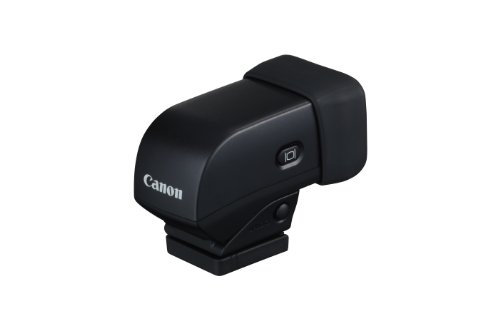
- 2.36MP XGA LCD display
- 90-degree upward tilt
- -3.0 to +1.0 dioptric adjustment
Best For: Compatible Canon cameras needing a dedicated electronic viewfinder
Best Compact Optical Framing

- 28mm, 35mm, and 50mm framelines
- Six optical glass lenses
- Lightweight aluminum-alloy body
Best For: Rangefinder-style composition with compatible Leica, Ricoh, and Panasonic cameras
Best Tilting EVF for Video

- Large electronic viewing area
- 90-degree upward tilt
- Audio monitoring and portable-SSD recording
Best For: SIGMA fp series video and stills setups
Best Director’s Optical Viewer
VD 11X Micro Director’s Viewfinder

- Supports multiple film and TV formats
- Telescopic multi-coated optical design
- 37mm filter thread for converters
Best For: Production planning, aspect-ratio checks, and optical scene framing
Best LCD Magnifier

- 3x focusable LCD magnification
- Blocks light in bright conditions
- Fits many 3.0- and 3.2-inch 16:9 screens
Best For: Outdoor LCD-based shooting
Best Dedicated EVF
Blackmagic Pocket Cinema Camera Pro EVF
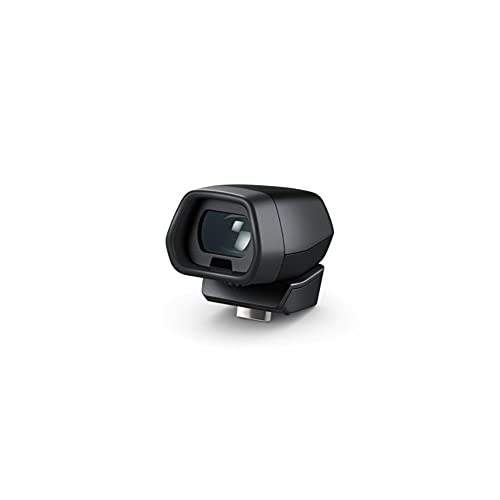
- Made for the Pocket Cinema Camera 6K Pro
- -4 to +4 diopter compensation
- Proximity sensor and status information
Best For: Blackmagic 6K Pro owners
Best Optical Compact Option
Ricoh GV-2 External Mini Viewfinder

- Lag-free optical viewing
- 28mm-equivalent framing
- 1:1 alignment marks and included case
Best For: Ricoh GXR wide-angle photography
Best Waist-Level Option
CHI Sight 28mm Optical Viewfinder

- Battery-free mirrored optical viewing
- 35mm and 50mm bright-line frames
- Detachable hood and adjustable cold shoe
Best For: Classic waist-level street and travel composition
Best Wearable Viewfinder Camera
Godox C100 Transparent Pocket Camera

- Transparent optical viewfinder with HUD overlays
- Built-in light meter for analog cameras
- 65g body with photo, video, and four ratios
Best For: Candid travel and film-inspired street shooting
Best Simple Light-Meter Camera
Godox C100 Transparent Viewfinder

- See-through framing with smart display overlays
- Automatic center-weighted light meter
- 65g body with USB-C transfer and charging
Best For: Beginners and film-inspired casual photography
Best Integrated EVF – Canon EVF-DC1
The Canon EVF-DC1 is a practical choice for photographers who want a dedicated electronic viewfinder rather than relying only on a rear screen. Its 2.36MP XGA display shows shooting information, while the 90-degree upward tilt and dioptric adjustment add flexibility when composing.
Best For: Canon users seeking an accessory-shoe-mounted electronic viewfinder with a tilting display and high-eyepoint design.
Pros:
- 2.36MP XGA LCD displays shooting information.
- 90-degree upward tilt supports flexible viewing angles.
- Dioptric adjustment from -3.0 to +1.0 accommodates different eyesight needs.
- Compact 2.4-ounce design mounts on the camera’s accessory shoe.
Cons:
- Compatibility depends on a camera with the appropriate accessory-shoe support.
- Requires a 9V battery.
- Brightness adjustment is handled through the camera’s monitor controls.
For compatible Canon cameras, the EVF-DC1 offers a well-rounded combination of electronic display clarity, tilt adjustment, and compact handling. Confirm camera compatibility and battery requirements before buying.
Best Compact Optical Framing – LightMate OV-X2
The LightMate OV-X2 is an optical option for photographers who prefer bright framelines and a direct, screen-free view. It combines 28mm, 35mm, and 50mm full-frame framing lines with a lightweight aluminum-alloy body and a standard cold-shoe mount.
Best For: Leica M, Ricoh GR, Panasonic S9, and other compatible cameras where quick optical framing across several focal lengths is useful.
Pros:
- Built-in bright framelines for 28mm, 35mm, and 50mm views.
- Six high-transmittance optical glass lenses provide a clear view.
- Aluminum-alloy construction is lightweight and scratch-resistant.
- Adjustable cold-shoe positions help fine-tune mounting.
Cons:
- Optical framing lines are designed for specific focal lengths rather than continuous zooming.
- Compatibility may vary with camera shoe designs, including special mounts.
- Its approximately 0.5x magnification may not suit users seeking a highly magnified view.
With its three framing options, compact 21g build, and vintage styling, the OV-X2 is a focused tool for rangefinder-style composition. Verify the camera mount before purchase, especially for nonstandard shoe designs.
Best Tilting EVF for Video – Sigma EVF-11
The Sigma EVF-11 is an electronic viewfinder designed specifically for the SIGMA fp series. Its large viewing area, 90-degree upward tilt, and support for audio monitoring and external portable-SSD recording make it particularly relevant to video-focused setups.
Best For: SIGMA fp series users who want a larger, tilting electronic viewfinder for photography or video capture.
Pros:
- Large viewfinder design emphasizes viewing clarity and comfort.
- 90-degree upward tilting mechanism supports low-angle operation.
- Supports audio monitoring during video capture.
- Enables external recording to a portable SSD.
Cons:
- Compatible devices are limited to the SIGMA fp series.
- Its video-oriented features may be unnecessary for stills-only users.
- The supplied specifications do not identify a high-resolution display figure.
The EVF-11 is a specialized choice rather than a universal camera accessory. For SIGMA fp owners, its tilt mechanism and video connectivity features can add meaningful flexibility, but other camera systems should look elsewhere.
Best Director’s Optical Viewer – VD 11X Micro Director’s Viewfinder
The VD 11X Micro Director’s HD Viewfinder is an optical scene viewer for planning shots, checking framing, and inspecting composition away from the camera’s built-in display. Its multi-coated optical elements, telescopic design, aspect-ratio markings, and 37mm filter thread make it suited to production-oriented use.
Best For: Directors, cinematographers, and photographers who need portable optical framing across multiple film and television formats.
Pros:
- Supports numerous aspect ratios, including 4:3, 16:9, 1.85, 2.2, 2.4, and 2.55.
- Telescopic design and magnifying function help with viewing and composition.
- Multi-coated optical glass is intended to improve clarity and sharpness.
- 37mm filter thread accepts compatible wide-angle converters.
Cons:
- It is an optical scene viewer, not an electronic camera viewfinder.
- Its format and aspect-ratio controls may be more extensive than casual users need.
- It is not water resistant.
The VD 11X is best understood as a dedicated previsualization and framing accessory. Its broad format support and optical magnification make it useful for production planning, while the 37mm thread adds expansion potential.
Best LCD Magnifier – Kamerar CVF-2 3X Viewfinder
The Kamerar CVF-2 is a practical choice among camera viewfinders when bright sunlight makes an LCD screen difficult to see. Designed for most 3.0- and 3.2-inch 16:9 screens, it combines light blocking with 3x focusable magnification for a clearer view.
Best For: DSLR and mirrorless users who compose on a compatible rear LCD, especially outdoors.
Pros:
- 3x magnification provides a 300% view of the LCD with edge-to-edge sharpness.
- Blocks excess light for higher-contrast viewing in bright conditions.
- Left- or right-eye eyecup works with eyeglasses.
- Adjustable rubber bands mount it securely without leaving marks.
Cons:
- Compatibility is limited to most 3.0- and 3.2-inch 16:9 LCD screens.
- It is an LCD magnifier rather than an electronic or optical camera viewfinder.
Choose the CVF-2 if your main challenge is judging focus and composition on a rear screen in harsh light. Its simple strap-style installation and compact 4-ounce design keep the setup straightforward.
Best Dedicated EVF – Blackmagic Pocket Cinema Camera Pro EVF
The Blackmagic Pocket Cinema Camera Pro EVF is a dedicated electronic option among camera viewfinders, made specifically for the Pocket Cinema Camera 6K Pro. Its proximity sensor, glass diopter, and integrated status information support a more controlled shooting workflow.
Best For: Blackmagic Pocket Cinema Camera 6K Pro owners who want a purpose-built electronic viewfinder.
Pros:
- Designed specifically for the Blackmagic Pocket Cinema Camera 6K Pro.
- Four-part glass diopter offers compensation from -4 to +4.
- Proximity sensor and integrated status information add shooting convenience.
- Supports left- and right-eye viewing.
Cons:
- Compatibility is limited to the specified Blackmagic camera model.
- It is not water resistant.
- It is a specialized accessory rather than a general-purpose viewfinder.
This EVF makes the most sense when you already use the 6K Pro and want a tailored viewing interface. The adjustable diopter and built-in information are more useful than broad compatibility if your priority is a dedicated cinema-camera setup.
Best Optical Compact Option – Ricoh GV-2 External Mini Viewfinder
The Ricoh GV-2 is a compact optical choice among camera viewfinders for the Ricoh GXR system. It mounts to the hot shoe and provides a lag-free 28mm-equivalent framing reference, with 1:1 marks for photographers who want square composition guidance.
Best For: Ricoh GXR users shooting with a 28mm-equivalent perspective who prefer optical, manual framing.
Pros:
- Optical viewing provides a lag-free framing experience.
- 28mm-equivalent field of view suits wide-angle photography.
- Built-in 1:1 aspect-ratio marks help with square compositions.
- Lightweight 23-gram design includes a protective case.
Cons:
- Compatible with the Ricoh GXR hot shoe and system.
- Provides framing only, without autofocus, image stabilization, or electronic exposure controls.
- The fixed 28mm view is less flexible for other focal lengths.
The GV-2 is a focused accessory rather than an all-purpose viewfinder. It is a strong fit for GXR photographers who value a small, clear optical frame and deliberate manual composition over electronic features.
Best Waist-Level Option – CHI Sight 28mm Optical Viewfinder
For photographers comparing camera viewfinders, the CHI Sight offers a battery-free optical waist-level shooting experience with a horizontally mirrored image. Its bright-line framing supports 35mm and 50mm compositions, while the 28mm viewing angle provides a broad view.
Best For: Street, travel, and outdoor photographers who want classic waist-level composition without electronic delay.
Pros:
- Battery-free optical design with a bright mirrored image
- Built-in 35mm and 50mm frame lines
- Detachable hood helps reduce flare in direct sunlight
- Adjustable cold-shoe mount and aluminum construction
Cons:
- Displays a horizontally mirrored image, which may require adjustment
- Designed as an external viewfinder rather than an electronic display
- Its framing is centered on 35mm and 50mm focal lengths
The CHI Sight is a specialized choice for photographers who value an analog, direct-to-scene composing experience. Its compact 3.36-ounce build and optical simplicity make it practical for daily carry, provided its waist-level format suits your workflow.
Best Wearable Viewfinder Camera – Godox C100 Transparent Pocket Camera
The Godox C100 combines a transparent optical viewfinder with a compact digital camera and built-in light meter. Among camera viewfinders, it stands out for showing the real scene through a see-through display while overlaying framing grids, exposure information, and battery status.
Best For: Travelers, street photographers, and creators who want an ultralight camera for candid photos, video, and film-light-meter use.
Pros:
- Transparent viewfinder offers more than 50% light transmittance
- Built-in center-weighted light meter calculates exposure guidance for film cameras
- Supports four aspect ratios plus photo and video modes
- USB-C OTG transfer and up to 128GB TF card expansion
Cons:
- Low 1MP still-image resolution
- No built-in flash and no water-resistance rating
- Requires a TF card for expanded storage
At 65g, the C100 is aimed more at spontaneous, lightweight shooting than high-resolution photography. Its transparent display and light-meter function make it particularly distinctive for users who enjoy a deliberate film-inspired process alongside simple digital capture.
Best Simple Light-Meter Camera – Godox C100 Transparent Viewfinder
The Godox C100 is a screenless compact camera built around a transparent compositional viewfinder and automatic exposure guidance. It lets you frame through the scene while viewing grid lines, settings, and battery information, making it an unusual option among camera viewfinders.
Best For: Beginners and film enthusiasts who want a lightweight creative camera with automatic exposure assistance and quick USB-C sharing.
Pros:
- See-through viewfinder maintains a view of the real scene
- Center-weighted light meter helps calculate exposure values
- Offers 16:9, 4:3, 3:2, and 1:1 composition options
- USB-C charging, data sync, and OTG transfer
Cons:
- TF card is not included
- Plastic enclosure is not water resistant
- Compact design prioritizes portability over advanced camera controls
The C100 focuses on accessible, mindful shooting rather than traditional camera specifications. Its 65g pocket-friendly design, automatic exposure control, and direct phone or computer transfer make it convenient for casual daily use and creative experiments.
How We Picked These Camera Viewfinders
We selected options across several common categories rather than treating every viewfinder as interchangeable. The list includes dedicated electronic viewfinders, optical finders for rangefinder-style composition, LCD magnifiers for video work, director’s viewfinders, and compact accessories for portable cameras.
Our comparison focuses on practical ownership factors: compatibility, viewing clarity, framing versatility, mounting convenience, portability, and the type of feedback each device provides. An electronic model may display exposure and focus information, while an optical model can be lighter, faster, and independent of battery power.
Quick Comparison
| Type | Best For | Main Advantage | Key Limitation |
|---|---|---|---|
| Electronic EVF | Mirrorless and cinema cameras | Live exposure, focus, and playback data | Requires compatibility and power |
| Optical viewfinder | Rangefinder and compact cameras | Bright, lag-free framing | Does not show sensor-based exposure |
| LCD magnifier | Video and filmmaking | Larger, easier-to-inspect screen image | Adds bulk around the rear display |
| Director’s viewfinder | Shot planning and cinematography | Useful focal-length and framing reference | Not a replacement for a camera EVF |
Key Buying Factors for Camera Viewfinders
Compatibility and Mounting
Start with the camera body, not the accessory’s appearance. Dedicated EVFs typically use a specific hot shoe or accessory port, so confirm the exact model and firmware requirements. Optical and LCD accessories may rely on a cold shoe, mounting bracket, adhesive frame, or the camera’s rear screen dimensions.
Optical Versus Electronic Viewing
Optical Camera Viewfinders offer an immediate, natural view and usually consume no battery. They are well suited to bright outdoor shooting and simple composition, but parallax and framing accuracy can vary. Electronic viewfinders show the actual sensor image and may provide focus peaking, exposure simulation, menus, and playback, although resolution, refresh rate, eye relief, and battery use differ.
Magnification, Framelines, and Visibility
Choose magnification based on your subject and lens. Higher magnification can help with critical focus but may make it harder to see the full frame. If you use multiple focal lengths, look for selectable framelines or a viewing system that matches your lenses. For rear-screen magnifiers, verify screen size and consider whether touch controls remain accessible.
Portability and Durability
A small optical finder may be ideal for travel, while a cinema EVF or LCD loupe is better for a rigged setup. Check dimensions, locking mechanisms, filter threads, weather resistance, and whether the accessory can remain attached during storage or transport.
Who Should Buy Which Camera Viewfinders?
- Mirrorless photographers: Choose a dedicated electronic viewfinder when your camera supports one and you want exposure previews, focus aids, and a more stable shooting position.
- Rangefinder and compact-camera users: An optical finder with suitable framelines is a good choice for quick, distraction-free composition.
- Filmmakers: Consider a cinema EVF or LCD magnifier when manual focus, monitoring, and outdoor visibility matter more than minimum size.
- Directors and shot planners: A director’s viewfinder is useful for scouting focal lengths and planning compositions, but it is a planning tool rather than a camera monitor.
- Travel photographers: Prioritize low weight, simple mounting, and battery-free operation unless you need electronic exposure information.