
A reliable follow focus system can make rack focuses smoother, repeatable, and easier to execute—whether you shoot narrative video, interviews, weddings, or fast-moving subjects. The right setup depends on your lens mount, camera rig, control preference, and need for wireless automation.
We selected 10 camera follow focus systems ranging from compact mechanical units to advanced wireless and LiDAR-assisted lens-control kits, so you can match your budget and workflow with the features that matter most.
Best 10 Camera Follow Focus Systems Picks for 2026
Compact Precision Pick

- Fluid-damped manual focus control
- Quick-release adjustable A/B stops
- Includes 15mm rod hardware and case
Best For: Lightweight 15mm-rod camera rigs
Wireless High-Torque Pick
SmallRig Wireless Follow Focus Kit

- 4.3 kgf.cm peak motor torque
- About 21 hours of handwheel battery life
- One-click A/B calibration with memory
Best For: Wireless control of high-damping cinema and zoom lenses
Advanced LiDAR System
DJI Focus Pro All-in-One Combo

- 20-meter LiDAR-assisted focusing range
- AI recognition for people and vehicles
- Includes LiDAR, motor, grip, and hand unit
Best For: DJI PRO ecosystem productions needing advanced focus control
Lightweight Everyday Pick

- About 204 g and easy to carry
- Adjustable A/B stops or 360° travel
- Includes 15mm clamp and snap-on gear ring
Best For: Compact DSLR and mirrorless camera rigs
Best Wireless Motor
SmallRig Wireless Receiver Motor Lite 4297

- 4.3 kgf.cm peak torque
- Low-latency Magic FIZ control
- PD/QC fast-charging support
Best For: Compatible SmallRig wireless follow focus and zoom setups
Best Gimbal Motor
Zhiyun TransMount Servo Follow Focus Controller
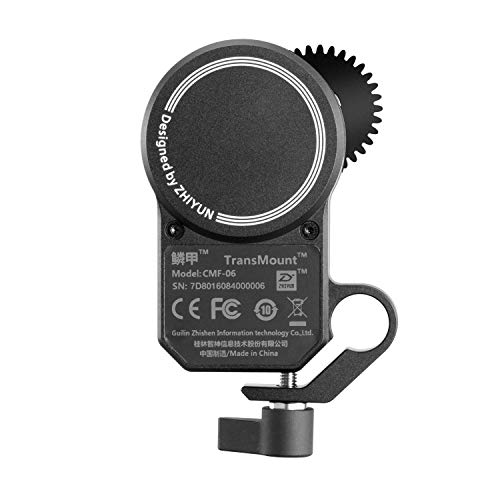
- Focus/zoom switching lever
- About 100 ms latency
- Designed for supported Zhiyun gimbals
Best For: Zhiyun gimbal-based focus and zoom control
Best Manual Follow Focus
SmallRig F50 Follow Focus with A/B Stops

- Adjustable damping from 0.3–1.0 kgf
- A/B stops with 360-degree pulls
- 15mm rod and clamp included
Best For: Manual DSLR and mirrorless focus pulls
Most Versatile Wireless System
Tilta Nucleus Nano II Base Kit

- Wireless focus, zoom, and aperture control
- Real-time focal-distance display via lens mapping
- Expandable to up to four motors with optional handle
Best For: Multi-camera or expanding wireless lens-control setups
Best DJI RS Handgrip Control
SmallRig Handle with Follow Focus
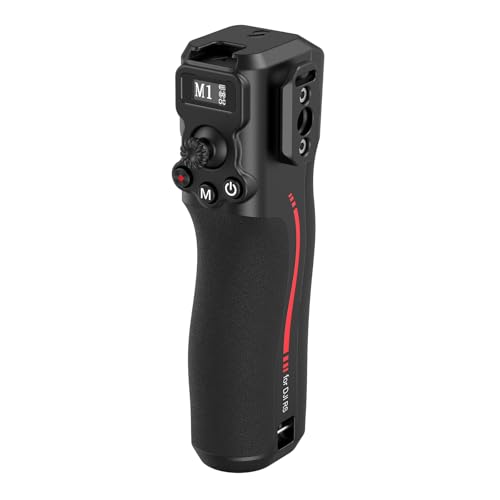
- Designed for multiple DJI RS-series gimbals
- Combines focus, camera, and gimbal controls
- Up to 100 m range and 10-hour battery life
Best For: DJI RS gimbal operators wanting a remote handgrip
Best Lightweight Scorp Add-On
FeiyuTech Follow Focus Brushless Motor Kit

- Works with compatible FeiyuTech Scorp gimbals
- 108 g lightweight metal brushless motor
- Supports focus or focal-length adjustment
Best For: Scorp gimbal users seeking a compact lens-control upgrade
Compact Precision Pick – Tilta Pocket Follow Focus
The Tilta Pocket Follow Focus is a compact mechanical option for camera follow focus systems. Its fluid-damping feel, non-slip grip, interchangeable gears, and included 15mm rod hardware make it practical for controlled manual focus pulls without adding much bulk.
Best For: Shooters who want a lightweight, tactile follow focus for cameras and lenses using a 15mm rod setup.
Pros:
- Fluid damping and a non-slip grip provide tactile focus control.
- Quick-release A/B hard stops can be set and engaged quickly.
- Interchangeable gears accommodate lenses with different gear-ring sizes.
- Includes a 15mm rod, rod holder, gear ring, case, and tools.
Cons:
- Requires a compatible 15mm rod mounting arrangement.
- Manual operation does not provide wireless or automated focus control.
- It is not water resistant.
Choose this Tilta when simplicity, portability, and a damped manual focusing experience matter more than remote operation or advanced automation.
Wireless High-Torque Pick – SmallRig Wireless Follow Focus Kit
The SmallRig Wireless Follow Focus Kit (Lite) adds remote control to camera follow focus systems while supporting lenses with substantial damping. Its receiver motor delivers up to 4.3 kgf.cm of peak torque, while the handwheel offers one-click calibration and long battery life for extended shoots.
Best For: Filmmakers who need wireless focus control for cinema or zoom lenses, including high-damping lenses.
Pros:
- Wireless handwheel control is designed for precise, low-latency focusing.
- Peak motor torque of 4.3 kgf.cm can drive demanding zoom lenses.
- Handwheel battery life is rated at about 21 hours.
- One-click A/B calibration and memory storage reduce repeated setup.
Cons:
- Requires suitable power, with the supplied cable or USB 3.0 cable recommended to avoid insufficient torque.
- At 325 g, it is less minimal than a basic mechanical follow focus.
- It is not water resistant.
This is the stronger choice when remote operation and motor torque are priorities, particularly for rigs using cinema or zoom lenses with high damping.
Advanced LiDAR System – DJI Focus Pro All-in-One Combo
The DJI Focus Pro All-in-One Combo is an advanced camera follow focus system built around LiDAR-assisted focusing, AI recognition, and FIZ lens control. It combines manual, automatic, and hybrid operation with a 20-meter subject-focusing range and a separate hand unit for collaborative control.
Best For: Professional DJI PRO ecosystem users who need long-range subject focusing, tracking, and precise focus, iris, and zoom control.
Pros:
- LiDAR provides 76,800 ranging points and a stated 20-meter focusing range.
- AI recognition supports human and vehicle subject tracking.
- AMF mode combines autofocus assistance with operator control.
- Includes the LiDAR, grip, motor, hand unit, and carrying case.
Cons:
- At 2,512 g, the all-in-one package is substantially heavier than compact mechanical systems.
- Compatibility is centered on DJI PRO products such as Ronin 4D and Inspire 3.
- It is not water resistant.
The Focus Pro is best viewed as a complete professional focusing platform rather than a simple manual accessory, especially for productions already using compatible DJI equipment.
Lightweight Everyday Pick – SmallRig Mini Follow Focus
The SmallRig Mini Follow Focus 3010C is a portable mechanical choice for camera follow focus systems used with DSLRs and mirrorless cameras. Adjustable A/B stops, a grippy ergonomic wheel, modular mounting, and included 15mm hardware make it useful for handheld or tripod-based shooting.
Best For: DSLR and mirrorless users who want compact manual focus control with flexible mounting and gear options.
Pros:
- Lightweight design weighs about 204 g according to the product description.
- Adjustable A/B stops can switch between limited travel and 360-degree operation.
- Included 15mm rod clamp and snap-on gear ring support quick setup.
- Interchangeable M0.8 gears support lenses with different diameters.
Cons:
- Additional gears may be needed for certain lens sizes or setups.
- Manual operation offers no wireless or automated focusing.
- Its compatibility is primarily described for DSLRs and mirrorless cameras.
For a compact run-and-gun kit, this SmallRig offers a practical balance of low weight, adjustable stops, and modular mounting without the complexity of a motorized system.
Best Wireless Motor – SmallRig Wireless Receiver Motor Lite 4297
For camera follow focus systems that prioritize wireless control, the SmallRig Wireless Receiver Motor (Lite) 4297 combines a compact design with low-latency operation and strong peak torque. Its support for Magic FIZ cross-control and PD/QC fast charging adds flexibility for demanding lens setups.
Best For: Wireless follow focus and zoom control with compatible SmallRig systems, especially when compact size and higher torque are priorities.
Pros:
- 4.3 kgf.cm peak torque can help drive zoom lenses.
- Designed for low-latency, precise control and Magic FIZ cross-control.
- Supports 5V–18V input along with PD and QC fast charging.
- Compact 3.44-ounce design.
Cons:
- Extended high-torque zooming may cause the motor surface to heat up.
- Requires the supplied power cord or a USB 3.0 cable to avoid insufficient torque.
- Best suited to users already working within the compatible SmallRig wireless ecosystem.
Choose this motor when wireless operation and torque matter more than having a complete standalone follow focus kit. The status lights and automatic connection guidance also make setup more approachable.
Best Gimbal Motor – Zhiyun TransMount Servo Follow Focus Controller
The Zhiyun TransMount Servo Follow Focus/Zoom Controller is a compact option for camera follow focus systems built around supported Zhiyun gimbals. Its switchable focus-and-zoom control and approximately 100-millisecond latency make it useful for creators who want lens control from the stabilizer’s wheel.
Best For: Zhiyun gimbal users who need a lightweight motor for switching between focus and zoom control.
Pros:
- Compatible with several Zhiyun Weebill and Crane stabilizer models listed by the manufacturer.
- All-function switch lever changes between focus and zoom control.
- Upgraded motor structure provides stated ultra-low latency of 100 milliseconds.
- Thicker gears and a larger contact area support secure installation.
Cons:
- Compatibility is centered on supported Zhiyun gimbal systems.
- At 358 g, it is heavier than the SmallRig wireless motor listed here.
- The supplied notes do not indicate wireless operation or standalone camera-rig compatibility.
This is a focused choice for Zhiyun stabilizer workflows rather than a universal follow focus solution. Its strongest advantage is direct, synchronized control through the gimbal wheel.
Best Manual Follow Focus – SmallRig F50 Follow Focus with A/B Stops
The SmallRig F50 is a manual alternative among camera follow focus systems, designed for precise lens control with adjustable damping and A/B stops. Its 15mm rod mounting, silicone drive gear, and zero-backlash design target handheld, tripod, and other rig-based shooting scenarios.
Best For: Mirrorless and DSLR shooters who want adjustable manual focus pulls, A/B stops, and support for 360-degree lens rotation.
Pros:
- Adjustable rotational play is designed to minimize focus backlash.
- Stepless damping adjustment ranges from 0.3 kgf to 1.0 kgf.
- Quick-release controls support A/B stops and 360-degree pulls.
- Includes a 15mm rod and rod clamp with adjustable mounting angle.
Cons:
- Silicone gear is intended for DSLR and mirrorless lenses, not cinema lenses.
- High-damping zoom lenses may slip if the silicone gear is not fitted tightly.
- Manual operation does not provide wireless or motorized control.
The F50 is a practical pick for hands-on focus pulling and repeatable focus marks. Its damping adjustment and A/B-stop system add control, but cinema-lens users should switch to the gear-drive configuration.
Most Versatile Wireless System – Tilta Nucleus Nano II Base Kit
The Tilta Nucleus Nano II Base Kit is a capable choice for camera follow focus systems when you need wireless control across focus, zoom, and aperture. Its handwheel, touchscreen, lens mapping, and camera-communication features support more precise pulls and a streamlined on-set workflow.
Best For: Filmmakers who want wireless lens control with room to expand to multiple motors.
Pros:
- Controls wireless focus, zoom, and aperture with the included handwheel and motor.
- Lens mapping displays real-time focal-distance information for more accurate focus pulling.
- Supports up to four motors when paired with the optional control handle.
- Offers camera setting adjustments and a touchscreen interface.
Cons:
- Some camera compatibility is limited to selected Canon, Sony, and Blackmagic Design models.
- The optional control handle is needed for the stated four-motor expansion.
- It requires a lithium-ion battery.
Choose this kit if flexibility and wireless expansion matter more than a minimal setup. Its broader control set makes it particularly useful for more involved productions.
Best DJI RS Handgrip Control – SmallRig Handle with Follow Focus
The SmallRig Handle with Follow Focus is a practical addition to camera follow focus systems built around DJI RS gimbals. It combines a focus dial with camera and gimbal controls, wireless operation, mounting points, and an ergonomic grip for handheld shooting.
Best For: DJI RS 2, RS 3 Pro, RS 4, RS 4 Pro, and RS 5 users seeking integrated remote control.
Pros:
- Designed specifically for the listed DJI RS-series gimbals.
- Provides focus adjustment, shutter and recording control, joystick operation, and mode switching.
- Offers up to 100 meters of wireless range with less than 50 milliseconds of signal delay.
- Includes 1/4-inch-20 locating holes, a cold shoe, and NATO-compatible mounting hardware.
Cons:
- It is specialized for DJI RS-series setups rather than a universal follow-focus system.
- The handle has a 2.0 kg maximum payload, while the receiver supports up to 4.0 kg.
- The remote contains a lithium battery and is not water resistant.
This is a strong fit when your workflow already uses a compatible DJI RS gimbal. The integrated controls and long stated range add convenience, while the mounting options help accommodate accessories.
Best Lightweight Scorp Add-On – FeiyuTech Follow Focus Brushless Motor Kit
The FeiyuTech Follow Focus Brushless Motor Kit is a compact option among camera follow focus systems for compatible FeiyuTech Scorp gimbals. It adds motorized focus or focal-length adjustment through the gimbal’s multifunctional controls while keeping the motor lightweight and quick to mount.
Best For: FeiyuTech Scorp users who need a lightweight focus or zoom motor for compatible lenses.
Pros:
- Compatible with SCORP 3, SCORP 2, SCORP-C2, SCORP Pro, and SCORP C gimbals as listed.
- Lightweight metal motor construction weighs 108 g.
- Supports manual focus or focal-length adjustment through the gimbal controls.
- Includes automatic or manual calibration and reversible motor direction.
Cons:
- Compatibility is limited to the specified FeiyuTech Scorp gimbal series.
- It supports lenses with a maximum diameter of 10 cm.
- The kit is not water resistant.
For Scorp owners, this kit offers a focused way to add lens control without a heavier standalone system. Its lightweight construction and calibration options suit gimbal-based shooting where quick setup is important.
How We Picked These Camera Follow Focus Systems
We compared these systems by looking at focusing precision, compatibility, mounting flexibility, control method, torque, power options, and overall usefulness for common filmmaking setups. Mechanical models were assessed for smooth damping, gear engagement, and A/B stop functionality. Wireless options were considered for latency, range, motor strength, supported lens functions, and integration with gimbals or handheld rigs.
Compatibility is especially important. A follow focus may require 15mm rods, a specific camera cage, a gimbal connection, a compatible lens gear, or an additional receiver. Always confirm the included components before buying.
Quick Comparison
| Best For | Recommended Type | What to Look For |
|---|---|---|
| Simple handheld or tripod rigs | Mechanical follow focus | Fluid damping, secure rod mounting, A/B stops |
| Gimbals and compact cameras | Mini or handle-mounted system | Low weight, direct compatibility, compact motor |
| Remote lens operation | Wireless motor system | Low latency, reliable range, strong torque |
| Professional multi-function control | Wireless FIZ system | Focus, iris, zoom, calibration, and monitoring tools |
| Automated subject tracking | LiDAR-assisted system | Range, recognition features, and camera support |
Key Buying Factors for Camera Follow Focus Systems
Mechanical or Wireless Control
Mechanical follow focus units are affordable, dependable, and easy to operate when the camera is within reach. Wireless systems cost more but allow an assistant, operator, or gimbal user to control focus from a handwheel or remote motor.
Rig and Lens Compatibility
Check whether the unit mounts to 15mm rods, a cage, a gimbal, or a proprietary handle. Your lens also needs a compatible focus gear or gear ring. For electronic lenses, verify whether the system supports the required camera and lens communication protocols.
Torque, Range, and Power
Higher torque helps drive stiff cinema lenses, while lightweight motors are better suited to small mirrorless lenses and gimbals. Wireless systems should offer enough range for your shooting distance and practical battery life for a full session.
Stops and Repeatability
A/B hard stops make repeat focus pulls faster and more consistent. They are particularly useful for scripted scenes, product shots, and interviews where the subject moves between two known distances.
Who Should Buy Which Camera Follow Focus Systems?
Choose a compact mechanical model if you want the simplest, lowest-cost upgrade for a rod-based camera rig. A SmallRig or Tilta mechanical option is well suited to beginners, independent filmmakers, and controlled tripod work.
Choose a wireless motor kit if you operate a gimbal, need to pull focus remotely, or want to control focus without touching the camera. SmallRig, FeiyuTech, and Zhiyun options are worth considering when their mounting and camera compatibility match your setup.
For advanced productions requiring wireless focus, iris, and zoom control, a Tilta Nucleus Nano II-style system offers a more complete lens-control workflow. DJI’s Focus Pro is the better fit for creators who specifically want LiDAR-assisted focusing, subject recognition, and a more automated approach. Before ordering, prioritize compatibility and rig balance over feature count: the best system is the one that works smoothly with your camera, lenses, and shooting style.