
Wireless camera follow focus systems give filmmakers more control over focus, iris, and zoom without requiring a hand on the lens. The right setup can make handheld shooting, gimbal work, interviews, and narrative production significantly more precise.
This roundup covers compact mechanical follow focuses, motorized wireless kits, and advanced LiDAR-assisted systems. Use the guide below to match the control method, lens compatibility, and mounting setup to your camera rig.
Best 10 Wireless Camera Follow Focus Systems Picks for 2026
Advanced Wireless Control
Tilta Nucleus Nano II Base Kit

- Wireless focus, zoom, and aperture control
- Real-time focal-distance display via lens mapping
- Expandable to four motors with optional handle
Best For: Multi-function wireless lens control and expandable camera rigs
Compact Manual Precision
SmallRig Mini Follow Focus 3010

- Lightweight 204g design for portable rigs
- Adjustable A/B stops and unlimited rotation mode
- Includes 15mm rod, clamp, and snap-on gear ring
Best For: Compact DSLR and mirrorless manual-focus setups
LiDAR Autofocus Control

- LiDAR autofocus with multiple scanning modes
- High-torque motor with three speed levels
- Stores presets for up to five lenses
Best For: Small crews needing wireless LiDAR-assisted autofocus
Travel-Ready Manual Focus
NEEWER PG001 Mini Follow Focus

- Lightweight 10-ounce design for mobile shooting
- Adjustable A/B stops or unlimited focus rotation
- Includes 15mm rod, clamp, and tilting arm
Best For: Portable manual focus control for lenses up to 114mm
Best Wireless Cinema Upgrade
SmallRig Wireless Follow Focus Lite

- 4.3 kgf.cm peak torque for demanding lenses
- Approximately 21-hour handwheel battery life
- One-click A/B calibration with memory storage
Best For: Cinema and zoom lens setups needing wireless, repeatable focus control
Best Compact Manual Option

- Compact composite-material construction
- Quick-release A/B hard-stop system
- Includes 15mm rod and interchangeable gear
Best For: Small rigs favoring tactile manual focus control
Best for FeiyuTech Gimbals
FeiyuTech Brushless Focus Motor Kit

- Designed for compatible FeiyuTech SCORP gimbals
- Lightweight 108g metal motor
- Supports manual or automatic calibration
Best For: SCORP gimbal users adding motorized focus or zoom control
Best DJI RS Handgrip
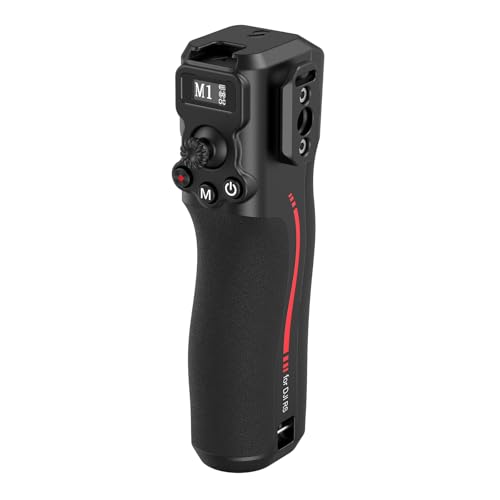
- 100 m wireless range and under-50 ms delay
- Controls focus, recording, joystick, and gimbal modes
- Up to 10 hours of battery life
Best For: DJI RS-series gimbal users
Best Cinema FIZ Kit

- Wireless focus, iris, zoom, and ND control
- Lens mapping displays stored lens information
- Includes motor, FIZ hand unit, mounts, and case
Best For: Cinema crews needing multi-motor FIZ control
Best Compact Manual Kit

- A/B hard stops and 360-degree infinity zoom
- Three reversible 0.8-mod drive gears
- Includes 15mm rod, clamp, and marking disks
Best For: 15mm rod camera rigs needing manual focus control
Advanced Wireless Control – Tilta Nucleus Nano II Base Kit
The Tilta Nucleus Nano II Base Kit is a strong choice for wireless camera follow focus systems when you want more than basic lens control. Its handwheel, motor, touchscreen, lens mapping, and camera-communication features support focus, zoom, aperture, and selected camera settings in a streamlined setup.
Best For: Filmmakers who need wireless lens control with room to expand across multiple motors and compatible camera systems.
Pros:
- Controls focus, zoom, and aperture wirelessly.
- Lens mapping displays real-time focal-distance information for more accurate pulls.
- Supports up to four motors with the optional Control Handle.
- Touchscreen provides access to advanced features and workflow controls.
Cons:
- Additional motor expansion requires the optional Control Handle.
- Camera communication is limited to selected compatible Canon, Sony, and Blackmagic Design models.
- Its broader feature set may be more than needed for simple manual focus work.
Choose this kit if wireless control and future expansion matter more than keeping the rig as small and simple as possible. Compatibility should be checked carefully before purchase.
Compact Manual Precision – SmallRig Mini Follow Focus 3010
The SmallRig Mini Follow Focus 3010 is a compact manual option for wireless camera follow focus systems shoppers comparing lightweight, on-camera control. It includes A/B stops, a 15mm rod, rod clamp, and snap-on gear ring, making it practical for DSLR and mirrorless setups.
Best For: Mobile shooters who want compact manual focus control for handheld, tripod-mounted, and other small-camera configurations.
Pros:
- Lightweight design weighs about 204g and includes a storage box.
- Adjustable A/B stops can be switched off for unlimited 360-degree rotation.
- Included 15mm rod and clamp support modular camera-rig mounting.
- Interchangeable M0.8 gears and gear ring support lenses up to 114mm in diameter.
Cons:
- This is a manual follow focus rather than a wireless motorized system.
- Some lens and rig configurations may require additional optional gears or accessories.
- It is designed primarily around DSLR and mirrorless camera compatibility.
The 3010 makes sense for buyers prioritizing portability and tactile focus control. It offers useful stop and mounting flexibility without the added complexity of a motorized wireless setup.
LiDAR Autofocus Control – PDMOVIE Live AIR 4 Deluxe Kit
The PDMOVIE Live AIR 4 Deluxe Kit stands out among wireless camera follow focus systems by combining wireless motor control with LiDAR autofocus. Its controller, motor, and large handwheel are designed for manual lenses, while multiple scan modes and focus presets add flexibility for changing shooting conditions.
Best For: Independent filmmakers and small crews seeking responsive LiDAR-assisted autofocus for indoor, outdoor, and dynamic location work.
Pros:
- LiDAR supports multiple scan modes for short- and long-range autofocus.
- High-torque motor is designed for rapid, frame-by-frame response.
- Three motor-speed levels accommodate different shooting needs.
- Stores focus presets for up to five lenses and supports master-slave operation.
Cons:
- It requires six lithium-ion batteries, increasing power-planning needs.
- Its 3.09-pound package is less lightweight than a basic manual follow focus.
- Compatibility is centered on manual and cine lenses with a focus limit or depth-of-field scale.
This deluxe kit is a compelling choice when autofocus assistance and wireless operation are more important than minimizing kit size. Its LiDAR features are especially useful for crews working across varied distances and motion.
Travel-Ready Manual Focus – NEEWER PG001 Mini Follow Focus
The NEEWER PG001 is a practical manual alternative for shoppers comparing wireless camera follow focus systems but wanting a straightforward, portable control solution. It combines adjustable A/B stops, a 15mm mounting setup, a tilting arm, and a silicone-coated focus knob for DSLR, mirrorless, and cinema cameras.
Best For: Travel-oriented shooters who need adaptable manual focus control for lenses up to 114mm.
Pros:
- Compact 10-ounce design is easy to carry in a mobile kit.
- Adjustable A/B stops support repeatable focus ranges or unlimited rotation.
- 138-degree arm tilt accommodates different camera and lens sizes.
- Includes a 15mm rod and rod clamp for cage or shoulder-rig mounting.
Cons:
- This is a manual follow focus, not a wireless motorized system.
- It is not water resistant.
- Lens compatibility is limited to diameters up to 114mm with the included gear ring.
The PG001 is best suited to shooters who value low weight and simple operation. Its adjustable arm and included 15mm hardware make it flexible, though buyers specifically seeking remote control should consider a motorized system instead.
Best Wireless Cinema Upgrade – SmallRig Wireless Follow Focus Lite
For filmmakers comparing wireless camera follow focus systems, the SmallRig Wireless Follow Focus Kit (Lite) combines a handwheel controller with a high-torque receiver motor. Its compatibility with cinema and zoom lenses makes it a practical choice for setups that need responsive, repeatable focus control.
Best For: Shooters using high-damping cinema or zoom lenses who want wireless control, strong motor output, and saved calibration settings.
Pros:
- 4.3 kgf.cm peak torque is designed to drive demanding zoom lenses.
- Handwheel battery provides approximately 21 hours of operation.
- One-click A/B calibration and memory storage help reduce setup time.
- Supports a broad range of cinema and zoom lenses.
Cons:
- Requires a suitable 5V–18V power source and the correct cable for full torque.
- Not water resistant.
The SmallRig kit is the most feature-rich option here for wireless focus work, particularly when motor strength and repeatable lens calibration matter more than absolute simplicity.
Best Compact Manual Option – Tilta Pocket Follow Focus
The Tilta Pocket Follow Focus is a compact manual alternative for filmmakers who want tactile lens control without a wireless motor system. For buyers exploring wireless camera follow focus systems, it is worth considering when a simple 15mm-rod setup and direct hand operation fit the rig better.
Best For: Compact camera rigs and users who prefer fluid, hands-on focus control with adjustable lens gearing.
Pros:
- Compact composite-material construction keeps the design lightweight.
- Quick-release hard stops allow A/B marks to be set and engaged quickly.
- Interchangeable gears accommodate lenses with different gear-ring sizes.
- Includes a 15mm rod, holder, gear ring, case, and tools.
Cons:
- It is a manual follow focus rather than a wireless motorized system.
- Requires a 15mm rod-based installation.
- Exact folded dimensions are not provided.
Choose the Tilta when portability, tactile damping, and a straightforward manual workflow are the priorities. It is less suitable if remote focus pulls are essential.
Best for FeiyuTech Gimbals – FeiyuTech Brushless Focus Motor Kit
The FeiyuTech Follow Focus Brushless Motor Kit extends the focus and zoom controls of compatible SCORP gimbals. Among wireless camera follow focus systems, it is a specialized choice for users already working within the FeiyuTech ecosystem and wanting motorized lens control from the gimbal’s multifunctional dials.
Best For: FeiyuTech SCORP 3, SCORP 2, SCORP-C2, SCORP Pro, and SCORP C users adding focus or focal-length control.
Pros:
- Compatible with several FeiyuTech SCORP-series gimbals.
- Lightweight metal motor construction weighs about 108g.
- Brushless motor supports manual focus or focal-length adjustment.
- Offers automatic or manual calibration and reversible motor direction.
Cons:
- Compatibility is centered on FeiyuTech SCORP-series gimbals.
- Supports lenses with a maximum diameter of 10 cm.
- Not water resistant.
This kit makes the most sense as a gimbal-specific expansion rather than a universal follow-focus solution. Its light weight and integrated controls are useful when the compatible SCORP platform is already part of your camera setup.
Best DJI RS Handgrip – Wireless Follow Focus Handle
For DJI RS users comparing wireless camera follow focus systems, this SmallRig handle combines remote gimbal controls with a focus dial. Its 100-meter range, under-50-millisecond signal delay, and up to 10 hours of battery life suit extended shoots, while the 2.0 kg handle payload keeps compatibility considerations clear.
Best For: DJI RS 2, RS 3 Pro, RS 4, RS 4 Pro, and RS 5 users who want handheld gimbal and focus control in one accessory.
Pros:
- Supports shutter, recording, joystick, mode, centering, locking, and power/sleep controls.
- Offers wireless operation up to 100 meters with less than 50 milliseconds of delay.
- Includes 1/4″-20 locating holes, a cold shoe, and a NATO-clamp receiver.
- Ergonomic silicone grip and up to 10 hours of normal-use battery life.
Cons:
- Designed specifically for DJI RS-series compatibility rather than universal use.
- The remote control is not water resistant and contains a lithium battery.
- The handle payload is limited to 2.0 kg.
This is a practical choice when your priority is integrated DJI RS operation rather than a dedicated cinema FIZ system. Check the listed gimbal and receiver compatibility before buying.
Best Cinema FIZ Kit – Tilta Nucleus-M II Hand Wheel
For cinema crews evaluating wireless camera follow focus systems, the Tilta Nucleus-M II Hand Wheel Kit is built for multi-axis lens control. It supports wireless focus, iris, zoom, and ND motor adjustment, while lens mapping and camera-setting control add useful on-set workflow features.
Best For: Cinema and photography lens setups that need wireless FIZ control, lens mapping, and compatibility with earlier Nucleus systems.
Pros:
- Controls focus, iris, zoom, and ND motors wirelessly.
- Supports 0.8 and 0.5 gear-pitch lenses through compatible motors.
- Provides lens mapping for focus, iris, and zoom information.
- Includes FIZ hand unit, motor, rod mounts, marking disks, cables, power cable, gear rings, and carrying case.
Cons:
- At 4.4 pounds, the kit is substantially heavier than a compact follow-focus accessory.
- The supplied kit includes one Nucleus-M II motor, so additional motor requirements may affect setup planning.
- Its advanced cinema-oriented feature set may be more than basic single-axis focus users need.
The Nucleus-M II stands out for multi-motor cinema control and broad kit contents. It is the stronger fit for FIZ workflows, particularly when integrating with existing Nucleus equipment.
Best Compact Manual Kit – Nitze MF15C Follow Focus
While not wireless, the Nitze MF15C is a useful baseline for shoppers comparing wireless camera follow focus systems with simpler manual alternatives. This compact 15mm-rod kit offers adjustable mounting, A/B hard stops, reversible drive gears, and interchangeable marking disks for flexible lens control.
Best For: Camera rigs with a 15mm rod system that need an affordable, compact manual follow-focus setup.
Pros:
- Supports A/B hard stops or 360-degree infinity zoom operation.
- Includes three reversible 0.8-mod drive gears with 38, 43, and 65 teeth.
- Provides two interchangeable magnetic marking disks.
- Includes a 15mm aluminum rod and NATO-rail rod clamp.
Cons:
- It is manual rather than wireless, so it cannot provide remote focus control.
- Compatibility depends on a camera rig using a 15mm rod system.
- The kit is not water resistant.
The MF15C makes sense when you value mechanical simplicity, adjustable positioning, and included gearing over wireless operation. Choose a wireless system instead if the focus puller must work away from the camera.
How We Picked These Wireless Camera Follow Focus Systems
We selected systems across several use cases, from simple 15mm-rod follow focuses to multi-motor wireless lens-control platforms. Our evaluation focuses on control precision, motor and hand-unit design, mounting flexibility, lens compatibility, power requirements, and suitability for handheld, tripod, or gimbal work.
Because these products serve different production levels, a compact mechanical unit is not directly comparable to a complete wireless FIZ system. The best choice depends on whether you need repeatable marks, remote operation, autofocus assistance, or simply smoother manual focus pulls.
Quick Comparison
| System type | Best suited for | What to check |
|---|---|---|
| Mechanical follow focus | Budget filmmaking and controlled manual pulls | Rod standard, gear ring, A/B stops |
| Single-motor wireless kit | Gimbals, solo operators, and remote focus | Range, battery life, calibration |
| Multi-motor FIZ system | Cinema production and assistant operation | Motor count, lens support, accessories |
| LiDAR-assisted system | Manual lenses with autofocus-style operation | Detection range, subject tracking, calibration |
Key Buying Factors for Wireless Camera Follow Focus Systems
Control Type and Motor Support
Decide whether you need a physical handwheel, a wireless controller, or both. Single-motor systems usually control focus, while higher-end systems can operate focus, iris, and zoom simultaneously. Make sure the selected motor has enough torque for your lens, especially with stiff cinema lenses or internal focusing designs.
Mounting and Camera Compatibility
Check whether the system uses 15mm rods, a dedicated cage, a gimbal handle, or another mounting standard. Measure the distance between your lens gear and rod position before buying. Also confirm that the included gear ring fits your lens diameter and tooth pitch; some setups require a separate ring.
Calibration, Range, and Repeatability
Wireless range matters when the camera is mounted on a crane, gimbal, vehicle, or remote head. Look for reliable calibration and clearly defined lens limits. A/B stops are especially useful for repeatable pulls, while electronic lens mapping can improve consistency when switching between lenses.
Power, Noise, and Workflow
Review battery type, charging method, expected runtime, and whether the motor creates audible noise near onboard microphones. For narrative or commercial work, prioritize smooth starts, quiet operation, and dependable wireless pairing. For lightweight rigs, avoid adding more motor and controller weight than your camera support can handle.
Who Should Buy Which Wireless Camera Follow Focus Systems?
Choose a mechanical mini follow focus if you want an affordable, compact solution for a tripod, shoulder rig, or basic cinema setup. These are practical for shooters who do not need remote operation.
Choose a single-motor wireless kit if you operate a gimbal, work solo, or need to pull focus while keeping your hands away from the lens. These systems offer a strong balance of portability and control.
Choose a multi-motor wireless system for professional productions using cinema lenses with separate focus, iris, and zoom rings. The additional cost and setup complexity are justified when repeatability and assistant control matter.
Choose a LiDAR-assisted option if you use manual lenses but want autofocus-style assistance. Confirm that its tracking behavior and operating range match your subjects and shooting environment before relying on it for critical shots.