
Precise focus pulls can make mirrorless-camera footage look more polished, but the right follow focus system depends on your lens setup, camera rig, and shooting style. The options in this roundup range from compact manual units for lightweight rigs to wireless motor systems designed for demanding production work.
Use the comparison and buying advice below to narrow the field by control method, mounting requirements, compatibility, and focusing features before choosing a system for your camera.
Best 10 Camera Follow Focus Systems for Mirrorless Cameras Picks for 2026
Best Wireless Torque
SmallRig Wireless Follow Focus Kit (Lite)

- 4.3 kgf.cm peak torque
- About 21-hour handwheel battery life
- Memory-enabled one-click A/B calibration
Best For: High-damping cinema and zoom lenses
Best Advanced Autofocus Assist
DJI Focus Pro All-in-One Combo

- 20-meter LiDAR focusing range
- AI recognition for people and vehicles
- Includes hand unit, grip, motor, and case
Best For: Compatible DJI PRO production setups
Best Compact Manual Option

- Lightweight 195–204 g design
- Adjustable A/B stops or unlimited rotation
- Includes 15mm clamp and snap-on gear ring
Best For: Portable DSLR and mirrorless video rigs
Best Dual-Sided Control
TILTA FF-T04 Dual-Sided Follow Focus Kit

- Dual hand wheels for left- or right-side access
- Supports 15mm LWS and 19mm studio rods
- Includes ARRI ports and ENG-lens gears
Best For: Larger DSLR, mirrorless, and cinema camera rigs
Best Adjustable Damping Pick
SmallRig F60 Modular Follow Focus

- Stepless 0.6–1.8kgf damping adjustment
- Adjustable A/B stops and rotation reversal
- Includes 15mm rod, clamp, and gear ring
Best For: Mirrorless video shooters needing configurable tactile focus control
Best Gimbal Motor Kit
FeiyuTech Follow Focus Brushless Motor Kit

- Designed for FeiyuTech SCORP gimbals
- Controls focus or focal length electronically
- Lightweight 108g brushless motor
Best For: SCORP-series gimbal users adding motorized lens control
Best Compact Rod-Mount Option

- Quick-release A/B hard-stop system
- Interchangeable gears for varied lens rings
- Includes 15mm rod and holder
Best For: Compact manual rigs needing tactile focus control
Best for DJI RS rigs
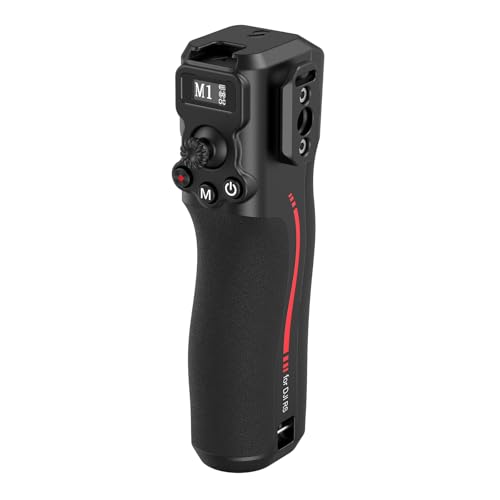
- Wireless focus and gimbal controls
- Up to 100 m range and 10-hour battery
- Multiple mounting points with ergonomic grip
Best For: DJI RS-series gimbal users needing integrated wireless control
Best lightweight value
NEEWER PG001 Mini Follow Focus

- Adjustable A/B stops for repeatable pulls
- Includes 15mm rod and rod clamp
- Lightweight 320 g design
Best For: Portable DSLR, mirrorless, and cinema-camera rigs
Best Simple Pick

- Stepless damping from 0.3kgf to 1.0kgf
- A/B stops plus 360-degree focus pulls
- Silicone and gear-drive options
Best For: Mirrorless shooters who want customizable focus resistance
Best Wireless Torque – SmallRig Wireless Follow Focus Kit (Lite)
For filmmakers comparing camera follow focus systems for mirrorless cameras, the SmallRig Wireless Follow Focus Kit (Lite) combines remote handwheel control with a high-torque motor. Its 4.3 kgf.cm peak torque, broad lens compatibility, and memory-enabled calibration make it suited to demanding cinema and zoom lenses.
Best For: Mirrorless-camera video rigs using high-damping cinema or zoom lenses and requiring wireless focus control.
Pros:
- 4.3 kgf.cm peak torque helps drive compatible zoom lenses.
- Handwheel battery is rated for about 21 hours of operation.
- One-click A/B calibration and memory storage reduce setup repetition.
- Includes a 15mm rod clamp and supports PD/QC-compatible power sources.
Cons:
- Requires a suitable power cable or USB 3.0 cable to avoid insufficient torque.
- Not water resistant.
- Its wireless motor setup is more involved than a basic mechanical follow focus.
This is a strong choice when torque and wireless operation matter more than the simplicity of a compact manual unit. The stored calibration and long handwheel runtime are especially useful for repeat shooting setups.
Best Advanced Autofocus Assist – DJI Focus Pro All-in-One Combo
The DJI Focus Pro All-in-One Combo is a feature-rich option among camera follow focus systems for mirrorless cameras, adding LiDAR ranging, AI recognition, and hybrid operator control. It is designed for creators and crews who want autofocus assistance alongside precise manual FIZ control.
Best For: Professional productions using compatible DJI PRO equipment and needing long-range, collaborative focus control.
Pros:
- LiDAR provides up to 20 meters of subject focusing range with 76,800 ranging points.
- AI recognition supports human and vehicle subject tracking.
- AMF mode combines autofocus precision with operator input.
- Includes the LiDAR, grip, motor, hand unit, and carrying case.
Cons:
- At 2,512 g, the complete combo is comparatively heavy.
- Compatibility is specifically listed with DJI Ronin 4D and Inspire 3.
- Its advanced feature set may be excessive for simple manual focus pulls.
This is the most sophisticated option in the group, but its value depends on fitting into the DJI PRO ecosystem. Choose it for tracking and collaborative control rather than a lightweight mirrorless setup.
Best Compact Manual Option – SmallRig Mini Follow Focus
For a lightweight entry into camera follow focus systems for mirrorless cameras, the SmallRig Mini Follow Focus 3010 offers direct mechanical control in a compact package. Adjustable A/B stops, a snap-on gear ring, and a 15mm rod clamp make it practical for handheld or tripod-based video work.
Best For: DSLR and mirrorless users who want portable manual focus control with adjustable stops.
Pros:
- Lightweight design weighs about 195–204 g.
- Switches between unlimited rotation and A/B-stop operation.
- Adjustable installation angle supports handheld and tripod shooting.
- Includes a gear ring belt, 15mm rod clamp, and storage box.
Cons:
- Manual operation offers no wireless or electronic focus control.
- Additional gears may be needed for different lens diameters or setups.
- Lens compatibility is listed for diameters up to 114 mm.
This is a sensible choice for compact mirrorless rigs where portability and tactile control are priorities. It delivers useful stop and mounting flexibility without the added electronics of wireless systems.
Best Dual-Sided Control – TILTA FF-T04 Dual-Sided Follow Focus Kit
The TILTA FF-T04 is a robust mechanical choice among camera follow focus systems for mirrorless cameras, with dual hand wheels and support for both 15mm LWS and 19mm studio rod systems. Its aluminum-alloy and stainless-steel construction is aimed at DSLR, mirrorless, and cinema camera rigs.
Best For: Multi-camera users and crews needing dual-sided manual focus control across different rod standards.
Pros:
- Dual hand wheels provide access from either side of the camera rig.
- Supports 15mm LWS and 19mm studio rod systems.
- Includes ARRI standard accessory ports and gears for ENG lenses.
- Aluminum-alloy and stainless-steel construction suits demanding rig use.
Cons:
- Weighs 1.5 pounds, making it heavier than compact alternatives.
- Manual design lacks wireless or electronic focusing features.
- Not water resistant.
The FF-T04 stands out when access from both sides and rod-system flexibility are more important than minimum weight. It is better suited to a substantial rig than a stripped-down handheld mirrorless setup.
Best Adjustable Damping Pick – SmallRig F60 Modular Follow Focus
For filmmakers comparing camera follow focus systems for mirrorless cameras, the SmallRig F60 stands out for its adjustable damping, precise focus tracking, and flexible A/B-stop controls. Its included 15mm rod, clamp, and snap-on gear ring make it a practical manual-focus setup for compatible DSLR and mirrorless lenses.
Best For: Mirrorless shooters who want adjustable focus resistance and configurable A/B stops for video work.
Pros:
- Stepless damping adjustment from 0.6kgf to 1.8kgf.
- Optimized drive mechanism is designed for zero-backlash focus tracking.
- Adjustable A/B marks, two A/B-stop settings, and three-step rotation reversal.
- Includes a 15mm rod, single rod clamp, gear ring, wrench, and carrying bag.
Cons:
- A/B stops must be completely locked to avoid friction noise.
- The twist lock must stay locked during use or the unit may slip.
- The included silicone gear is intended for DSLR and mirrorless lenses and should be removed for cinema lenses.
The F60 is a strong choice when tactile control and damping adjustment matter more than the simplest possible setup. Careful locking of the stops and twist mechanism is essential for quiet, reliable operation.
Best Gimbal Motor Kit – FeiyuTech Follow Focus Brushless Motor Kit
Among camera follow focus systems for mirrorless cameras, this FeiyuTech kit is designed specifically for SCORP-series handheld gimbals. Its lightweight brushless motor lets users control focus or focal length through the gimbal’s multifunctional controls, with automatic or manual calibration options.
Best For: FeiyuTech SCORP 3, SCORP 2, SCORP-C2, SCORP Pro, and SCORP C users who want integrated motorized lens control.
Pros:
- Compatible with multiple FeiyuTech SCORP-series gimbals.
- Lightweight metal construction; the motor is listed at 108g.
- Supports manual focus or focal-length adjustment.
- Offers automatic or manual calibration and reversible motor direction.
Cons:
- Its compatibility is centered on FeiyuTech SCORP-series gimbals.
- It requires mounting hardware, a rod, gear ring, and USB-C connection.
- Lens compatibility is specified for lenses up to 10cm in diameter.
This is less suitable as a universal standalone follow focus than as a dedicated SCORP accessory. For compatible gimbal owners, however, it adds convenient electronic focus and zoom control without a heavy motor assembly.
Best Compact Rod-Mount Option – Tilta Pocket Follow Focus
The Tilta Pocket Follow Focus is a compact option for creators comparing camera follow focus systems for mirrorless cameras. It combines simulated lens damping, a non-slip grip, quick-release A/B hard stops, and interchangeable gears in a lightweight 15mm rod-mounted package.
Best For: Camera operators who want a compact manual follow focus with tactile control and broad system compatibility.
Pros:
- Quick-release hard-stop system makes A/B marks easy to set and engage.
- Interchangeable gears accommodate lenses with different gear-ring sizes.
- Simulated lens damping and a non-slip grip provide tactile focus control.
- Includes a 15mm rod, rod holder, gear ring, safety case, and hex keys.
Cons:
- The supplied details do not provide exact folded dimensions.
- It uses a single 15mm rod, so the camera rig must support that mounting arrangement.
- It is a manual follow focus rather than a motorized system.
Tilta’s Pocket Follow Focus is a practical fit for compact rigs that prioritize portability and straightforward manual operation. Its interchangeable gears and quick-release stops add flexibility without requiring a larger follow-focus assembly.
Best for DJI RS rigs – Wireless Follow Focus Handle
For mirrorless-camera operators already using a compatible DJI RS gimbal, this SmallRig handle adds wireless focus and camera control without requiring a separate focus-wheel setup. Its long wireless range, ergonomic grip, and multiple mounting points make it a specialized option among camera follow focus systems for mirrorless cameras.
Best For: DJI RS 2, RS 3 Pro, RS 4, RS 4 Pro, or RS 5 users who want wireless focus and gimbal control.
Pros:
- Supports focus control, shutter, recording, joystick operation, and gimbal mode functions.
- Wireless range reaches up to 100 meters with less than 50 milliseconds of signal delay.
- Offers up to 10 hours of battery life under normal working conditions.
- Includes 1/4-inch locating holes, a cold shoe, and a NATO-clamp receiver.
Cons:
- Designed specifically for DJI RS-series gimbals rather than general camera rigs.
- The handle payload is limited to 2.0 kg, while the receiver supports up to 4.0 kg.
- The remote control contains a lithium battery and is not water resistant.
This is a strong fit when wireless gimbal integration matters more than universal compatibility. Check your DJI RS model and rig weight before buying.
Best lightweight value – NEEWER PG001 Mini Follow Focus
The NEEWER PG001 is a compact manual option for filmmakers who want repeatable focus pulls on a DSLR, mirrorless, or cinema camera. With adjustable A/B stops, a 15mm rod connection, and a lens gear ring supporting lenses up to 114mm, it is a travel-friendly choice among camera follow focus systems for mirrorless cameras.
Best For: Lightweight handheld, cage, and shoulder-rig setups that need affordable manual focus control.
Pros:
- Adjustable A/B hard stops support fast, repeatable focus or zoom movements.
- Stops can be released for 360-degree continuous focus adjustment.
- Includes a 15mm rod and rod clamp, with an arm that tilts 138 degrees.
- Compact 320 g design and a soft, nonslip silicone focus knob suit mobile shooting.
Cons:
- Manual operation does not provide the wireless control of motorized systems.
- Lens compatibility is specified up to 114mm in diameter, so larger lenses may not fit.
- Requires a compatible cage, shoulder rig, or other 15mm rod support.
Choose the PG001 if portability and straightforward manual control are priorities. Its adjustable arm and included rod hardware make it easy to add to a basic rig.
Best Simple Pick – SmallRig F50 Follow Focus
The SmallRig F50 is built for precise manual focusing on mirrorless and DSLR lenses, with adjustable damping and reduced rotational play. Its A/B-stop system, 15mm rod mounting, and interchangeable silicone or gear-drive approach make it a versatile choice among camera follow focus systems for mirrorless cameras.
Best For: Shooters who want customizable focus resistance and quick switching between limited pulls and full 360-degree rotation.
Pros:
- Adjustable rotational play is designed to minimize backlash during focus pulls.
- Stepless damping adjusts from 0.3kgf to 1.0kgf for different lens-feel preferences.
- Two-step A/B-stop control supports quick switching between preset and infinite pulls.
- Includes a 15mm rod and clamp, with freely adjustable installation angles.
Cons:
- The silicone gear must fit tightly or it may slip on high-damping zoom lenses.
- Silicone gearing is intended for DSLR and mirrorless lenses; cinema lenses require gear drive.
- Requires a 15mm rod and clamp mounting setup.
The F50 is a good choice when focus feel and repeatability are more important than the simplest possible design. Its lens-type guidance is important, especially for users switching between mirrorless and cinema glass.
How We Picked These Camera Follow Focus Systems for Mirrorless Cameras
We selected systems covering the main ways mirrorless filmmakers control focus: direct manual operation, rod-mounted follow focus, handle-integrated controls, and wireless motorized lens control. We considered adjustment precision, A/B-stop support, mounting flexibility, compatibility with DSLR, mirrorless, and cinema lenses, and suitability for handheld, gimbal, and tripod rigs.
Because camera bodies and lenses vary widely, no single system is ideal for every setup. A practical choice should match your lens diameter, available mounting points, gear-ring requirements, and whether you need a focus puller or remote operator.
Quick Comparison
| System type | Best suited for | Notable advantage |
|---|---|---|
| Manual compact follow focus | Small rigs and beginners | Low weight and simple operation |
| Dual-sided or modular manual unit | Tripod and cinema-style rigs | Flexible handwheel positioning |
| Wireless motor kit | Gimbals and remote focus pulls | Control without touching the lens |
| LiDAR-assisted wireless system | Professional solo and fast-moving shoots | Automated or assisted subject focusing |
| Handle-integrated control | DJI RS-based setups | Convenient access during stabilization |
Key Buying Factors for Camera Follow Focus Systems for Mirrorless Cameras
Manual or Wireless Control
Manual units are usually lighter, quieter, and easier to power because they transfer handwheel movement directly to the lens. Wireless systems are more versatile for gimbals, jibs, and two-person crews, but they add motors, batteries, calibration steps, and cost.
Mounting and Lens Compatibility
Check whether the system uses 15mm rods, a camera cage, a handle mount, or a proprietary stabilizer connection. The included gear ring must fit the lens barrel, and the motor should have enough clearance to engage the lens without excessive pressure. Lens focus-rotation direction and hard-stop behavior can also affect setup.
A/B Stops and Repeatability
A/B stops help you repeat focus pulls between two marked distances. They are valuable for scripted scenes and solo operation, while a smooth, damped wheel is more important for subtle manual pulls. For autofocus lenses with electronic focus-by-wire rings, confirm that the system can provide reliable repeatable control.
Rig Weight and Power
Compact mirrorless rigs benefit from lightweight follow focus hardware. On a gimbal, motor and battery weight can affect balance and runtime, so verify payload limits and allow time for rebalancing. Wireless kits also require compatible batteries, cables, and sometimes a separate controller.
Who Should Buy Which Camera Follow Focus Systems for Mirrorless Cameras?
- Beginners and lightweight-rig users: Choose a compact manual model with A/B stops and straightforward 15mm mounting.
- Tripod-based filmmakers: Consider a modular or dual-sided follow focus with fluid damping and adjustable handwheel placement.
- Gimbal operators: A wireless motor kit or handle-integrated system is generally more practical than a large rod-mounted assembly.
- Solo creators and fast-paced crews: A wireless system with subject tracking or LiDAR-assisted focusing can reduce the need for a dedicated focus puller.
- Budget-conscious shooters: Start with a manual follow focus and a properly sized gear ring; upgrade to wireless control only when your shooting workflow requires it.
Before ordering, confirm the exact camera cage, lens gear, rod spacing, motor clearance, and stabilizer compatibility. Those details matter more than brand or feature count when building a dependable mirrorless-camera focus system.