
Film negatives are easier to find—and less likely to be scratched—when they have a dedicated home. The right binder keeps sleeves organized while making it simple to identify a roll without repeatedly handling the film.
These eight options include empty binders, boxed albums, and sleeve kits. The best choice depends on your film format, the sleeves you already own, and how much protection you need from dust and handling.
Best 8 Archival Film Storage Binders Picks for 2026
Best for Mixed Film Formats

- Fits standard pages for several film formats
- Includes protective hard box
- Holds up to 100 pages; inserts sold separately
Best For: Organizing mixed-format negatives in standard pages
Best Snap-Closure Binder
White Polypropylene Archival Binder

- Holds print, negative, and slide pages
- Fold-over snap closure
- 1-inch 3-ring O-rings
Best For: Enclosed storage for assorted photo pages
Best 35mm Sleeve Kit
Zippered Binder with 50 Negative Sleeves

- Includes 50 sleeves for 35mm negatives
- Stated capacity of 2,100 frames
- Zipper closure and wrist strap
Best For: Filing a sizable 35mm negative collection
Best Archival Box Binder
Lineco Tan Clamshell 3-Ring Album

- Acid-free and lignin-free box
- 1.5-inch O-rings inside clamshell
- Fits most standard 3-ring page formats
Best For: Box-style storage of compatible photo and film pages
Ready-to-File Kit

- 50 acid-free polypropylene pages included
- Seven six-frame strips per page
- Binder holds up to 100 standard pages
Best For: Starting a 35mm negative archive
Room to Expand

- 50 polyethylene negative pages included
- 42 frames per page
- Album holds up to 100 standard pages
Best For: Growing a 35mm negative collection
Two-Box Option
Affrolling Acid-Free Negative Binder Pair
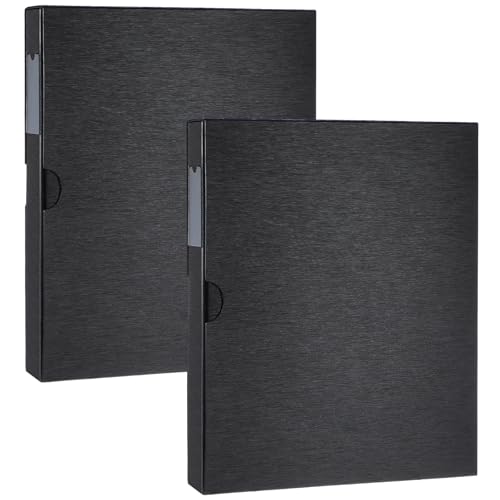
- Two acid-free binder boxes
- Up to 100 page protectors per box
- Sleeves not listed as included
Best For: Filing existing negative pages in two boxes
Labeled-Page Pick
Brown 35mm Binder With 30 Sleeves
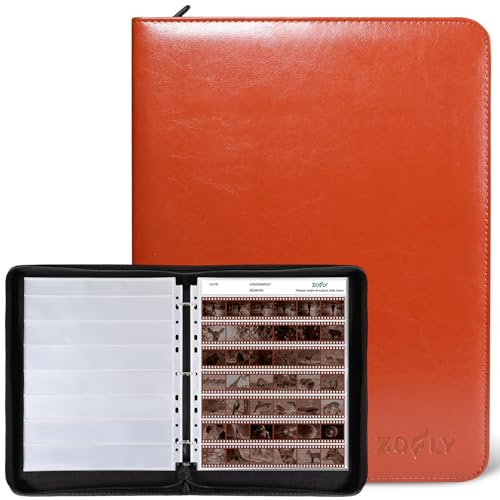
- 30 acid-free clear sleeves
- Up to 1,260 frames total
- Label area on each page; labels not included
Best For: Organizing 35mm negatives by date or subject
Best for Mixed Film Formats – Acid-Free Film Binder and Box
For archival film storage binders that accommodate several negative formats, this polypropylene 3-ring album is a practical option. It comes with a protective hard box and is designed for standard Print File-style 35mm, 120, 4×5, and 8×10 negative pages.
Best For: Photographers organizing multiple film formats in standard negative pages.
Pros:
- Acid-free polypropylene album with a protective hard box.
- Holds up to 100 standard negative pages.
- Category label slot and index table help organize contents.
Cons:
- Negative-page inserts are not included.
- Check page dimensions and hole spacing before buying nonstandard inserts.
The included box and generous stated page capacity make this a useful starting point if you already own compatible sleeves or plan to buy them separately.
Best Snap-Closure Binder – White Polypropylene Archival Binder
Among archival film storage binders, this white polypropylene model offers an enclosed design for print, negative, and slide pages. Fold-over snap closures help keep out dust and moisture, while 1-inch 3-ring O-rings hold the pages.
Best For: Storing print, negative, or slide pages in a snap-closure binder.
Pros:
- Holds print, negative, and slide pages.
- Fold-over snaps provide an enclosed closure.
- Polypropylene construction and 1-inch O-rings.
Cons:
- The 1-inch ring size may limit how many pages you can file.
- The supplied details do not specify included pages or sleeves.
Choose this one if a closed binder matters more than maximum ring capacity; confirm sleeve compatibility for your collection before ordering.
Best 35mm Sleeve Kit – Zippered Binder with 50 Negative Sleeves
If you want archival film storage binders with pages included, this 35mm kit supplies a zippered 3-ring holder and 50 negative sleeves. Each sleeve holds seven strips of six frames, for a stated total of 2,100 frames.
Best For: Building or organizing a 35mm negative collection without sourcing sleeves separately.
Pros:
- Includes 50 sleeves with stated capacity for 2,100 frames.
- 3-ring design makes sleeves removable and easy to browse.
- Zipper closure and wrist strap support carrying and storage.
Cons:
- Supplied sleeves are specified for 35mm film, not other formats.
- Soft-shell construction may not suit buyers seeking a rigid box.
The included sleeves make this the most ready-to-file choice here for 35mm negatives; consider a different binder if your collection includes larger formats.
Best Archival Box Binder – Lineco Tan Clamshell 3-Ring Album
For shoppers comparing archival film storage binders with box-style protection, Lineco’s tan clamshell album offers an acid-free, lignin-free enclosure. Its internal 1.5-inch O-ring binder accommodates most standard 3-ring page formats.
Best For: Housing compatible photo, negative, or document pages in an archival-quality box binder.
Pros:
- Acid-free, lignin-free box construction.
- Clamshell design with internal 1.5-inch O-rings.
- Made in the USA; sized 12.75 x 11.5 x 2 inches.
Cons:
- Film-specific sleeves are not specified as included.
- Confirm your preferred pages fit its dimensions and rings.
This is a strong fit when the enclosure itself is the priority and you already have, or can purchase, suitable 3-ring storage pages.
Ready-to-File Kit – 35mm Binder With 50 Sleeves
35mm Film Negative Storage Kit - 50 Pcs Sleeves, 135 Film Binder Box, Acid-Free Protector
Check Price On AmazonAmong archival film storage binders, this kit is a convenient starting point for filing 35mm negatives: it includes a three-ring case and 50 acid-free polypropylene pages. Each page holds seven strips of six frames.
Best For: Photographers who want a binder and 35mm sleeves in one purchase.
Pros:
- Includes 50 pages, with room in the binder for up to 100 standard negative pages.
- Three-ring design lets you add or rearrange pages.
- PU leather case has a buckle closure and rounded corners.
Cons:
- Supplied sleeves are specified for 35mm film, not 120 film.
- Only 50 pages are included, despite the binder’s 100-page capacity.
This is a practical pick if you want to start filing several rolls immediately while leaving space to expand.
If you are comparing archival film storage binders for a growing 35mm collection, this eTone set pairs an acid-free polypropylene album shell with 50 polyethylene negative pages. The album is specified to hold up to 100 standard pages.
Best For: 35mm shooters who want included pages and space to add more later.
Pros:
- Includes 50 negative pages.
- Each page holds seven six-frame strips, or 42 frames.
- Album capacity leaves room for up to 50 additional standard pages.
Cons:
- Additional pages are needed to reach the stated 100-page album capacity.
- Page layout is specified for 35mm film.
Choose this set for its straightforward page capacity rather than for mixed-format storage.
For buyers who already have negative pages, this pair of archival film storage binders offers two acid-free boxes with three-ring fittings. The listing describes them for 120 and 135/35mm negative storage, with capacity for up to 100 page protectors per box.
Best For: Organizing existing negative pages across two binders.
Pros:
- Two binder boxes are included.
- Three-ring and C-slot design supports page filing.
- Snap closures and rounded corners make the boxes straightforward to handle.
Cons:
- Negative sleeves are not listed among the included components.
- The boxes are specified as not water resistant.
This two-pack makes sense when you need more binder space, but budget separately for compatible pages.
Among archival film storage binders, this brown PU leather kit stands out for its page-top labeling areas. It includes 30 acid-free clear 35mm sleeves; each holds seven six-frame strips, for a stated total of up to 1,260 frames.
Best For: 35mm photographers who want to date or identify each negative page.
Pros:
- Includes 30 sleeves with space for up to 42 frames each.
- Dedicated label area helps organize pages by date or subject.
- Clear, acid-free sleeves are described as nonstick.
Cons:
- Physical labels are not included.
- The stated maximum sheet capacity is 30 pages.
It is a tidy choice for a defined 35mm archive, especially if page-level identification matters more than room for expansion.
How We Picked These Archival Film Storage Binders
We focused on the practical differences among the eight selected options: whether a listing includes sleeves, which film formats it says it fits, whether the binder is enclosed, and how easily pages can be added or replaced. We also considered stated acid-free materials, capacity, and the space a binder takes on a shelf. A product name alone cannot establish long-term archival safety, so verify material specifications before using any option for irreplaceable negatives.
Quick Comparison
Start by deciding whether you need a binder, sleeves, or both. An empty archival binder or three-ring album box makes sense if you already have compatible negative pages. A 35mm kit with sleeves is a more convenient starting point for a new collection, but its stated frame capacity may assume a particular number of strips and frames per page. The 120-focused two-pack suits photographers sorting multiple rolls or projects, while listings that mention 4×5 or 8×10 deserve a closer check: large-format sheets need correctly sized pages, and those pages may not be included. An enclosed album box offers an additional barrier to dust compared with an exposed binder, though neither replaces a suitable storage environment.
Key Buying Factors for Archival Film Storage Binders
Film and Page Compatibility
Match the sleeves to your negatives first: 135/35mm, 120, 4×5, and 8×10 require different pockets. Then check page width, overall page dimensions, and ring-hole spacing against the binder. “Three-ring” does not guarantee that every negative page will fit, and an advertised format may describe compatible accessories rather than included ones.
Materials and Enclosure
Look for clear identification of sleeve material, such as polyester, polypropylene, or polyethylene, along with the maker’s archival-use claims. Avoid assuming that an acid-free binder makes unknown sleeves safe. For long-term storage, keep negatives away from PVC, adhesives, excess heat, humidity, and direct light. A box-style binder can limit dust exposure, but film should be dry before it is sleeved and stored.
Capacity and Everyday Use
Check the number of sleeves included, pockets per sleeve, and usable ring capacity rather than relying on a headline frame count. Do not pack pages so tightly that they bow or become difficult to turn. If you retrieve negatives often, choose a setup that lets you read labels and remove pages without touching the image area.
Who Should Buy Which Archival Film Storage Binders?
Choose an empty binder if you already use a sleeve brand and want to preserve that filing system. Choose a 35mm binder-and-sleeve kit if convenience matters more than mixing page types. For 120 or large-format work, prioritize verified pocket dimensions and page compatibility over the binder’s name. If your collection will sit on a shelf for years, favor a well-fitting enclosed binder and clearly documented sleeve materials—and label each roll so you can find it without unnecessary handling.