
Choosing an audio interface with low latency can make the difference between a smooth take and a distracting delay in your headphones. For recording vocals, guitar, or podcast dialogue, fast response and stable drivers matter as much as sound quality.
Below, we’ve focused on interfaces that balance low-lag monitoring, useful I/O, and practical value so you can match the right model to your workflow.
Best 10 Audio Interface with Low Latency Picks for 2026
Low-Latency All-Rounder
MOTU M4 4x4 USB-C Audio Interface

- 4-in/4-out USB-C connectivity
- Low latency monitoring with hardware monitoring
- LCD screen and MIDI I/O for flexible setups
Best For: Home studios, podcasting, and compact recording rigs
Premium Desktop Pick
Audient iD4 MKII USB-C Interface

- Class-A console-style microphone preamp
- High-speed USB-C connection
- Monitor mix and panning controls
Best For: Solo recording and compact desktop setups
Converter-Quality Value Pick
MOTU M2 2x2 USB-C Interface Bundle

- ESS Sabre32 Ultra DAC technology
- 120 dB dynamic range and low-noise mic inputs
- Compact 2x2 USB-C design
Best For: High-quality home recording in a compact setup
DSP Monitoring Choice
Yamaha URX22C USB-C Audio Interface

- Latency-free DSP-powered monitoring
- 32-bit/192 kHz support with USB 3.0
- Two D-PRE combo inputs with MIDI I/O
Best For: Singers and guitarists who want built-in monitoring effects
Budget Dual-Input Starter
XTUGA Q-12 USB Audio Interface

- Ultra-low latency monitoring for vocals and streaming
- XLR plus 3.5mm input support with 48V phantom power
- USB plug-and-play design with no external adapter
Best For: Beginners building a simple home studio on a budget
Reliable Creator Pick
Focusrite Scarlett Solo 3rd Gen

- High-performance converters up to 24-bit/192kHz
- Low-noise balanced outputs for clean monitoring
- USB-C interface with Air mode for added clarity
Best For: Solo recording, vocals, and guitar work
Low-Latency Streaming Choice
USB 2-in/2-out Interface with Phantom Power

- Zero-latency monitoring for live voice and instrument tracking
- Mono and stereo recording modes for flexible sessions
- 48V phantom power with USB power options
Best For: Podcasters and streamers who need simple low-delay monitoring
Hybrid Creator Interface
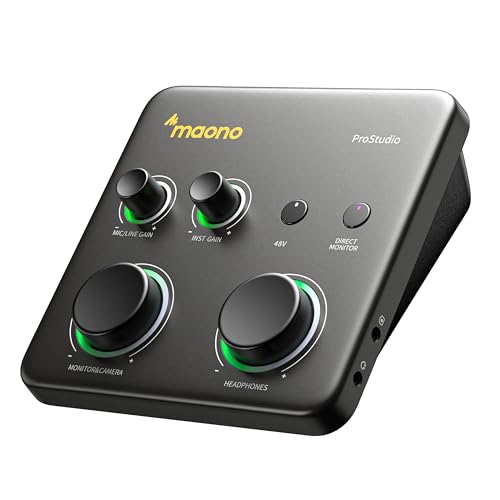
- Dual USB connectivity for computer, phone, and iPad use
- Up to 70dB gain with 24-bit/192kHz recording
- ASIO, direct monitoring, auto-gain, and loopback for creator workflows
Best For: Solo creators and streamers who need flexible device switching
Dual-Input Monitoring Rig

- 2-in/4-out layout with dual XLR/TRS combo inputs
- Zero-latency monitoring with four selectable modes
- 24-bit/192kHz recording plus +48V phantom power
Best For: Podcasters and home recordists who want flexible monitoring
Low-Latency All-Rounder – MOTU M4 4×4 USB-C Audio Interface
If you want an audio interface with low latency for recording, mixing, or podcasting, the MOTU M4 is built to cover the basics well while adding useful workflow extras. It offers 4-in/4-out USB-C connectivity, hardware monitoring, MIDI I/O, and a clear LCD screen, making it a practical choice for a compact desktop setup.
Best For: Home studios, podcasters, and creators who want a flexible USB-C interface with low-latency monitoring and MIDI support.
Pros:
- 4-in/4-out USB-C connectivity for recording and playback flexibility
- Low latency monitoring with hardware monitoring support
- Two microphone preamps for dual-input sessions
- LCD screen helps with level visibility during use
Cons:
- Not focused on advanced DSP effects or onboard processing
- Best suited to small-to-mid channel needs rather than larger rigs
The M4 stands out as a straightforward interface that balances features and usability, especially if you want low-latency monitoring without a lot of extra complexity. Its mix of USB-C, MIDI I/O, and clear metering makes it easy to build around.
Premium Desktop Pick – Audient iD4 MKII USB-C Interface
The Audient iD4 MKII is a compact audio interface with low latency appeal for creators who want a simple desktop setup and a high-quality microphone preamp. Its high-speed USB-C connection, Class-A console preamp, and monitor mix/panning controls make it a strong fit for focused recording work on Mac, PC, or iOS.
Best For: Solo recording, voice work, and small desktop studios that value a high-quality preamp and easy monitoring control.
Pros:
- Class-A microphone preamp based on Audient’s console design
- High-speed USB-C connection for easier handling and power delivery
- Monitor mix and monitor panning functions for monitoring control
- All-metal desktop housing for stability and durability
Cons:
- Only 2 channels, so it is not built for larger input counts
- Designed around a compact desktop workflow rather than full studio expansion
If you only need a few inputs but want a refined desktop interface, the iD4 MKII offers a very practical feature set. It is especially appealing for users who want low-latency monitoring along with a strong preamp and simple, reliable connectivity.
Converter-Quality Value Pick – MOTU M2 2×2 USB-C Interface Bundle
The MOTU M2 is a compact audio interface with low latency monitoring benefits and a strong focus on audio quality. Its ESS Sabre32 Ultra DAC technology, 120 dB dynamic range on outputs, and -129 dBu EIN on mic inputs make it a compelling option for users who want clean conversion in a simple 2×2 USB-C design.
Best For: Writers, singers, and home recordists who want high-quality conversion in a compact USB-C interface.
Pros:
- ESS Sabre32 Ultra DAC technology for strong analog sound
- Measured 120 dB dynamic range on outputs
- Measured -129 dBu EIN on mic inputs for low-noise capture
- Compact 2×2 USB-C layout for straightforward setups
Cons:
- Only 2 channels, so input expansion is limited
- Windows support is listed, so cross-platform flexibility is not as broad as some rivals
The M2 is a good match if your priority is clean, reliable recording in a small footprint. It does not lean on extra features, but its measured performance and USB-C design make it easy to recommend for focused low-latency workflows.
DSP Monitoring Choice – Yamaha URX22C USB-C Audio Interface
The Yamaha URX22C is an audio interface with low latency monitoring in mind, thanks to its DSP-powered monitoring path and included effects. With 32-bit/192 kHz support, two combo inputs, MIDI I/O, and a rugged metal chassis, it is aimed at users who want a more polished tracking experience.
Best For: Singers, guitarists, and small studios that want latency-free DSP monitoring and built-in processing tools.
Pros:
- Latency-free DSP-powered monitoring with REV-X reverb and Channel Strip
- 32-bit/192 kHz USB 3.0 audio interface for high-resolution capture
- Two XLR/TRS combo inputs with Class-A D-PRE mic preamps
- Cross-platform support for Windows, macOS, and iOS
Cons:
- Only 2 analog inputs, so larger sessions will need more gear
- DSP features may be more than needed for very basic recording setups
The URX22C is especially appealing if you want monitoring tools built into the interface itself instead of relying only on software. That makes it a strong option for tracking with confidence while keeping latency concerns out of the way.
Budget Dual-Input Starter – XTUGA Q-12 USB Audio Interface
If you want an audio interface with low latency for basic recording, streaming, or karaoke, the XTUGA Q-12 is built around simple USB plug-and-play use. It offers dual inputs, 48V phantom power, and a low-delay monitoring workflow that suits beginners setting up a small home studio.
Best For: Beginners, students, and budget-minded creators who want a straightforward 2-channel interface for vocals, karaoke, and home recording.
Pros:
- Ultra-low latency and zero-latency style monitoring help reduce distracting delay during vocal tracking.
- Dual XLR and 3.5mm microphone inputs support simple 2-channel recording setups.
- 48V phantom power lets it work with condenser microphones.
- Plug-and-play USB power means no external adapter is needed.
Cons:
- Limited to 2 channels, so it is not ideal for larger recording rigs.
- Focused on basic daily use rather than advanced studio routing.
- Designed mainly for beginners, not feature-heavy production workflows.
Overall, the Q-12 is a practical low-latency option when you want a simple interface that gets audio into your computer fast without extra setup. It makes the most sense if you value ease of use and low-cost recording over advanced controls.
Reliable Creator Pick – Focusrite Scarlett Solo 3rd Gen
The Focusrite Scarlett Solo 3rd Gen is a solid audio interface with low latency for musicians and podcasters who want cleaner capture and dependable playback. Its high-performance converters, low-noise outputs, and Air mode make it a strong fit for focused recording sessions.
Best For: Solo singers, guitar players, and podcasters who want polished recordings and a dependable USB-C interface.
Pros:
- 24-bit/192kHz conversion supports studio-quality recording and mixing.
- Low-noise balanced outputs help deliver clean playback for headphones and monitors.
- Air mode adds extra clarity to acoustic instruments and vocals.
- USB-C connectivity and broad software compatibility make it easy to integrate into a setup.
Cons:
- Only one XLR mic preamp, so it is not built for multi-mic recording.
- Only one Hi-Z instrument input limits simultaneous source capture.
- Less flexible than multi-channel interfaces for expanding studios.
If you need a compact interface with low-latency performance and a proven recording workflow, the Scarlett Solo is one of the safest picks here. It is especially appealing when you want better preamps and cleaner monitoring in a simple 2-channel format.
Low-Latency Streaming Choice – USB 2-in/2-out Interface with Phantom Power
For creators looking for an audio interface with low latency for podcasting, music production, or live streaming, this 2-in/2-out USB sound card focuses on real-time monitoring and flexible recording modes. It also adds 48V phantom power and multiple sample-rate support for users who want a simple but capable desktop interface.
Best For: Podcasters, streamers, and home recordists who want low-delay monitoring and easy mode switching.
Pros:
- Zero-latency monitoring is ideal for hearing your voice or instrument without delay.
- Switchable mono and stereo recording modes add flexibility for different sessions.
- 48V power and multiple sample-rate support improve recording versatility.
- USB power options can support uninterrupted sessions with an adapter or power bank.
Cons:
- Product details are more limited than larger-name interfaces, so feature depth is less clear.
- Best suited to small setups rather than complex multi-input productions.
- Focused on core recording functions instead of premium extras.
This is a sensible choice if your priority is low-delay monitoring and straightforward USB recording. It is especially useful for creators who want flexible basic controls without overcomplicating a streaming or podcast setup.
Hybrid Creator Interface – MAONO P1 USB Audio Interface
If you want an audio interface with low latency for recording, streaming, and mobile content, the MAONO P1 is built for flexible creator workflows. Its dual USB ports let you connect to a computer and phone or iPad at the same time, while ASIO support and direct monitoring help keep playback and monitoring delays down during sessions.
Best For: Solo creators, streamers, and musicians who want one compact interface for PC, phone, and tablet workflows.
Pros:
- Up to 70dB gain handles hungry dynamic microphones without an external booster.
- 24-bit/192kHz recording with a class-leading -130dB EIN for quiet capture.
- Direct monitoring and ASIO support are aimed at lower-latency monitoring.
- Built-in loopback, auto-gain, mute controls, and software routing for streaming and content creation.
Cons:
- Best suited to creator workflows rather than multi-input studio tracking.
- Many routing and streaming features may be more than a basic user needs.
The MAONO P1 stands out if you need a practical, all-in-one creator interface that can move between devices without interrupting your workflow. It is especially appealing for streamers and musicians who value simple monitoring, strong mic gain, and versatile connectivity in one desktop unit.
Dual-Input Monitoring Rig – BlueAVS AR013 USB Interface
The BlueAVS AR013 is a straightforward audio interface with low latency monitoring for home recording, podcasting, and streaming. With 2 XLR/TRS combo inputs, zero-latency monitoring modes, and USB-C connectivity, it gives you a practical way to track vocals, guitars, and line-level sources without distracting delay.
Best For: Creators who want a compact two-input interface with flexible monitoring options and condenser mic support.
Pros:
- Two XLR/TRS combo inputs handle microphones, guitars, and line-level devices.
- Zero-latency monitoring includes OFF, MONO, Crossfeed, and STEREO modes.
- 24-bit/192kHz recording with an upgraded 103dB dynamic range.
- Independent +48V phantom power and PAD switches support condenser mics and louder sources.
Cons:
- Only two inputs, so it is not ideal for larger recording setups.
- Designed for essential recording and monitoring rather than advanced channel expansion.
For a simple desktop setup, the AR013 covers the core needs well: clean conversion, real-time monitoring, and support for common recording software. It is a solid choice when you want a compact interface that stays focused on low-delay monitoring and easy compatibility.
Beginner 2-in/2-out Interface – Kmise 2i2 USB Audio Interface
This USB audio interface with low latency is aimed at beginners and creators who want a simple way to record vocals, guitars, and other sources. The 2-in/2-out design, direct monitoring, and plug-and-play USB Type-C connection make it easy to start recording on a Mac, PC, or mobile device without dealing with a complicated setup.
Best For: Beginners, home musicians, and streamers who want an easy two-channel interface with basic low-delay monitoring.
Pros:
- Direct monitoring helps keep vocal and instrument playback delay to a minimum.
- 24-bit/192kHz recording resolution for clear capture.
- 48V phantom power supports condenser microphones.
- Compact, plug-and-play design is beginner-friendly and portable.
Cons:
- Maximum sample rate is listed at 48 kHz in the specs, despite the higher-resolution marketing claim.
- Feature set is basic compared with more advanced creator interfaces.
The Kmise 2i2 is best viewed as a simple starter interface that keeps the essentials front and center. If you want low-latency monitoring, easy connectivity, and a no-fuss path into recording or streaming, it delivers that without adding extra complexity.
How We Picked the Best Audio Interface with Low Latency
We prioritized interfaces that are commonly used for real-time recording, home studios, and content creation, with an emphasis on stable performance, simple setup, and responsive monitoring. For an Audio Interface with Low Latency, driver quality and monitoring options often matter more than raw specs alone.
We also looked at input/output flexibility, phantom power for condenser mics, support for instrument recording, and whether the interface offers direct or hardware monitoring to reduce perceived delay.
Quick Comparison
If you want the most flexible all-round option, look for more I/O and stronger monitoring controls. If you record solo vocals or guitar, a compact 2-in/2-out model may be enough. For creators moving between computer, phone, and tablet, cross-device compatibility can be a major advantage.
Key Buying Factors for an Audio Interface with Low Latency
Driver Stability and Monitoring
The best low-latency experience usually comes from solid drivers, efficient USB-C connectivity, and a direct monitoring path that lets you hear yourself without noticeable delay. Zero-latency or hardware monitoring is especially helpful for singers and guitarists.
Inputs, Outputs, and Gain
Choose enough inputs for your current setup, plus a little room to grow. Combo inputs are versatile, while higher-gain preamps help dynamic microphones and quiet sources. If you use headphones heavily, check for a clean headphone amp and dedicated monitor control.
Sample Rate and Bit Depth
Higher sample rates like 192kHz are not a substitute for good latency performance, but they can be useful for specific workflows. For most buyers, dependable 24-bit recording and consistent buffer behavior matter more than headline numbers.
Software and DSP Features
Some interfaces include DSP effects, mixer software, or bundled recording tools. These extras can improve workflow, but only if they are easy to use and do not complicate setup.
Who Should Buy Which Audio Interface with Low Latency?
Solo vocalists, podcasters, and guitar players usually do well with compact 2-in/2-out interfaces that keep latency low and setup simple. Musicians who need more routing flexibility, dual inputs, or monitor control may prefer a slightly larger desktop model.
If you record across multiple devices or want extra software features, consider models with broader compatibility and onboard DSP. The right Audio Interface with Low Latency is the one that fits your recording habits today while leaving enough headroom for tomorrow.