
If you need an audio interface with MADI, you’re probably working beyond a simple home-recording setup. MADI is built for clean digital routing, higher channel counts, and dependable integration in professional studios and live rigs.
This roundup focuses on interfaces that help you move more audio with less hassle, whether you’re expanding I/O, connecting outboard gear, or building a more flexible production system in 2026.
Best 10 Audio Interface with Madi Picks for 2026
USB MADI Interface for Direct Computer Connection
RME MADIface USB Audio Interface

- 2 x MADI I/O with optical and coax
- USB 2.0 for Mac and Windows
- TotalMix FX software for routing
Best For: Compact computer-based MADI recording setups
High-Channel PCIe MADI Card

- 390 total channels via PCIe
- 3 x MADI I/O plus AES/EBU support
- Compatible with Windows, macOS, and Linux
Best For: Fixed studio systems needing maximum MADI channel density
Dante and MADI Bridge Interface
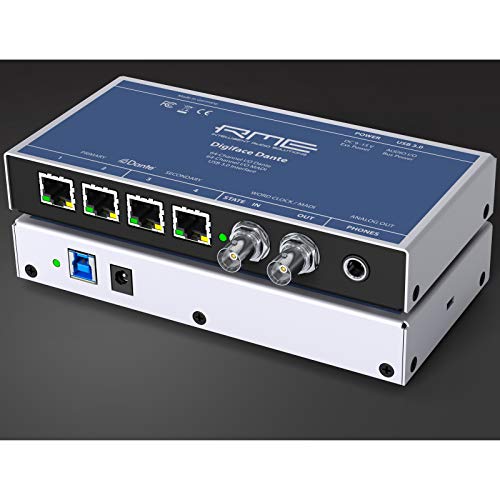
- 128-in/128-out Dante, MADI, and USB 3.0
- Bus-powered with headphone output
- 24-bit/192 kHz and word clock I/O
Best For: Networked audio setups that need Dante and MADI routing
Portable Creator Interface with DSP Effects
Antelope Zen Quadro Audio Interface

- 4 discrete preamps with up to 75 dB gain
- Real-time Synergy Core FX and dual USB-C
- 14-in/10-out with ADAT and S/PDIF
Best For: Portable recording and streaming setups with onboard effects
PCIe MADI Expansion Card
RME HDSPe Madi for computer-based MADI rigs

- PCIe card for interfacing MADI-equipped devices
- Supports surround sound output in 5.1
- Up to 96 kHz sample rate with 110 dB SNR
Best For: Desktop setups that need a PCIe card for MADI connectivity
32-Channel USB/Thunderbolt Interface
Antelope Orion 32+ with MADI optical expansion

- 32x32 analog I/O with 130 dB dynamic range
- MADI optical supports 128 channels at 48 kHz
- Thunderbolt 3 or USB with flexible routing
Best For: Large studios needing high I/O and MADI optical expansion
High-Channel USB MADI Interface
RME MADIface XT II with multiple MADI ports

- 394-channel USB 3.0 interface
- 1 MADI coax plus 2 MADI optical ports
- Up to 192 kHz and supports Windows, macOS, Linux
Best For: Engineers needing multiple MADI ports and very high channel counts
Compact Starter Interface
Focusrite Scarlett Solo 3rd Gen USB-C Audio Interface

- 1 XLR mic preamp and 1 Hi-Z input
- 24-bit/192kHz conversion with Air mode
- Low-noise balanced outputs for clean monitoring
Best For: Singer-songwriters and podcasters starting with simple USB recording
Portable 2-In/2-Out Choice
M-AUDIO M-Track Duo HD USB-C Audio Interface

- 2 combo inputs for mics, instruments, or line sources
- 24-bit/192kHz with zero-latency monitoring
- USB-C design with included software bundle
Best For: Podcasters and mobile creators needing a compact dual-input interface
Streaming-Friendly Budget Pick
MAONO PS22 Lite USB Audio Interface

- 24-bit/192kHz recording with 106dB dynamic range
- 56dB preamp gain and 48V phantom power
- ProStudio routing software with virtual channels
Best For: Beginners and streamers who want simple recording and loopback features
USB MADI Interface for Direct Computer Connection – RME MADIface USB Audio Interface
If you need an audio interface with madi that plugs straight into a laptop or desktop, the RME MADIface USB keeps the setup focused and practical. It offers 2 x MADI I/O over optical and coax, plus TotalMix FX management software, making it a straightforward choice for routing and recording in a computer-based rig.
Best For: Engineers and musicians who want a compact USB MADI interface for Mac or Windows recording setups.
Pros:
- 2 x MADI I/O with both optical and coax connections
- USB 2.0 connectivity for Mac and Windows computers
- TotalMix FX management software for routing control
- Supports up to 64 channels and 192 kHz sample rate
Cons:
- Limited to interface duties rather than a full-featured studio hub
- No built-in mic preamps listed in the supplied specs
Overall, this is a clean, computer-friendly MADI solution when your priority is reliable I/O and software-based control. It makes the most sense for users already working in a DAW and needing simple MADI connectivity without extra hardware complexity.
High-Channel PCIe MADI Card – HDSPe MADI FX PCIe Audio Card
For a high-capacity audio interface with madi, the HDSPe MADI FX is built for systems that need serious channel count and internal PCIe performance. With 194 input and 196 output channels, three MADI I/O connections, and AES/EBU support via breakout cable, it is aimed at complex studio and post-production workflows.
Best For: Large studios and advanced users who need dense PCIe-based MADI routing and very high channel counts.
Pros:
- 194 input and 196 output channels for 390 channels total
- 3 x MADI I/O: 2 optical and 1 coaxial
- AES/EBU I/O supported via breakout cable
- Works across Windows, macOS, and Linux
Cons:
- Requires a PCI Express computer slot, so it is not portable
- Designed for advanced setups rather than simple plug-and-play use
This card is a strong fit when your MADI workflow is built around a fixed computer and you want maximum routing density. It is less about convenience and more about scale, making it especially useful in serious multi-channel environments.
Dante and MADI Bridge Interface – RME Digiface Dante
If you want an audio interface with madi that also connects into a Dante workflow, the RME Digiface Dante is built for routing between digital networks and USB. It combines 128-in/128-out Dante/MADI/USB 3.0 capability with a headphone output and word clock I/O, which makes it useful in live, install, and studio environments.
Best For: Users who need a compact Dante and MADI interface for networked audio routing and computer recording.
Pros:
- 128-in/128-out Dante/MADI/USB 3.0 audio interface
- Includes headphone output for monitoring
- Bus-powered design for flexible use
- 24-bit/192 kHz support with word clock I/O
Cons:
- Supplied details list Windows as the operating system
- More specialized than a standard general-purpose audio interface
This model stands out when your setup has to move audio between MADI and Dante as well as a computer. It is a practical choice for users who value flexible digital routing more than analog input features.
Portable Creator Interface with DSP Effects – Antelope Zen Quadro Audio Interface
The Antelope Audio Zen Quadro is not a MADI unit, but it can still belong in an audio interface with madi roundup for buyers comparing compact studio interfaces and routing-focused gear. It offers four discrete mic preamps, dual USB-C, and expandable digital connectivity, so it is better suited to small-session recording and creator workflows than large-format MADI systems.
Best For: Portable recording, streaming, and small studio setups that want built-in effects and flexible USB-C connectivity.
Pros:
- 4 discrete mic preamps with up to 75 dB of gain
- Real-time Synergy Core FX with included effects
- Dual USB-C supports computer, phone, tablet, or two computers
- 14-in/10-out layout with ADAT, S/PDIF, and two headphone outputs
Cons:
- Does not include MADI I/O in the supplied specifications
- Only 4 channels, so it is not aimed at high-channel-count workflows
As a compact interface, it is strongest where portability and onboard processing matter more than large digital expansion. It is a good fit for creators who want a modern, bus-powered box with studio-grade features and flexible connectivity.
PCIe MADI Expansion Card – RME HDSPe Madi for computer-based MADI rigs
If you need an audio interface with madi support for a computer-based rig, the RME HDSPe Madi is a straightforward PCIe option built for interfacing MADI-equipped devices. It’s designed for stable computer integration and supports surround audio output, making it a focused choice for systems centered on digital I/O rather than onboard mic preamps.
Best For: Desktop users who need a PCIe MADI card to connect MADI hardware to a computer.
Pros:
- PCIe card designed for interfacing MADI-equipped devices with a computer
- Supports surround sound output with 5.1 channel configuration
- Maximum sample rate of 96 kHz
- Listed signal-to-noise ratio of 110 dB
Cons:
- PCI-based design is less flexible than USB or Thunderbolt interfaces
- Does not list built-in mic or line inputs
- Best suited to systems that already use MADI gear
This is a targeted expansion card rather than a full-featured standalone interface, so it makes the most sense when MADI connectivity is the priority. If your workflow is built around external MADI devices, the HDSPe Madi keeps the computer side simple and direct.
32-Channel USB/Thunderbolt Interface – Antelope Orion 32+ with MADI optical expansion
For buyers comparing an audio interface with madi connectivity and a large routing matrix, the Antelope Audio USB Audio Interface w/32 Channel Mixing stands out as a high-channel-count studio hub. It delivers 32×32 analog I/O, supports Thunderbolt 3 and USB operation, and includes MADI optical connectivity for expanded digital workflows.
Best For: Studios that need high channel count, flexible routing, and MADI optical expansion.
Pros:
- 32×32 channels of analog I/O for large studio setups
- MADI optical connectivity supports 128 channels at 48 kHz
- Works over Thunderbolt 3 or USB, with up to 192 kHz via Thunderbolt 3
- Built-in routing matrix and monitoring calibration for multi-channel workflows
Cons:
- Heavy unit at 6.21 kg
- Feature set may be more than needed for simpler home studios
- USB mode is limited to 32 channels compared with Thunderbolt 3’s wider stream count
This is a strong pick if you want an interface that can anchor a complex studio and still leave room for digital expansion. The combination of MADI optical, advanced clocking, and flexible routing makes it especially practical for multi-format production environments.
High-Channel USB MADI Interface – RME MADIface XT II with multiple MADI ports
If you want an audio interface with madi support and serious channel capacity, the RME MADIface XT II is built for demanding computer-based workflows. It combines USB 3.0 connectivity with one MADI coax port, two MADI optical ports, and a total of 394 channels, making it a strong fit for large digital audio systems.
Best For: Engineers who need very high channel counts and multiple MADI connections in one USB interface.
Pros:
- 394-channel USB 3.0 audio interface for large routing tasks
- Includes 1 MADI coax port and 2 MADI optical ports
- Supports up to 192 kHz sample rate
- Compatible with Windows, macOS, and Linux
Cons:
- Only 2 mic/line inputs, so it is not a traditional all-purpose front-end
- Requires a serious digital audio workflow to take advantage of its capacity
- Headphone and analog output count is limited compared with its channel total
For users who care most about MADI connectivity and channel count, this model is the most expansive option in the group. Its mix of USB 3.0, multiple MADI ports, and broad OS support makes it well suited to complex studio and DAW setups.
Compact Starter Interface – Focusrite Scarlett Solo 3rd Gen USB-C Audio Interface
If you want an audio interface with madi-style clarity for simple home recording, the Scarlett Solo 3rd Gen is a straightforward USB-C option built for vocals, guitar, and basic monitoring. It focuses on clean conversion, low-noise playback, and an easy setup that fits beginners and creators who want reliable sound without extra complexity.
Best For: Singer-songwriters, podcasters, and first-time home recordists who need a simple 2-channel interface for voice and guitar.
Pros:
- 1 XLR mic preamp plus 1 Hi-Z instrument input for vocals and guitar
- Up to 24-bit/192kHz recording with high-performance converters
- Switchable Air mode adds extra clarity to acoustic instruments
- Low-noise balanced outputs for clean headphone or monitor playback
Cons:
- Only 2 channels, so it is not meant for larger multi-mic setups
- No dedicated MADI connectivity or advanced routing features
- Best suited to basic recording rather than expanded studio expansion
As a compact USB interface, the Scarlett Solo keeps the essentials front and center: a solid preamp, one instrument input, and dependable software support. If your priority is clear solo recording rather than a more complex audio interface with madi-style expansion, this is an easy, practical pick.
Portable 2-In/2-Out Choice – M-AUDIO M-Track Duo HD USB-C Audio Interface
For buyers comparing an audio interface with madi to a compact USB-C recording solution, the M-Track Duo HD is a practical 2-in/2-out interface for podcasting, live streaming, and music capture. It combines combo inputs, direct/USB monitoring, and 24-bit/192kHz audio in a lightweight body that is easy to move between a desk, studio, or gig bag.
Best For: Podcasters, streamers, and home-recording musicians who want flexible dual-input recording on Mac, PC, or mobile devices.
Pros:
- 2 combo inputs handle mic, guitar, bass, or line-level sources
- 24-bit/192kHz audio with zero-latency monitoring
- USB-C connectivity with a Direct/USB monitor switch
- Includes Ableton Live Lite, MPC Beats, and a Splice trial
Cons:
- Limited to 2-in/2-out, so it is not built for larger tracking sessions
- No dedicated MADI connectivity or studio expansion features
- Lightweight portable design may not feel as substantial as rack gear
This model makes sense if you want a simple interface that supports recording and streaming without a steep learning curve. It is especially appealing when you need a portable USB-C unit with usable monitoring and included software rather than a more advanced audio interface with madi routing.
Streaming-Friendly Budget Pick – MAONO PS22 Lite USB Audio Interface
If you are shopping for an audio interface with madi alternatives that are easier to use at home, the MAONO PS22 Lite is aimed at streaming, vocals, and guitar recording. It offers 24-bit/192kHz capture, a 106dB dynamic range, and a compact plug-and-play layout that suits creators who want quick setup and simple workflow switching.
Best For: Beginners, streamers, podcasters, and guitar-focused creators who want a small, easy-to-use USB interface.
Pros:
- 24-bit/192kHz recording with 106dB dynamic range
- Up to 56dB preamp gain plus 48V phantom power for microphones
- Dedicated instrument input with adjustable impedance for guitar work
- Included ProStudio Routing Software adds virtual channels and loopback support
Cons:
- Best suited to small setups rather than multi-source studio expansion
- No dedicated MADI connectivity or advanced hardware routing
- Compact design favors simplicity over physical controls and I/O count
The PS22 Lite is a strong fit when you want a small interface that can handle recording, live broadcast, and instrument use without extra friction. It leans into ease of use and streaming features more than the kind of expansion you would expect from a larger audio interface with madi support.
How We Picked the Best Audio Interface with Madi
We prioritized MADI-ready models and adjacent options that make sense for buyers comparing an Audio Interface with Madi setup. Selection focused on connectivity, driver stability, channel expansion potential, latency performance, and real-world studio usefulness. We also weighed form factor, computer compatibility, and whether a unit is better suited to tracking, mixing, or system integration.
Quick Comparison
The right choice depends on your workflow. PCIe options tend to win on ultra-stable, high-throughput performance in permanent rigs. USB models are easier to deploy across multiple systems. If you need to bridge digital ecosystems, look for flexible clocking, robust routing, and enough I/O headroom to support future expansion.
Key Buying Factors for an Audio Interface with Madi
Channel Count and I/O Type
Check whether you need single-port MADI, dual-port capability, or a hybrid design. The best choice depends on how many inputs and outputs you actually use today—and how much you expect to grow.
Connection Standard
PCIe is often preferred for dedicated studio computers, while USB and USB-C offer easier portability and broader compatibility. Make sure the host connection matches your computer and your latency expectations.
Routing and Expansion
A strong Audio Interface with Madi should offer straightforward routing, clock sync options, and enough flexibility to integrate converters, digital consoles, and external processors. Look for tools that simplify signal management rather than adding complexity.
Driver Support and Stability
Professional users should pay close attention to long-term driver support. Stable drivers and clear control software matter as much as headline specs, especially for recording sessions and live environments.
Who Should Buy Which Audio Interface with Madi?
Choose PCIe-based MADI cards if you need a permanent, high-performance studio backbone. Pick USB interfaces if you want easier setup and mobility. If your priority is live sound or large-format routing, focus on models with strong digital integration and expansion-friendly design. For smaller projects, simpler USB interfaces may be enough, but they are not substitutes for a true MADI workflow.
In short, the best choice is the one that matches your routing demands, computer setup, and growth plans—not just the highest spec sheet numbers.